Markle Foundation initiative aims to bring practical AI tools to emergency management
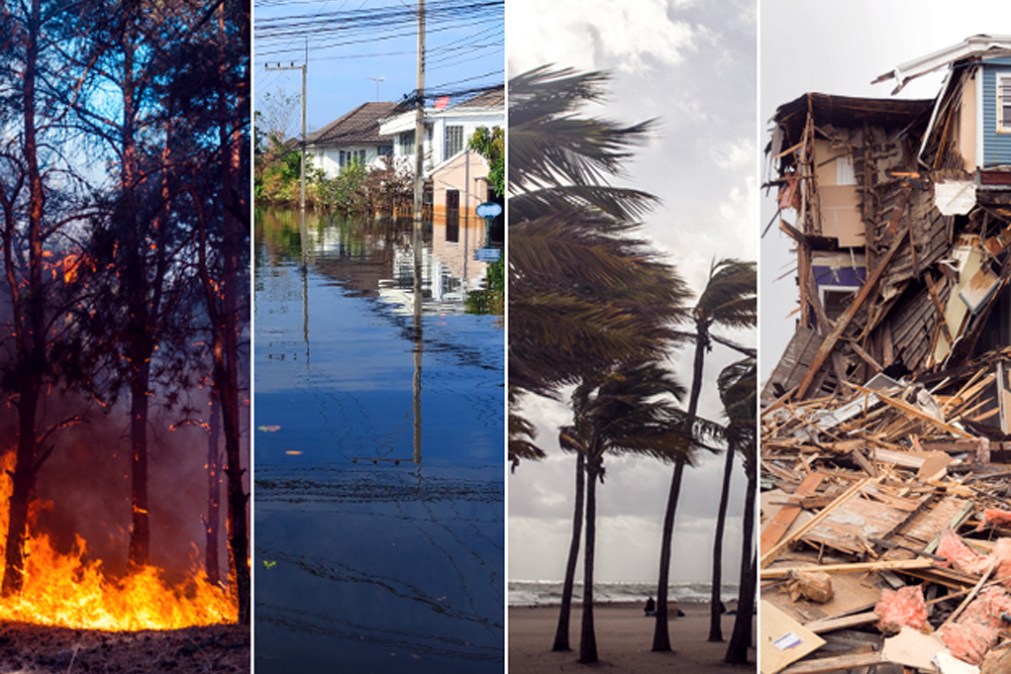
As communities across the United States brace for another active hurricane and wildfire season, a coalition of researchers, technologists and emergency managers is examining how artificial intelligence could help agencies better prepare for disasters without sacrificing public trust or accountability.
The AI for Disasters and Emergencies (AIDE) initiative — launched by the Markle Foundation in partnership with Aspen Digital, part of the Aspen Institute, and RAND, a nonprofit think tank, last fall — is developing practical ways AI can support emergency managers before, during and after disasters.
AIDE focuses on state and local government use cases rather than developing new AI models. Instead, the initiative aims to identify existing technologies that can improve emergency communications, situational awareness, resource allocation, recovery operations and disaster planning, while establishing best practices for responsible AI deployment in public-sector emergency management.
“We know that natural disasters are increasing in frequency and intensity, and we know AI capabilities are advancing rapidly,” Jeremy Greenberg, senior adviser for Aspen Digital, said in a recent interview. “The question became: How can these technologies help emergency managers meet growing demands?”
Rather than focusing exclusively on generative AI tools such as ChatGPT, the initiative is evaluating a broader range of technologies, said Greenberg, a former director of FEMA’s Response Operations Division.
“Those tools are amazing, but they’re just one tool in the suite of artificial intelligence capability,” Greenberg said.
In May, the Trump administration’s Federal Emergency Management Agency Review Council published its final report calling for new technology-driven approaches to emergency management. It highlighted tools such as predictive analytics, computer vision, geospatial intelligence and automated data processing systems that could help emergency managers make sense of rapidly changing disaster conditions.
Some applications, Greenberg noted, are hazard-specific. For instance, AI-powered wildfire detection systems in California can identify fire starts using infrared imagery, while flood-monitoring technologies in North Carolina can analyze stream gauge data and forecast where floodwaters may travel. Other tools have broader applications, such as automating administrative tasks, reviewing emergency plans, developing training exercises and improving situational awareness during disasters.
“There are a variety of different tools that are specific to an individual hazard, maybe it’s a fire start technology or flood technology,” Greenberg explained. “But then there’s other capability that’s more incident-agnostic in the sense that the threat itself doesn’t matter, but they’re applicable to all the different phases of emergency management.”
Limited personnel, long procurement
The AIDE initiative launched in October after the Markle Foundation spent nearly two years researching how emerging AI technologies could be applied by emergency management agencies, which continue to grapple with staffing shortages, administrative burdens and resource constraints. Since then, AIDE has conducted approximately 35 workshops involving nearly 100 state, local, nonprofit and private-sector organizations to identify operational challenges and opportunities for AI adoption.
One of the clearest themes to emerge from those conversations, according to Greenberg, is that many emergency management offices are operating with limited personnel.
Local emergency management departments often consist of just one or two staff members responsible for preparedness planning, grant applications, training exercises, public outreach and disaster response coordination.
“The demand of time capability and then what the expectation is when a response happens borderline overwhelms emergency managers,” Greenberg said, adding that AI assistants capable of drafting plans, reviewing grants and supporting training exercises could help ease administrative workload. “All of these advances allow people the extra time to focus on the tasks that either require human-to-human contact or human judgment.”
The initiative’s research also found that while emergency managers are generally interested in adopting AI tools, many face barriers related to procurement, training and governance.
“A lot of the newer technologies, specifically around AI language models are subscription-based. You can put your credit card in [to] use any of these tools, but government procurement systems are not the same,” he said.
To address those concerns, Greenberg said AIDE is currently developing guidance to help agencies evaluate and implement AI technologies responsibly, but emphasized that emergency managers must remain in control of critical decisions, particularly during high-stakes incidents such as hurricanes, wildfires and floods.
“Technology can help make emergency managers more efficient and more capable,” he said. “But the decisions still need to be made by people.”
Greenberg compared AI’s current evolution to other technological advancements applied to emergency management over the past few decades, including the widespread adoption of geographic information systems and computer-aided dispatch platforms.
He noted that while those innovations significantly improved situational awareness and resource coordination, they also required agencies to adapt their workflows and training protocols.
“It’s not just about freeing up your time, but offsetting some of the administrative tasks that are so burdensome to get the person back the ability to get out during disaster and interact with the survivors directly,” Greenberg said. “Then on the recovery side, taking — because this is important — a minute to decompress, write your notes, drafting after-action reports, and make sure that you’re going back through that process.”