FEMA review signals shift to state-led disaster management
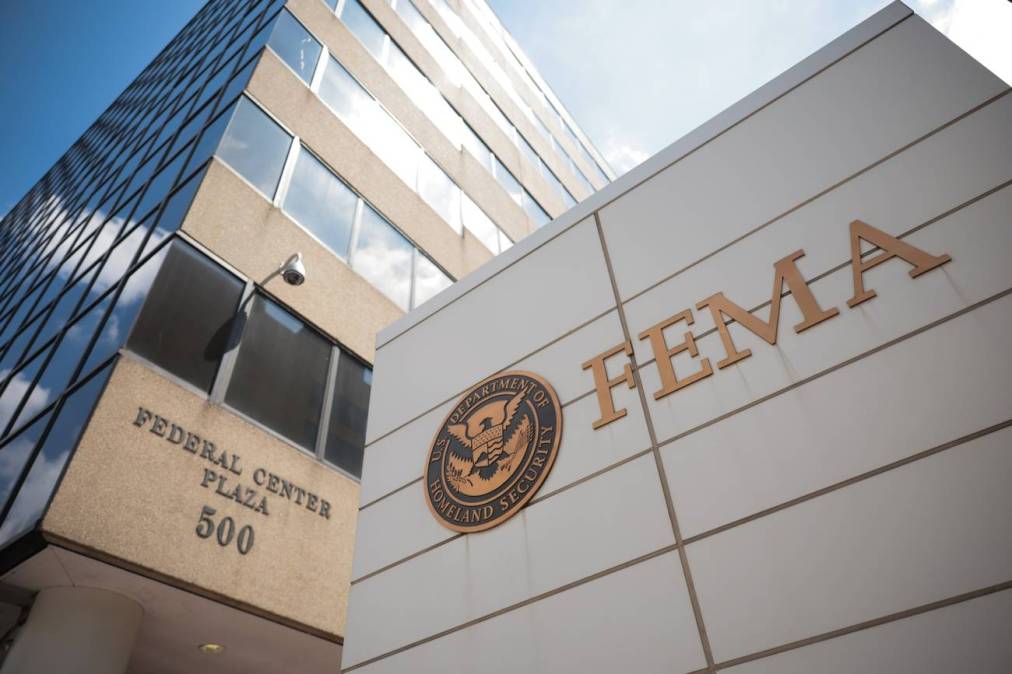
The Trump administration’s Federal Emergency Management Agency Review Council is proposing one of the most significant restructurings of federal disaster response in decades, a shift that could dramatically expand the responsibilities of state and local emergency management agencies.
The council published its final report this month, calling for expanded interoperable communications systems, improved data-sharing networks and new resource-cataloging systems designed to track emergency assets across federal, state, local, tribal and territorial governments. It also highlights new technology-driven approaches to emergency management, including predictive disaster modeling, automated aid assessments based on objective climate or financial metrics and expanded resilience data platforms.
President Donald Trump established the council last year through executive order to evaluate and streamline the nation’s disaster response system, as well as address accusations of potential political bias within the agency. After Hurricanes Helene and Milton struck Florida in 2024, congressional Republicans accused the Biden administration of intentionally denying disaster aid to Trump supporters in the state.
The report, which outlines several major recommendations aimed at shrinking FEMA’s operational footprint, embraces a philosophy that disasters should be “locally executed, state managed and federally supported” — a mandate some experts say is already in place.
“This is not a significant departure from traditional operations in the United States,” Jeremy Greenberg, senior adviser for Aspen Digital, a program of the Aspen Institute focused on public policy reform, said in an interview. “Every time a disaster is handled with local execution, state support and federal management, … that is truly the way it works best. Now it’s about building additional capacity for these state and local jurisdictions every single day.”
‘First indicator’
Greenberg, who spent five years as the director of FEMA’s response operations division and oversaw the agency’s search and rescue system, said increased technology adoption among state and local agencies would help move emergency management towards data-driven decision making.
“I grew up in a time where there was a fine line between gut instinct, which is inherent in every emergency manager, and a data-informed decision. I love relying on data as your first indicator or your last validator,” he said.
Greenberg noted, though, that many smaller jurisdictions lack the expertise, technical infrastructure and funding to absorb a larger disaster response role if federal support shrinks. He added that the council’s initiatives would force states and localities to speed up procurement, which he called a “barrier to technology adoption.”
“You have all of these authorities and capabilities during a disaster, because you’re expediting everything you were trying to do previously. Put that same rigor in doing steady state planning and steady state budgeting and I think we’ll be in a much better position to be able to respond to and recover from a disaster,” Greenberg said.
Samantha Penta, an associate professor at the University of Albany’s Department of Emergency Management and Homeland Security, said many of the most effective emergency mitigation strategies are often less visible, such as floodplain management, wildfire-resistant land use planning and infrastructure upgrades. And while new tools can improve state and local preparedness and response efforts, Penta said that technology alone is not enough.
“For us to be able to make realistic decisions based off of the predictions that comes from those [predictive] models, we need to invest in a data collection infrastructure that can then feed accurate data into that model to make the prediction,” Penta said in an interview. “If we don’t support the data collection infrastructure that collects the climatological or hydrological data that we need to feed into those models, how good is that prediction?”
Since Trump has taken office for a second term, more than 200 employees at FEMA have been cut, and 1,000 employees at the National Oceanic and Atmospheric Administration have been laid off, part of his administration’s effort to downsize the federal government. NOAA provides vital disaster alerts through the National Weather Service, and the staffing cuts have potentially disrupted weather forecasting and climate research.
‘Not easy to use’
Emergency alerts and public warning systems also emerged as a major point of discussion in the council’s report, particularly around FEMA’s Integrated Public Alert and Warning System, or IPAWS, which sends emergency notifications to mobile devices. The report recommends that states increase local participation in IPAWS, suggesting that 75% of a state’s localities should either operate their own alert systems or participate in IPAWS to qualify for federal cost sharing.
Jeannette Sutton, an associate professor at the University at Albany and owner of The Warn Room, a consulting practice that helps municipalities improve their hazard and warning messages, said that a proposed increase in state participation in IPAWS could improve local alert capabilities, particularly in rural areas where emergency alert participation remains low due to the high cost. While IPAWS itself is free to access, she said, many municipalities still must purchase costly software to use it.
“It would definitely increase the number of organizations that have the ability to reach locals during an imminent threat, but for some places it is cost prohibitive and the software is not easy to use,” Sutton said.
She added that state and local agencies do not currently receive enough training to effectively use emergency alert systems during fast-moving disasters and many alerting platforms are not intuitive and often fail to guide users on how to craft effective emergency warnings.
“Most of the people who end up pushing out those wireless emergency alerts are actually dispatchers and are extremely limited in their training,” she said. “We can’t just have a very basic, rudimentary training and think that that’s going to be sufficient for communicating during a Hurricane Helene or LA County wildfires.”
To address this training gap, the FEMA council recommends “professionalizing” emergency management at the state, local, tribal and territorial level by establishing stronger national capability standards, expanding training requirements and developing more formal professional development pathways for emergency managers.
About 150 universities in the United States offer degrees in emergency management, according to the FEMA Emergency Management Institute.
“Historically, emergency management has been an after career, something where someone was a [former] firefighter, a police officer, military, whatever,” Greenberg explained. “Over the last 20 years, we have proven collectively that it is a profession and one that needs proper education, credentialing, and training. We’ve created this generation of people that really want to do this job.”
‘A very good thing’
The council’s report suggests limiting FEMA’s role to catastrophic disasters, a step Penta argued could create challenges for rural or lower-resourced communities that may experience extensive damages without meeting a certain financial threshold for federal assistance.
In addition to damage estimates, the report also recommends using “parametric triggers,” objective measures like hurricane category, rainfall totals, wildfire spread or earthquake magnitude, to determine federal aid eligibility. Penta cautioned that disasters often stretch across jurisdictions, making federal coordination critical during large-scale emergencies like hurricanes and floods.
“Something happening in a smaller area could still be really impactful, saying that FEMA is only going to respond to those really, really big events kind of doesn’t acknowledge the variation of what a big event can be in different places in the U.S,” she said. “FEMA is probably going to become involved because of this sort of cross-border element. The federal government has that infrastructure to coordinate and sort of see the big picture.”
The council also recommends modernizing FEMA’s public assistance process by sending large recovery payments upfront based on the size and severity of the disaster instead of slowly paying states and local governments back for disaster costs over months or years.
Sutton, the University of Albany professor, said these changes could reduce bureaucracy and accelerate recovery operations, but she was cautious about proposals that redefine which disasters qualify for FEMA involvement.
“For states that have less money dedicated to disaster preparedness and response, they’re going to be left holding the bag for a lot more of those minor disasters that are not catastrophic,” she said.
The council debated in the report whether FEMA should remain within Department of Homeland Security, report directly to the White House or become an independent agency again, like it was before 2003. Penta called that time “the golden age of FEMA” because the agency could focus on its core mission of disaster management rather than compete with the more security-focused priorities of DHS.
“One of the things that people identify as being one of the issues leading up to Hurricane Katrina, was a deprioritization of FEMA’s mission,” Penta said. “In a lot of ways, FEMA being a separate agency was a very good thing.”