One year after devastating Texas floods, adoption of warning systems remains uneven
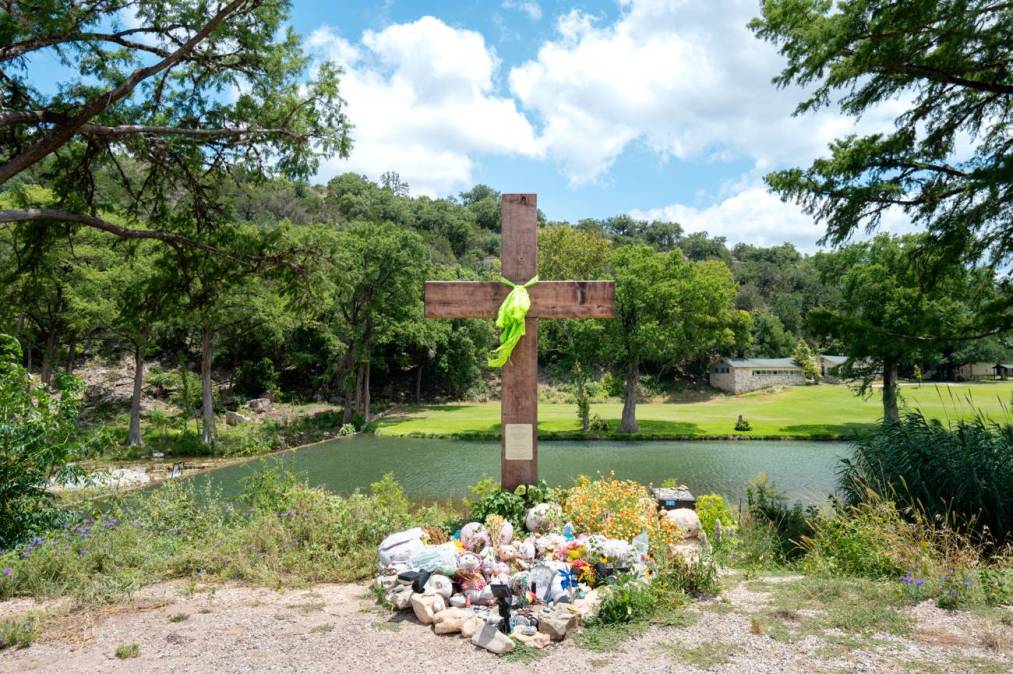
A year after catastrophic flooding in Texas Hill Country exposed critical gaps in emergency warning systems, state and local officials are expanding efforts in flood detection technology, outdoor sirens and real-time emergency communications designed to give residents more time to evacuate before fast-moving floodwaters arrive.
The floods last July 4th killed more than 130 people across Central Texas, including more than two dozen campers and counselors at Camp Mystic, an all-girls Christian summer camp. Heavy rains caused the Guadalupe River to rise by more than 26 feet in what’s known as “flash flood alley, making the incident one of the state’s deadliest natural disasters in decades.
In the aftermath, emergency management officials, researchers and lawmakers focused on modernizing the technology used to detect flooding and alert communities in areas known for rapidly rising rivers. There were reports that residents did not receive emergency alerts or evacuation orders in time, causing families to demand answers from local and state officials over the promptness of warning systems in the flood-prone area.
Twenty-nine counties have signed agreements with the state, including Kerr County, where eight sirens have been installed, out of 30 planned. But in the state’s more than 200 remaining counties, many communities still lack warning sirens, largely due to cost. Outdoor warning sirens can cost between $30,000 and $80,000 each.
Among the largest new efforts is a $4 million research project led by the University of Texas at Arlington to develop a real-time flood warning system for the Texas Hill Country. Funded through a grant from Gov. Greg Abbott’s office, the project aims to combine environmental sensors and predictive modeling to provide earlier warnings for communities along flood-prone waterways.
“The number one priority of our state is the safety of our fellow Texans,” Abbott said in a press release. “This grant will provide critical funding to enhance emergency alert systems. I thank UT Arlington for working to implement improved weather monitoring systems to provide Texans with accurate emergency warnings.”
According to the release, the network will combine radar-derived rainfall data with advanced hydrologic and hydraulic models. Instead of alerting residents only after flood conditions develop, the system provides emergency officials with location-specific forecasts of expected water depths before critical thresholds are reached, supporting earlier evacuation and response efforts.
State lawmakers also approved $281 million in flood-related recovery and resilience funding during this year’s legislative session, including $50 million to install flood warning sirens in high-risk communities. Youth camps in flood-prone areas of the state are also required to maintain emergency plans and weather alert systems that do not rely solely on internet connectivity.
Efforts to warn residents during last year’s disaster were complicated by the fact that the flooding happened at night and in areas with limited data connectivity. Investigations last year found Kerr County had for years discussed installing flood warning sirens but did not implement a comprehensive system.
The Federal Emergency Management Agency last year made $40 million available to states and tribal nations under the Next Generation Warning System Grant Program, with the goal of helping to build stronger emergency communication systems, ones that allow officials and first responders to push timely information to the public. But some experts worry that $40 million spread across dozens of states and thousands of local governments might not be enough.
In addition to the warning sirens, Kerr County commissioners are also asking the state’s transportation department to install flashing lights along roadways. “TxDOT has got plenty of money when it comes to that,” Tom Jones, a commissioner in Kerr County, told a local news station last month. “We just need to make the right appeal for them to start dealing with our roadways.”
But even as Texas expands its warning infrastructure, some technology priorities remain unfinished. The state legislature failed to pass a bill last April that would have created a new government council to establish an emergency response plan and administer a grant to help counties build new emergency communication infrastructure. The bill’s failure to pass leaves additional modernization efforts for future legislative sessions.