Kansas lawmakers overturn governor’s vetoes, approving many voting system changes
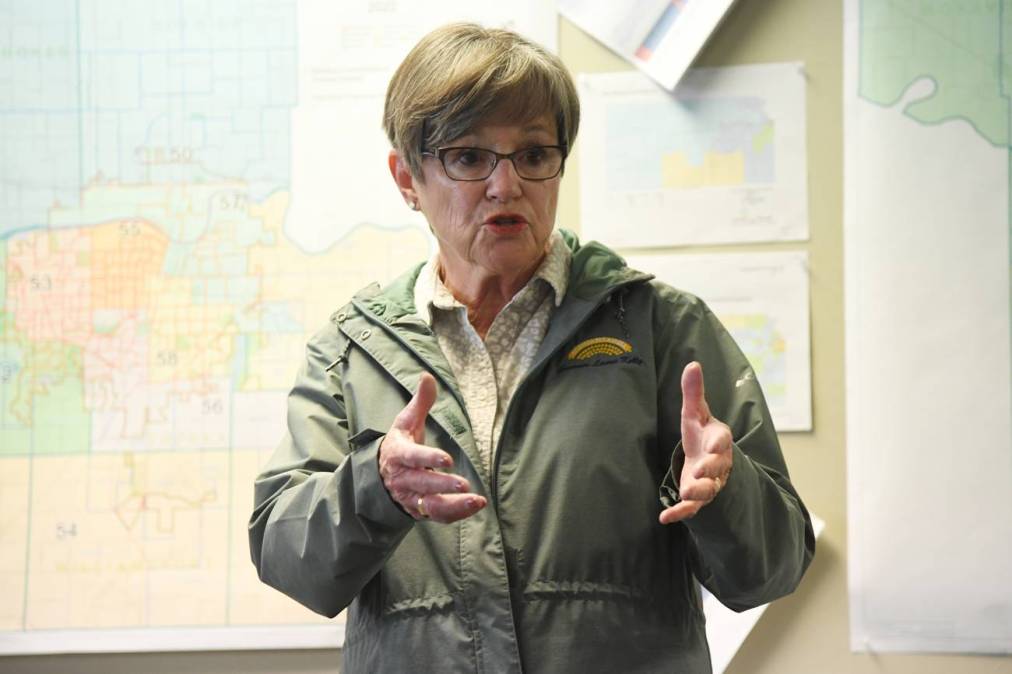
Kansas state lawmakers on Thursday overturned a handful of vetoes by Gov. Laura Kelly, including on bills that she said would “suppress civic engagement and make it harder for Kansans to vote.”
Among the legislation now to be enacted is the SAVE Kansas act, which directs the Kansas secretary of state to regularly check voter rolls, using a new, controversial tool offered by the federal government called the Systematic Alien Verification for Entitlements system. That tool, originally designed to check whether noncitizens were eligible for various benefits, has been repurposed by the second Trump administration to root out noncitizen voting, despite it being exceptionally rare.
Kansas’s law also puts new security requirements on the websites used to collect voter registrations. They must use the .gov domain and meet nine other security requirements, including that data is transmitted using “encryption in transit,” that encryption standards are aligned with those set by the National Institute of Standards and Technology and that audit logs are maintained.
The law directs the head of the state’s motor vehicle’s division each quarter to provide the secretary of state with “a list of all permanent and temporary drivers’ licenses issued to noncitizens.” The list must contain “names, all available addresses, phone numbers,” Social Security numbers, “dates of birth, alien registration numbers, temporary drivers’ license numbers” and license expiration dates.
Kelly, a Democrat heading a red state, wrote that the new law “risks purging the voter rolls of rightfully eligible voters,” and worried that sharing sensitive personal information across state agencies “may be prohibited under federal law.” Though a judge could wind up agreeing with the governor, the law is likely to be favored by the White House, which last week issued an executive order that strives to create lists of citizens who are authorized to vote in each state, and directs federal agencies to withhold funding from “noncompliant” states.
Kansas lawmakers also overturned Kelly’s veto on House Bill 2569, legislation that opens the door for the courts to reverse the state’s no-excuse mail-in voting option. Kelly wrote that mail-in voting “preserves this fundamental right of any Kansan to participate in the democratic process. It eliminates barriers imposed by proximity to a post office, work schedules, age, disability or illness, lack of transportation.” She worried the law would “disenfranchise a significant number of Kansans who are not able to vote in person. That appears to be the purpose of this bill as there is scant evidence of illegal voting necessitating these restrictions.”
The state’s reversal also more closely aligns Kansas with the president, who has referred to mail-in voting as “totally corrupt,” a fraud, “a disaster” and “cheating.” Trump last month voted by mail in a special election in Florida, a state that offers no-excuse mail-in voting. He later explained the inconsistency by reminding reporters that he’s “the president of the United States.”
Kansas’s legislature overturned other elections-related vetoes, including on House Bill 2587, which will require citizenship status to be displayed on driver’s licenses and will require that anyone who displays a noncitizen driver’s license at a polling place be provided a provisional ballot. Kelly justified her veto by noting that the state already has “one of the strongest driver’s license verification systems in the country,” which includes proving citizenship, and so therefore the bill “does not solve an existing problem.”
The American Civil Liberties Union of Kansas last month warned that the state’s legislature is attacking elections and voter rights “from a multitude of directions.” The group called HB 2587 a “shell bill,” noting that it was originally drafted for an unrelated purpose. And in fact, the bill’s title is: “Authorizing a licensed private psychiatric hospital to maintain a stock supply of emergency medication kits for pharmaceutical emergencies.” Micah Kubic, the ACLU of Kansas’s executive director, claimed in a press release last month that the state’s politicians were eroding “Kansans’ ability to vote by obstructing voter registration, shifting deadlines, restricting mail-in voting, sharing sensitive data, fabricating the issue of widespread fraud in Kansas elections, and assigning blame to noncitizens. Legislators have opted to do all this before key primary and general elections in Kansas, giving county clerks and voters virtually no chance to adapt to or even understand these changes.”