New York gets $17M to combat illegal drones at the 2026 FIFA World Cup
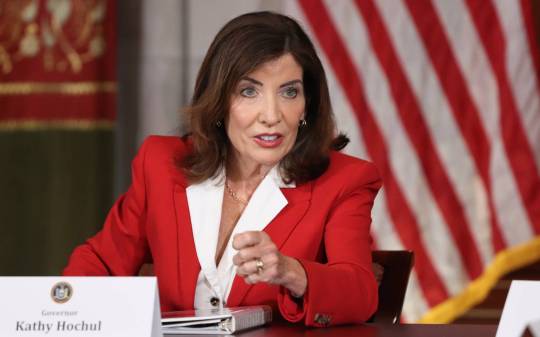
As the United States prepares to host part of the 2026 FIFA World Cup this summer, New York Gov. Kathy Hochul this month announced that the state will receive $17.2 million in federal funding to combat illegal or unsafe drone flights, as part of security preparations for the international event.
The money will go to four public safety agencies, including the port authority, state police, the Metropolitan Transit Authority and New York City Police Department, to help officials detect, track and respond to illegal drones near World Cup events.
In June and July, the event’s matches will be played in Canada, Mexico and in 11 U.S. cities. MetLife Stadium in East Rutherford, New Jersey, is scheduled to host eight of the international event’s 104 matches.
“These four key agencies are being provided with the flexible funding necessary to modernize their security posture, focusing on a mix of both hardware and specialized training,” Colin Ahern, New York’s chief cyber officer, wrote in an email. “These investments ensure we have the tools to identify and mitigate unauthorized drone activity and enhance aerial detection capabilities to protect large-scale public gatherings.”
Ahern added that the state plans to develop “back-end infrastructure,” including sensing technology and data-sharing tools, to detect potential threats before they reach crowded venues.
“Preparing for a global event like the World Cup requires a coordinated approach,” Ahern continued. “Our goal is to ensure all relevant agencies are getting information on the same comprehensive security picture in real-time.”
As drones become more widespread and accessible, they pose growing risks to public safety, critical infrastructure and the public. With the State Department estimating the games to draw between 5 million and 7 million international visitors, federal and state officials have turned their focus to counter-drone defenses.
In November, the Federal Emergency Management Agency launched a $500 million counter-drone grant program that has already sent $250 million to host states, to buy detection and mitigation systems, including radar, tracking stations and interception gear.
“With the evolution of technology comes new ways it can be used to harm others,” Hochul said in a press release this month. “This funding will go a long way to keep New Yorkers safe while allowing historic events like the 2026 World Cup and our nation’s 250th birthday to be celebrated safely and securely.”
The Federal Aviation Administration’s authority over the National Airspace System, the nation’s airspace, navigation facilities and airports, largely limits states’ ability to restrict where drones can operate, respond quickly when drones are used maliciously or dangerously, or test or use effective counter-drone technologies.
According to the National Conference of State Legislatures, states can restrict drone use near sensitive sites, like correctional facilities or water treatment plants, but they generally cannot impose operational bans or control navigable airspace, a job reserved for the FAA.