FirstNet reauthorization bill would bring stability and risk, says former DHS official
The House of Representatives on Monday voted unanimously to extend the legal mandate of the FirstNet Authority, which oversees the FirstNet public safety communications network, through 2037. The move gives public safety agencies a longer runway to plan the future of emergency communications. But according to one former federal official, it also leaves questions about oversight, innovation and the long-term risks that might come from relying a single service provider.
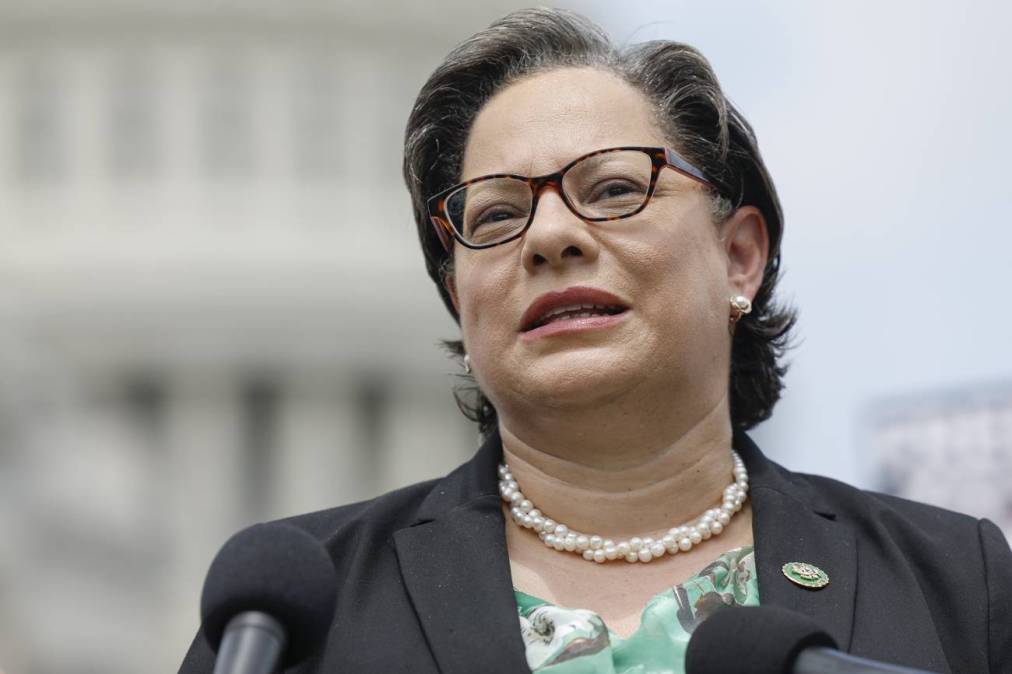
The reauthorization bill, led by Rep. Jennifer McClellan, a Democrat from Virginia, and Rep. Neal Dunn, a Republican from Florida, would extend the statutory authority of FirstNet by a decade and introduce stronger oversight, by the National Telecommunications and Information Administration, of its long-term contract with AT&T. The legislation would also expand allowable reinvestments, to help keep pace with evolving technologies such as 5G wireless, artificial intelligence and the latest cybersecurity trends.
Members of a House Energy and Commerce committee hearing in February said that FirstNet must continuously evolve to support emerging tools like drones, mobile command centers and advanced data-sharing platforms. The 2012 law establishing FirstNet, which mandates the program to be self-funding, limits reinvestment to the network core or radio access network to reduce dead zones for first responders. The Department of Commerce this month struck a deal with AT&T that will put $1 billion of the firm’s money into upgrades and reduce the government’s costs by another $1 billion.
Despite these changes, Paul Rosenzweig, who served as deputy assistant secretary for policy in the Department of Homeland Security from 2005 to 2009, warned that some of the program’s risks remain, particularly its reliance on a single network provider — an argument that some telecom experts have also raised.
“Monoculture risk is real. If we rely exclusively on a single FirstNet system, a single provider, we run grave risks,” he said, pointing to a nationwide outage in 2024 that left AT&T’s network down for hours as evidence that even robust systems can fail. “This has been a system that is an extremely valuable one, but it has not fulfilled the performance metrics that we conceptually have of it, of being available in the worst possible times.”
Cory Davis, vice president of Verizon Frontline, the company’s public safety business, in January testified before a Senate Commerce subcommittee that it was unwise to create a “single point of failure” for critical communications. “No single network should be the sole basket for our nation’s safety,” Davis told lawmakers at the hearing, raising concerns about whether redundancy and competition should play a larger role in the network’s future.
The reauthorization bill stops short of introducing additional service providers, instead opting to strengthen oversight. A 2024 audit by the Commerce Department’s Office of Inspector General recommended that FirstNet could use stronger oversight. The report criticized the partnership between FirstNet and AT&T, arguing that the program failed to “develop an adequate performance metric to accurately measure public safety use and adoption.” “FirstNet Authority does not have reasonable assurance that the data AT&T is reporting is accurate and reliable to support the primary program objectives of public safety adoption and use of the network,” the report states.
In February, AT&T President Scott Agnew pushed back, arguing that “no large-scale infrastructure project is without challenges or opportunities for improvement,” but that the board’s performance evaluations are sufficient. “We conduct internal assessments and gather valuable input from public safety stakeholders. Both the oversight and program governance combine to drive continuous enhancements to the program and ensures FirstNet meets the evolving needs of public safety,” Agnew told congressional leaders during the House Energy and Commerce hearing in February.
If the legislation passes, the NTIA would have expanded authority over FirstNet’s operations, including reviewing contractor performance, approving disaster recovery plans and requiring outage notifications within 30 minutes.
Rosenzweig approved of FirstNet’s added scrutiny under the NTIA, noting it would create “helpful friction” between the two governing bodies. “Oversight without tension is box-checking,” he said, adding that if AT&T isn’t forced to “look over their shoulders,” the arrangement isn’t working properly.
Mike Ferguson, AT&T’s executive vice president of federal legislative relations, in email expressed gratitude that the House passed the bill, and for the company’s role as the network’s sole provider: “We commend the House for passing legislation to reauthorize the FirstNet Authority and for recognizing the importance of preserving the FirstNet program for public safety…We now encourage the Senate to take up reauthorization as soon as possible so the President can sign a bill into law.”