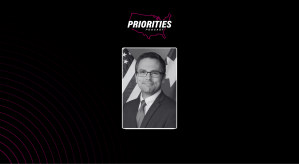
Charlottesville reflects on delayed cloud migration after years of ERP challenges

After years of concerns about its aging enterprise resource planning system, the City of Charlottesville, Virginia, last year completed a long-delayed effort to migrate two decades of city data from an on-premises system to the cloud.
Now, a year later, Charlottesville tech leaders who led the modernization efforts are reflecting back on the challenges and successes of the journey.
The upgrade from the city’s on-prem SAP enterprise resource planning system to the company’s S/4HANA Cloud and ERP started in July 2024, before going live in September 2025. The back-office hub that ties all of the city’s services together, the legacy ERP system presented a number of risks, including upcoming end-of-support in 2027, and other internal concerns such as usability and AI-readiness.
A year on, Stephen Hawkes, director of information technology for the City of Charlottesville, said the project was about “eight years in the making through a lot of starts and stops.” Principal among those challenges were staff turnover and organizational changes following the August 2017 “Unite the Right” white supremacy rally in the city, and the deadly car attack on counter-protesters that followed.
Hawkes led the effort to upgrade the ERP and said because of the turnover following the rally, it took years to get momentum and approvals from city leaders. Charlottesville cycled through “five or six city managers” in a short period, leading to difficulties securing funding and approval, Hawkes said.
“Getting someone to where this was a big enough issue for them to look into it took a lot of effort, and then you know someone would change,” Hawkes told StateScoop.
He also said that some city leaders didn’t really understand what an ERP was or what SAP offered, and questioned the idea of running an ERP in local government.
Following that skepticism, Hawkes said his team slowed down, educated leadership and even commissioned a study from a firm to compare options before they moved forward. The evaluated options included staying with SAP, switching to a different ERP provider, changing over to a “best-of-breed” multi-vendor strategy, or having no ERP at all.
The firm recommended sticking with SAP for a variety of reasons, which Hawkes said helped to make the five-person IT team’s case to city management.
In total, the project took 14 months and Hawkes said the team, which included finance and IT staff with substantial SAP experience, also relied on a trusted systems integrator to help lead the implementation, supported by an SAP-approved data transformation service. Though Charlottesville did have two-decades worth of data to migrate, Hawkes said that the city is one of SAP’s smallest customers, making the lift smaller in context.
Beyond the technical implementation, Hawkes said change management was the city’s largest focus and required strong internal knowledge of the organization. It took up “really the last half of the project, probably those last six, seven months,” he told StateScoop.
But with the new ERP, Hawkes said the city now benefits from a modern, user‑friendly front end with room to grow into artificial intelligence capabilities. He emphasized how much better the Fiori interface is compared to the old ECC6 GUI — something he said finally feels like what users “would expect in 2026”: simple, web‑based, intuitive and easier to navigate.
Hawkes said the city is already experimenting with AI agents powered via the ERP platform for bottlenecks like permit application processing. In his view, the limiting factor in most software is the tool itself — how hard it is to learn and operate.
And for other cities or small governments looking to complete a similar migration — especially those without large staff and vast amounts of resources — Hawkes said it was crucial to lean on the expertise of others.
“Our senior SAP engineer is really, really good, so I trust and rely on her judgment in conjunction with this [systems integrator] that we’ve been working with a long time — that to me was the key,” Hawkes said. “I mean, there was nothing magic about it. I wish there was some special ‘Here’s the playbook. Just do this.’ We got the right people. Every place is going to be different, but you’ll be able to figure it out.”