Center for Civic Futures announces 8 projects to improve AI for public benefits access
The nonprofit Center for Civic Futures on Tuesday announced it will award $8.5 million to accelerate the development of artificial intelligence projects designed to improve public benefits programs over the next two years.
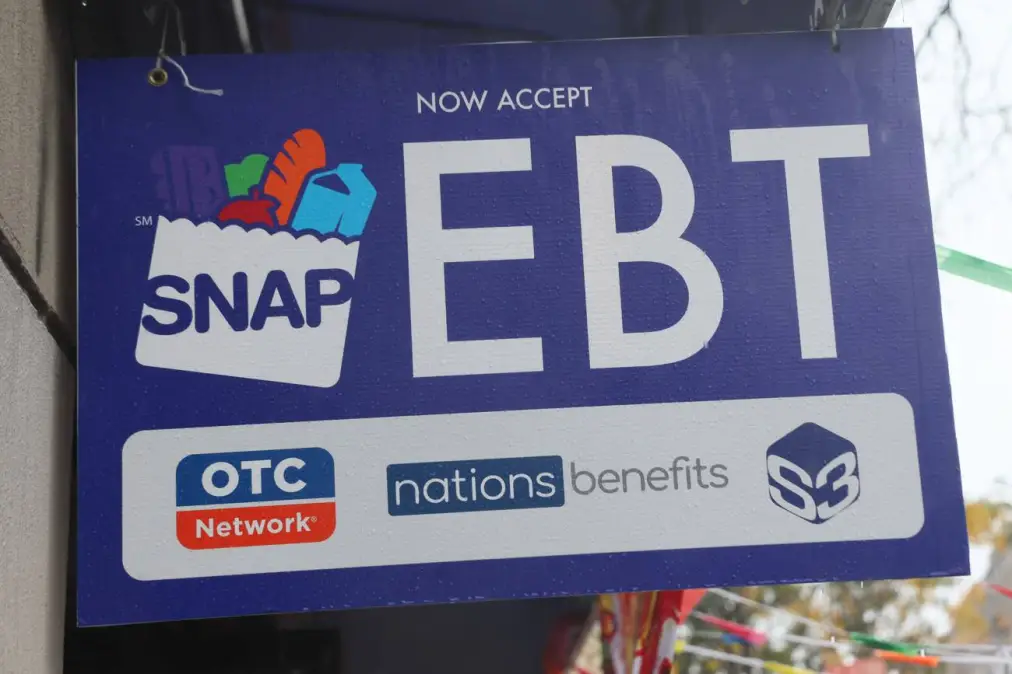
Following a call for ideas that yielded more than 400 responses, the group has named eight projects it will support. These include a multi-state cohort to improve AI tools that can verify work requirements for SNAP and Medicaid benefits, a project with Maryland’s labor department and the Harvard Kennedy School to improve the state’s unemployment insurance system and an initiative in New Jersey to scale up numerous AI pilot projects so that they can be used across the state government.
Another project will aim to develop new infrastructure and evaluation tools that can be widely used across the public sector to identify the generative AI models most effective at answering questions related to public benefits.
The work is funded through the group’s Public Benefit Innovation Fund, which the center’s executive director, Cassandra Madison, said is designed to create a “safe space for experimentation” for states. The fund gets support from the group’s philanthropic partners, including the Ballmer Group, the Gates Foundation, the W.K. Kellogg Foundation, Renaissance Philanthropy and the Families and Workers Fund.
“We think of ourselves as a living lab for states that can really focus in on and explore what are the most promising applications of AI to improve benefits access,” Madison said.
The nonprofit plans next spring to lead an additional open call for projects to fund, but Madison said that in the first round, the group selected projects that seemed “shovel ready,” those that had already advanced beyond the proof-of-concept phase, had a network of partners to draw on and whose organizers possessed “a deep understanding of the problem space.”
“We’re at a moment where AI’s applications, and generative AI’s applications in particular, are experimental and there’s been lots of promising pilots across the country, but very few things have scaled,” she said. “There will be a whole set of learnings.”
The vast majority of state IT leaders have expressed interest, in surveys and elsewhere, in finding ways to use AI to improve how they deliver services, but they have limited capacity to do so. Dave Cole, New Jersey’s chief innovation officer, said that in his state, AI “is never about replacing workers,” but admitted that, as in many other states, his state’s workforce hasn’t recovered to pre-pandemic levels — “We still need to do more with the teams that we have and make that work experience better.”
In New Jersey, grant funding will help the state scale up a host of AI projects that have been tested in isolated cases or by individual agencies. The state has launched an AI chatbot, which Cole said is used by 20% of the state’s workforce. But the state has also begun using AI for more specific purposes, like scanning and validating documents uploaded by benefits recipients, and writing memos.
Cole said such projects have so far proven valuable — “we can quickly catch errors that might have taken an agent 20 days or so to catch the error manually and review and get back to the applicant” — but that making such narrowly defined tools available across the entire state is a larger project that requires additional support.
“Inboxes are filled with pitches about AI tools that will solve problems,” Cole said. “For us, it’s been a core principle of our team and the way we work in New Jersey to be human-centered and to focus on the problems people are having now and then we find the tools and technologies that address those things.”
Cole said New Jersey plans to conduct between three and five pilot projects during the first year of the grant, and use the second year to scale up the most successful projects across the state government.
“This sort of national effort will allow us to have hopefully in a year a suite of tools that are specifically built to address some of the challenges that government has, with some of the unique constraints in government,” he said. “We’re very concerned with data security and privacy. We’re very concerned there is good training and guardrails on the tools we make available to public service workforce. It takes extra time to do those things.”
The new grant funding follows a project announced by the Center for Civic Futures last month called the AI Readiness Project, a $500,000 effort hoped similarly to identify best practices and accelerate the use of AI in state governments.
In addition to seven projects led by states and their partners funded by this round of grants, the center is also funding an eighth project designed to create benchmarking tools that can be widely adopted across government. That project will use Vals AI, a technology platform designed to benchmark AI tools used in the public sector, to develop measurements of how well AI models answer questions related to the Supplemental Nutrition Assistance Program. Madison said that through the group’s AI Readiness Project, it is also creating an evaluation and benchmarking group, designed to encourage states to think about model performance, identify successful frameworks and plan future experiments.
“That’s being developed in real time and so that’s going to be a big focus for us in 2026, and I’d say this initial project is the way we’re dipping our toes into the water, but it’s something that’s very important and something that states want to prioritize.”
Many states are testing AI on their own, but progress has come in fits and starts. Brandon Ragle, the chief information officer of Illinois, a state not involved in this round of grant funding, said that measuring the performance of AI tools is very important to his office, particularly in light of the hype being pumped out by many technology companies. He said other state agencies will sometimes ask for AI to fix a given problem, but that his office sees that they only need “some simple automation.”
In September, Illinois made Microsoft’s AI-powered productivity tools available to all of its 56,000 employees. Ragle said it was “a good use case because the cost was effective for us,” but admitted that more work is required to understand whether more narrowly focused AI projects would be worthwhile in his state.
“Sometimes that’s hard to do in government, because we’re not producing widgets or producing products that we’re selling,” he said. “We’re providing services to residents, and so that measurement is different.”
Madison said that the Center for Civic Futures operates “deep” communities of practice, and that she hopes these grants and the center’s other efforts will propel a “flywheel of shared learnings,” in which states leading on AI can help the laggards catch up. But with AI’s rapid development, even the most innovative state and local governments are lagging behind industry, she pointed out.
“We’re never going to close the gap completely, but if we can narrow the gap a little bit that would be great,” she said. “If we can get government a little bit more in the driver’s seat of what’s happening next, that would be great.”