State laws haven’t stopped federal immigration agencies from accessing state DMV data
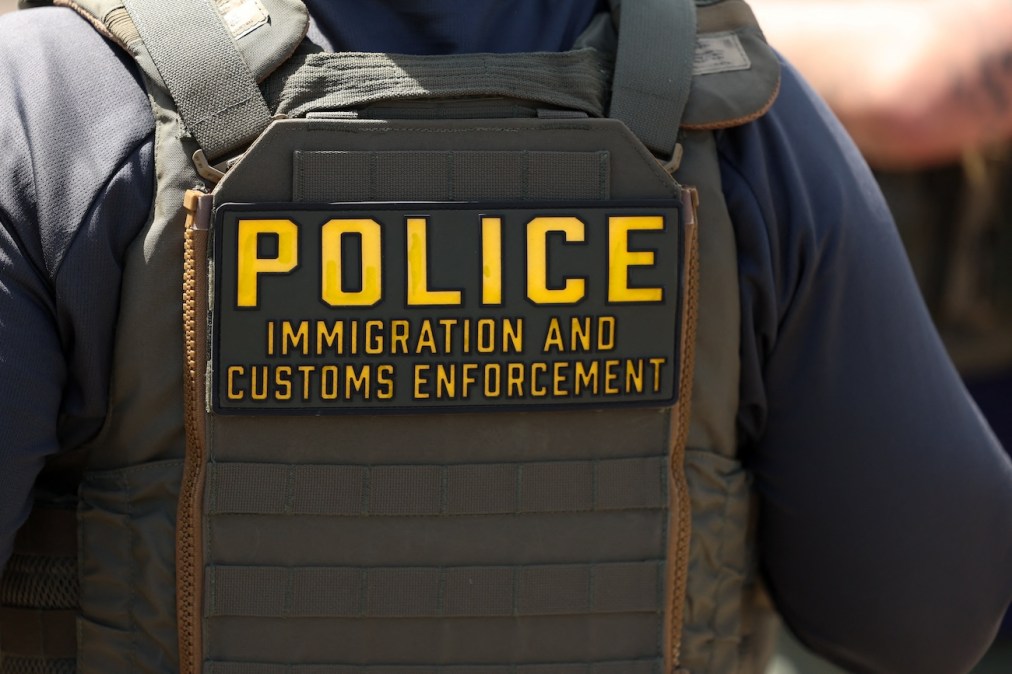
As federal immigration authorities continue their nationwide enforcement campaign, state-held data — including driver’s license records and license plate information — has become a key tool. But laws in some states intended to restrict federal access to that information fall short of preventing it, according to a new report.
The report from the University of Washington examined four methods by which federal immigration agencies can obtain state DMV data: direct database access, the Nlets interstate law enforcement network, data brokers and local law enforcement agencies. Researchers also examined patterns of immigration arrests in Maryland, Minnesota, New York and Washington — all states that have enacted some type of law geared toward restricting this type of sharing.
However, the report found that immigration agents with Immigration and Customs Enforcement and Customs and Border Protection continue to query state-held vehicle data in these states, with some searches linked to immigration arrests.
Angelina Godoy, a professor at the University of Washington and director of its Center for Human Rights, said that though these pathways are established and widely used, they’re often unknown to the state and local administrators of certain public data, such as DMVs or state comptroller offices.
“I think that in many cases, state and local leaders may even be unaware that this is happening, and it’s far too late for them to be waking up to it. But better to wake up today than tomorrow,” she said.
The researchers pointed out that while public awareness efforts about the technologies powering immigration enforcement — such as Flock Safety’s automated license plate readers — are generating deserved scrutiny, the use of less-visible systems such as Nlets and state DMV databases can facilitate immigration enforcement with equally serious consequences, despite receiving far less public attention.
Of particular concern is the Nlets system, Godoy said, which is a nonprofit computer network that allows state, local, federal and international law enforcement agencies to share criminal justice and public safety data. It appears to be the most common pathway used by federal authorities, she said. Agents can enter or scan a license plate in Nlets, and the issuing state’s DMV returns vehicle registration data, including the registered owner’s name, which agents can then cross-check against immigration databases.
Though states can block queries of their own data from certain federal agencies, as Washington did for ICE, Godoy noted that political will to extend restrictions to other agencies such as Border Patrol varies from local agency to agency. And, restricting one route may shift use to another.
“States that have, for the most part, relatively recently decided to open pathways for noncitizens to obtain driver’s licenses or to register their vehicles, they’ve done that out of an interest of being more inclusive or keeping roads safer,” she told StateScoop. “But I think in many cases, they did so without realizing all the various pathways through which federal immigration agencies can obtain folks’ data through the Department of Motor Vehicles, and the way in which that access can then be sort of weaponized against communities, essentially.”
Restricting the use of state-held data for immigration enforcement is a public safety and civil rights issue, the researchers argued in the report. Aggressive traffic stops made by ICE have resulted in injuries and deaths, and safeguards against federal agencies accessing this data — which can be perceived as seemingly routine — can help initiate an enforcement encounter with potentially deadly consequences.
To establish the holes in the law, the researchers documented examples in four states by starting with known immigration arrests and using public-records requests to trace preceding DMV queries. Godoy said the records often showed a query was followed by an arrest within minutes. The total number of arrests cannot be quantified, she said, and many states including Massachusetts and California denied the records requests researchers made to the query records. These state denials and additional missing query records prevent a reliable total count, Godoy said, adding that the findings should not be read as limited to those four states.
In fact, she called the data-sharing problem “widespread.”
“They’re not only arresting people who are undocumented, but people who are maybe on a student visa, or have a work permit, or are in all different stages of the immigration process,” Godoy said. “And this all takes place just within seconds that they get a response to their query, and in minutes, they make a determination about whether they’re going to arrest the person or not.”
While vendor-contract limits, downstream-use audits, and public audit results can help stop some access to state-held data, Godoy warned they may fail when agencies require their data vendors to anonymize who conducts the searches for security purposes.
Another conundrum is that who has authority to safeguard this data varies by method of access and the state individually; the DMV holds the data, governors typically direct restrictions, and legislatures can require safeguards.
Despite these policy conversations and questions of authority on data, Godoy hopes that the “human safety piece” is not lost.
“There’s real cases — and the report highlights many of them — of both families being separated as a result of these mechanisms, but then also the violence that we’re seeing now in ICE enforcement,” Godoy said. “It was really striking to me when we undertook this research that while we’re hearing a lot about the ICE shootings… one of the things that’s often lost in those stories is that the overwhelming majority of those shootings are taking place precisely in these traffic stop arrests.
“So, the DMV data is really important,” she continued, “and the rapid way in which it’s winding up in their hands while they’re still at the wheel performing these high-risk operations, and then suddenly surrounding a car in ways that have caused crashes, let alone shootings, is really worrisome.”