New York police agencies are searching Flock data to aid immigration enforcement
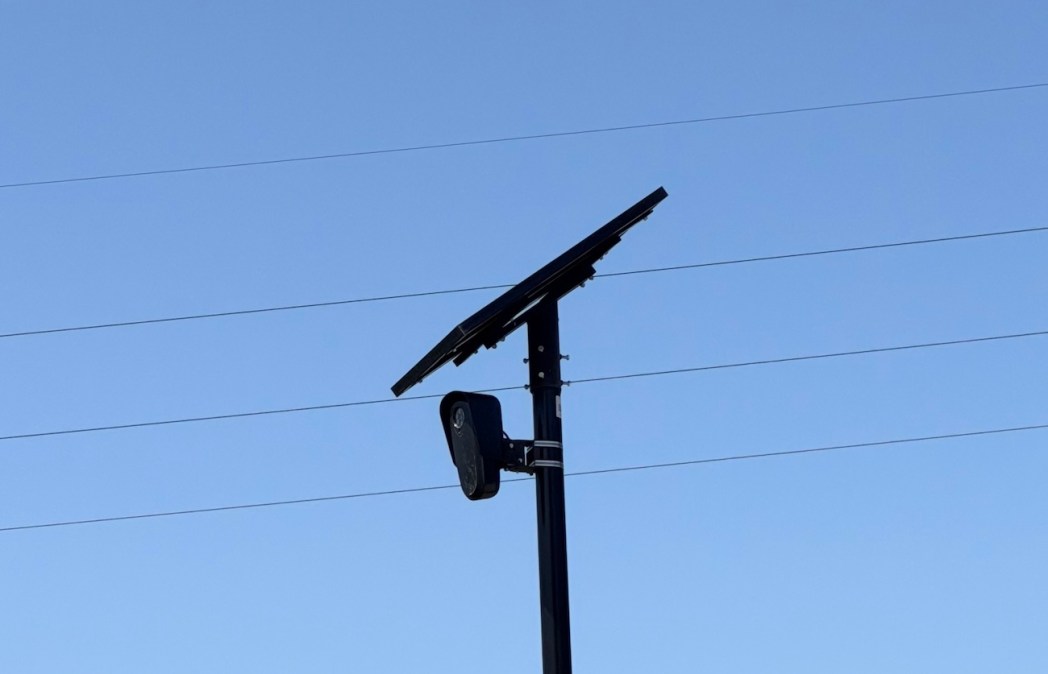
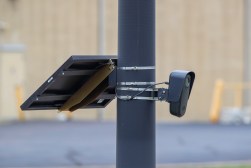
Police in New York state have repeatedly searched data gathered by license plate readers operated by other law enforcement agencies, and in some cases obscured the reasons for those searches, according to a report published Tuesday by two civil rights groups.
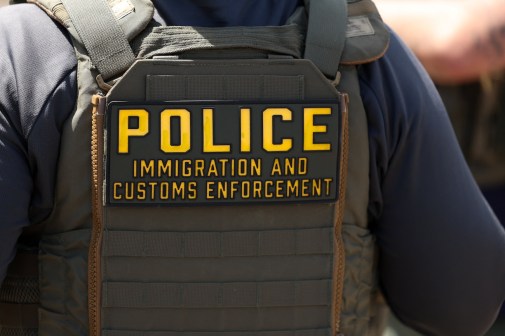
The authors — one from the Surveillance Technology Oversight Project, or STOP, a New York civil rights group that scrutinizes government surveillance technology, and the other from LatinoJustice PRLDEF, a New York civil rights group formerly known as the Puerto Rican Legal Defense and Education Fund — found that state and local police in New York have searched a license plate database organized by the law enforcement technology firm Flock, on behalf of Immigration and Customs Enforcement. Police listed their reasons for searches in internal logs as “Immigration (civil/administrative)” for drivers not suspected of any crime.
The report’s authors reviewed data from Have I Been Flock’d, a website that publishes Flock search logs based on public records requests. The logs show that, as recently as July, police in at least two New York towns included “ICE” in its searches of Flock’s data, listing the reason for the search as either “ICE” or “Wanted by ICE.”
These were only the searches that were plainly listed for immigration purposes. The authors also linked different searches for the same license plate, discovering a pattern: After federal agents conducted searches that were tagged for immigration enforcement, a New York state or local police officer searched for the same plate, only listing their search reason as “investigation.”
“The top line is that our own police in New York state — local and state police — are making immigration-related searches, and beyond that, they appear to be hiding these searches,” Eleni Manis, a co-author of the report and a research director at STOP, said in an interview. “What we saw was that as soon as an hour after an immigration-related search occurred, you’d see another New York State law enforcement agency completing the same search, but not labeling it immigration-related.”
The researchers found that on March 24, 2025, a search conducted at the New York State Fusion Center, an information-sharing hub used by federal, state and local law enforcement, included the reason “SWB 25-03-01 DHS Agent.” The researchers said that description indicated a search related to the southwest border and the date the search was conducted by a Department of Homeland Security employee. An hour later, a New York state police officer searched for same plate found in that search and listed their search reason as “Investigation.”
The report’s authors found that after a Border Patrol agent ran another plate, on June 1, 2025, a police officer from Lancaster, New York searched for the same plate later that day. The officer searched for the same plate again two days later, listing the reason as “inv.” A week later, an officer from the Cheektowaga, New York, Police Department searched the plate twice, with the reasons listed as “WANTED” and “Wanted by ICE.”
The findings offer a glimpse into how federal immigration enforcement is relying on cooperative local police departments to search license plate reader data, because ICE and CBP do not have direct access to Flock’s data. But the researchers noted in their report that the cases they found may be just a fraction of such assistive searches.
“I’m less interested in whether officers obscured their searches purposefully than in figuring out how often police in New York State are conducting searches on behalf of ICE … and we can’t possibly know because officers aren’t required to document those searches because it’s so easy to conceal the searches,” Manis said.
Manis said these searches are part of a larger pattern in which police officers are concealing their intentions with the Flock data, or concealing their searches for reasons beyond their police work. Across a number of states, including Georgia, Massachusetts, North Carolina and Wisconsin, officers have reportedly used the technology to spy, stalk or harass romantic interests or exes, or for other purposes.
“We’ve seen a Texas sheriff tracking an abortion seeker across state lines,” Manis said. “We’ve seen officers across the country performing completely inappropriate searches of, you know, their ex‑partners. We’ve seen law enforcement tracking protesters using license plate readers, and of course, we’ve seen license plate readers being used to track undocumented immigrants. There is no federal or New York state law regulating the use of license plate readers, and, consequently, all kinds of abuses are possible.”
While there is no federal law or New York state law, such as one in Virginia that creates strict rules for how license plate reader data may be used by law enforcement, former New York Gov. Andrew Cuomo during the first Trump administration signed Executive Order 170, prohibiting New York state agencies from assisting federal immigration for the purpose of civil immigration enforcement, specifically through the use of equipment such as license plate readers.
New York recently passed the Local Cops, Local Crimes Act, as part of the state’s 2026–27 budget. The law bars local law enforcement from entering into formal or informal agreements to assist with federal immigration enforcement, and requires existing 287(g) agreements — formal arrangements under federal law that allow ICE to deputize state and local officers to perform certain federal immigration enforcement functions — to end by Tuesday. The law does not explicitly address Flock searches, but the researchers argued that routine searches conducted at ICE’s request — particularly searches for people not suspected of crimes — could constitute prohibited informal cooperation under the new law.
In a recent interview with Fox News, addressing backlash following the exposure of recently identified police abuses of his company’s license plate reader data and widespread criticism of the company and its technology, Flock CEO Garrett Langley called for a “compromise” between privacy and safety. Tom Bowman, policy counsel with the nonprofit Center for Democracy and Technology’s Security & Surveillance Project wrote in an email that “the ‘compromise’ already exists. It’s called a warrant.”
The report recommends that every law enforcement agency submit a log of its Flock searches to the state’s attorney general, including information on who conducted each search, specific and detailed reasons for the search and an associated case number. The authors recommended a statewide policy that mandates a 48-hour retention policy for data collected from Flock license plate readers, which aligns with a recommendation from the American Civil Liberties Union, but is shorter than Flock’s recently updated default retention schedule of seven days.
The researchers also recommended limiting searches only to investigations involving felonies, stolen vehicles or missing persons cases, and prohibiting all law enforcement agencies in New York state from sharing data with ICE.
“New Yorkers shouldn’t have to worry that driving to work, dropping their kids off at school, or simply going about their day could allow ICE to track where they are,” Andrew Case, supervising counsel at LatinoJustice PRLDEF and co-author of the report, wrote in an email. “While New York has made clear that local police should not be doing ICE’s bidding, police can still use this technology to quietly share information with immigration enforcement. We need clear rules to make sure these tools are not used to track and target our immigrant communities.”