Pennsylvania pilots sexual assault kit tracking system for survivors ahead of statewide rollout
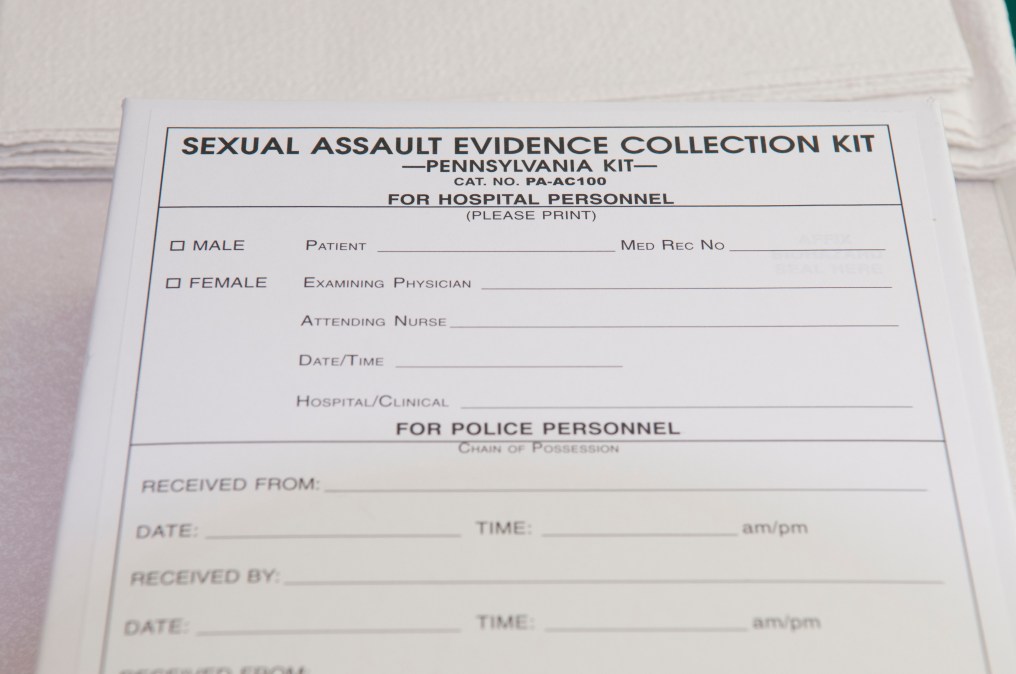
Pennsylvania is testing a new online tool that lets sexual assault survivors track the status of forensic evidence kits, giving them more visibility into the process while helping hospitals, law enforcement agencies and laboratories better keep tabs on evidence.
The Pennsylvania Commission on Crime and Delinquency began piloting Track-Kit in August, working with 12 local hospitals, 64 local law enforcement agencies, forensic nurses, and labs across Erie, Lancaster and York counties to streamline the sexual assault kit testing process. The state plans to expand the system statewide by the end of 2026, officials said in an interview with StateScoop.
“The idea is just to be able to track the kit throughout its life cycle,” Jamie Long, PCCD’s SAKI coordinator, said about the initiative.
The tracking system was established under 2024 legislation, following advocacy from the Pennsylvania Coalition to Advance Respect, the state’s sexual assault coalition, to launch an evidence-tracking system and build a more accountable process for survivors. In 2025, the commission secured a $2.5 million federal grant to support system design, implementation, and training through PCAR for hospitals, law enforcement agencies, forensic laboratories, and victim service professionals statewide.
Kathleen Buckley, director of PCCD’s Office of Victims’ Services, said Pennsylvania chose Track-Kit, a system already used by 17 other states, because it met the law’s requirements, including automated survivor notification.
“Track Kit is the only system that does the automated notifications, so that was really important,” Buckley explained. “It [also] needed to have a 24-hour helpline for those using the system — whether it’s law enforcement, medical labs, survivors to help out with accessing the system.”
In the immediate aftermath of a sexual assault, survivors often undergo a forensic examination to collect evidence of the assault, which can then be submitted to a crime lab for testing. A kit includes swabs for biological evidence, small sticks for fingernail scrapings, containers to store samples, and bags for collected clothing and physical evidence.
As part of the pilot, hospitals record when kits are collected and whether survivors consent to testing. Law enforcement agencies log the date and time when they pick up the kits from the hospitals and laboratories, while labs record when kits arrive and testing is complete.
Privacy protections are built into the platform. Survivors’ names and other personally identifiable information are not entered into the system. Each kit is associated with a barcode that survivors and participating organizations use to access its status.
“The system was built with that in mind,” Buckley said, describing the effort to keep survivor information confidential.
Long, which trained medical and law enforcement personnel on how to use the tool, said the system does not track criminal investigations or court proceedings. Instead it focuses strictly on the kit’s location and testing status. Survivors can opt in to notifications when their kit’s status changes, or check the portal when they choose. They can also decide not to use it. Either way, she said, logging onto the portal can help give survivors a greater sense of control after an experience that may leave them feeling powerless.
“It gives survivors autonomy in a situation where they otherwise might feel hopeless or helpless,” she said.
The new tracking system could also help state officials identify delays and improve accountability by showing how long kits remain at each stage.
Pennsylvania’s Sexual Assault Testing and Evidence Collection Act requires local law enforcement agencies to report the number of backlogged sexual assault kits in their inventory awaiting testing. Under the law, health care facilities must notify local law enforcement or the Pennsylvania State Police within 12 hours of collecting sexual assault evidence, and has 72 hours to secure possession of the evidence. Within 15 days of receiving consent from the survivor or advocate, the agency must submit the evidence to an approved laboratory, which has six months to complete testing.
According to a 2025 report by the Pennsylvania Department of Health, law enforcement agencies reported 233 backlogged sexual assault kits awaiting testing, down from over 3,000 total untested kits and 1,852 backlogged kits in 2015.
The state is also conducting a separate inventory of unsubmitted and partially-tested kits, an effort expected to continue into early 2028. Buckley said she expects Track-Kit to provide more detailed data on backlogs over time.
“I think it’s really been seen as a very positive and victim-centered type of system that makes people accountable [and] make sure the kit is moving through the process as intended and required by law,” she said. “We’re going to be able to provide much more data through Track-Kit about that as well in the future.”
Other states have taken similar steps to empower survivors and provide greater transparency after sexual assault. California launched an online sexual assault kit tracker in 2022 tied to its statewide evidence database. The National Association of State Chief Information Officers awarded Washington for its online tracking system in 2019.