New York City bets on blockchain, a technology most have discarded as useless
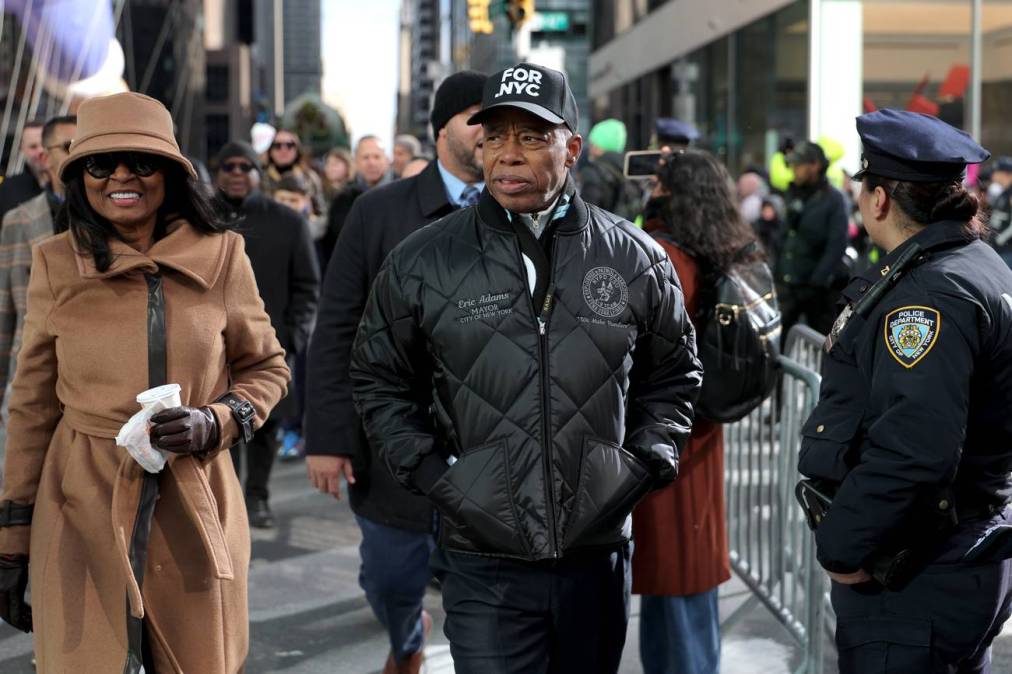
Eric Adams, who will be New York’s mayor for eight more days, on Friday unveiled the city’s new “blockchain plan,” a 61-page document intended to guide agencies as they investigate new uses of the distributed-ledger technology best known for undergirding cryptocurrencies like bitcoin.
The plan is designed to aid agencies as they “investigate potential opportunities and risks, build public literacy on emerging technologies, and establish mechanisms to track progress and coordinate citywide efforts,” according to a letter attached to the plan signed by city Chief Technology Officer Matthew Fraser. Purportedly developed over the last 18 months, the new plan is a continuation of Adams’ many years of policies, and stunts, aimed at stimulating the blockchain and cryptocurrency industries.
According to a press release, the plan also expands on an executive order Adams signed last October establishing an Office of Digital Assets and Blockchain Technology. The office is led by Moises Rendon, who for more than a year-and-a-half had served as a digital assets and blockchain policy adviser in the city’s Office of Technology and Innovation. (After repeated calls and emails over the last two months, the city’s technology office has not cleared Rendon for an interview, nor answered questions about the new blockchain office’s operations. When contacted for this article, a spokesperson from the technology office provided an excerpt from Fraser’s letter.)
The city’s plan notes that blockchain is a “fast-growing technology attracting intense global interest and development,” and points to the technology’s marriage with bitcoin and a recent rise in the number of new “digital assets.” The plan frames blockchain as an “emerging technology” that must be studied before the city can “chart a responsible path forward.” (A contact for Mayor-elect Zohran Mamdani didn’t immediately respond to an email asking whether the blockchain plan will continue under his administration.)
The plan outlines several new initiatives, including a pilot project led by the city’s Department of Environmental Protection that explores using blockchain to verify asbestos certification. No further details on the pilot are provided, except that the IT office will also “engage other interested agencies on potential applications such as digital credentials, permits and licenses, or broader data management efforts.”
There are plans for an interagency working group, a new “information hub” to advance public information and consumer safety, and technical guidance for agencies, centered on issues of “equity, privacy and data security, access, public benefit.” Not addressed in the plan is why the nation’s largest city is expending resources on a technology widely considered, outside of the crypto industry, to be of little utility.
More than four years ago, this publication published an article noting the rapid decline of blockchain, a technology buoyed by the success of cryptocurrency, but that never found widespread use in state or local government offices. This was despite many pilot projects around the country and repeated attempts by industry to breach the sector.
“Outside of crypto, tell me a use of it,” Ed Toner, Nebraska’s former chief information officer, said in 2021. “Tell me a widespread value-add that blockchain has ever delivered, ever. I challenge everybody.”
Many things have changed in the public sector over the last four years, but blockchain’s status isn’t among them. The technology’s primary role, as the technological backbone of the crypto industry, is occasionally punctuated by attempts to use it for other things before it once again fades from view.
Blockchain occasionally crops up in association with digital identity software being considered by state agencies, or is proposed as a way to register historic locations. The California Department of Motor Vehicles last year used blockchain to record 42 million vehicle titles, in hopes of reducing fraud and providing owners more autonomy when selling their vehicles.
In 2023, the Rhode Island Department of Commerce, led by Secretary Elizabeth Tanner, experimented with using blockchain to replace an outdated paper process for applying for business licenses. The department, which is no longer led by Tanner, did not respond to an email asking for an update on the success of that project.
Early iterations of mobile voting software used blockchain, only to be handily dismantled by security researchers. Joe Kiniry, a cryptographer who designed the technology behind the Mobile Voting Project, a new effort led by the political-strategist-turned-venture-capitalist Bradley Tusk, recently dismissed blockchain as “nonsense.”
Blockchain has been tried for many other uses, such as recording land deeds or streamlining disaster-response processes in the federal government, though the value added by blockchain has never been obvious. In 2022, more than 1,500 software engineers and other technologists signed a letter letting Congress know they’d had enough of blockchain technologies, which “facilitate few, if any, real-economy uses.”
“We dispute the claims made in recent years about the novelty and potential of blockchain technology,” the letter read. “Blockchain technology cannot, and will not, have transaction reversal or data privacy mechanisms because they are antithetical to its base design. Financial technologies that serve the public must always have mechanisms for fraud mitigation and allow a human-in-the-loop to reverse transactions; blockchain permits neither.”
Hilary Allen, a law professor at American University in Washington, D.C., said blockchain is a performative gimmick that won’t seem to go away, despite the clear message sent by the technology’s many detractors.
“People in the industry frankly had had enough of people saying, well, the blockchain can fix it,” Allen said of the 2022 industry letter. “And they’re like, no, blockchains suck.”
Blockchain’s conceit is largely the same as the cryptocurrencies that it enables: Centralized power, like that of banks, has led to levels of corruption, unfairness and institutional lethargy that do not serve the interests of the masses — but decentralized and transparent technologies can usher in a new paradigm in which people are empowered to transact on their own terms. But, Allen pointed out, blockchain has accomplished little in the crypto industry but to shift a modicum of power away from banks and into the hands of the people who run the crypto companies, many of whom are bankers and wealthy entrepreneurs.
“There are always concentrations of power,” Allen said. “You’re always trusting somebody. So why use this inefficient, clunky database when it doesn’t get rid of the intermediaries, it doesn’t get rid of the concentrations of power? So then, just use the simple database that’s quick and efficient.”