State, local governments can do more to safeguard LGBTQ+ data under Trump
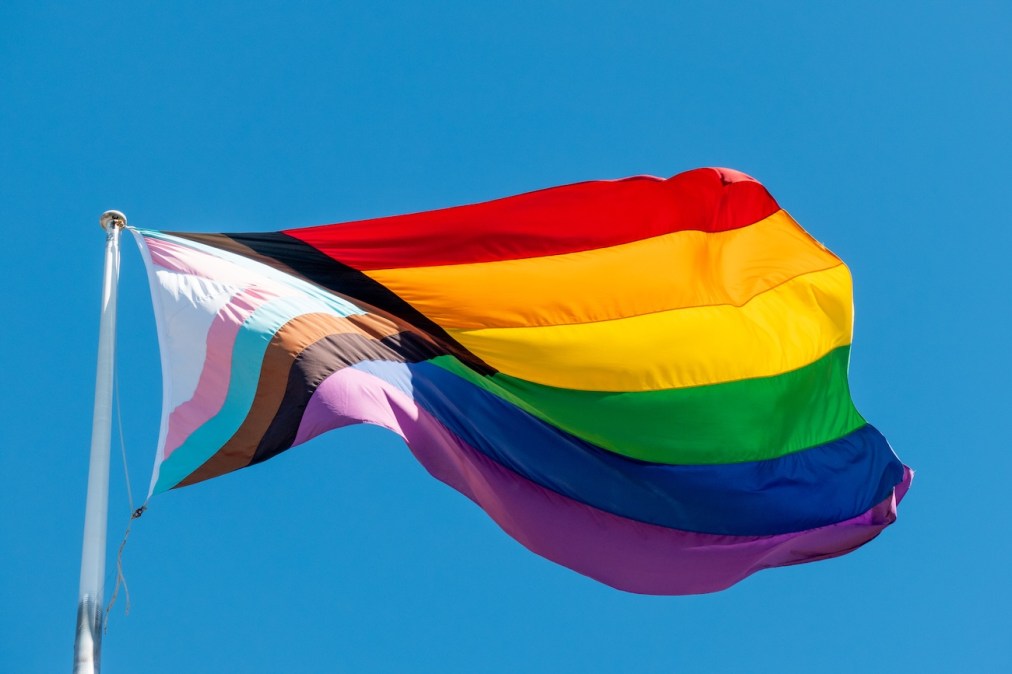
As the federal government removes LGBTQ+ data from federal surveys and seeks transgender medical information, a report published this month claims states can do more to safeguard data related to sexual orientation and gender identity, before it’s weaponized.
The report was authored by the Center for Democracy and Technology, a nonprofit advocacy group, the think tank Movement Advancement Project and Actionable Intelligence for Social Policy, a University of Pennsylvania initiative that aids state and local governments with their data systems. They argue that such data must be collected carefully, because while the collection of same sexual orientation and gender identity data, or SOGI, is necessary to document disparities and enforce civil rights, it can also expose LGBTQ+ people to risks, if misused.
The groups point to executive orders issued by President Donald Trump, and ensuing actions by federal agencies, that have created worries about whether SOGI data collected by states could be accessed, shared or repurposed in ways inconsistent with their original purposes. These risks include discrimination in housing, healthcare or employment; the surveillance and targeting of LGBTQ+ people in future policies; and harms from outing, such as familial or community rejection or harassment.
Some state legislatures, the report notes, have targeted LGBTQ+ protections, like in Kansas, where lawmakers recently weaponized data related to gender identity to invalidate the driver’s licenses and birth certificates of thousands of transgender residents. But the report also names ways states can better safeguard SOGI data, like committing to responsible data governance policies.
Though SOGI data helps agencies and policymakers make evidence-based decisions that improve service delivery and program design, only 11 states and the District of Columbia require that SOGI data is collected. The result is a patchwork of representation and protections around the data’s use.
“We need to recognize that SOGI data can be both incredibly valuable for advancing equity, but also potentially sensitive information that requires strong protections, and both realities need to be taken very seriously,” Caroline Medina, a senior adviser for data policy and strategy at the Movement Advancement Project, said during a webinar Thursday. “I think it’s also important to name what happens when LGBTQ folks are not represented in data systems. So, as we highlight in the report, invisibility and data is not a neutral decision. When SOGI data are missing from administrative records or surveys, governments lose the ability to see who is being served well. … So it really limits the capacity of government to design responsive and effective policy.”
The report suggests that states maintain or expand LGBTQ-inclusive surveys and administrative data systems so policymakers can identify better identify disparities, allocate resources and build better programs as federal data collection becomes more limited.
The authors also say governments should establish clear rules for when SOGI data can be collected, who can access it, how it can be used, how long it is retained and when it can be shared. Governments can also strengthen privacy and security protections, the report said, and adopt legislative and administrative safeguards. They should also communicate clearly to the public about why the data is being collected, and how it’s being used, and responsibly weigh collection with the risks it presents, the report continues.
Della Jenkins, executive director at the Actionable Intelligence for Social Policy, said during the webinar that to be responsible stewards of SOGI data, state and local government policymakers should be intentional — they could turn to a “four questions” framework when they’re evaluating the risks and benefits around SOGI data collection and sharing. The framework includes asking of SOGI data collection and use: is it legal, is it ethical, is it a good idea and who decides?
State and local governments can also learn from peers already doing this work. Priya Nair, executive director of the New York City Commission on Gender Equity, said during the webinar that, in 2023, New York passed a law requiring the collection of SOGI data wherever race, ethnicity or ancestry data was collected by state agencies.
But the reality of implementing that for agencies, and to do so safely, was a much more complex operation than just signing a bill into law. It required that hundreds of data systems be updated, Nair said.
“I remember one IT person, describing it as like a web of yarn, and you start pulling one piece of the string, and the whole thing comes undone,” Nair said. “In my mind, I’m like, Oh, we can just add a new field, right? It’s easy, you could do that overnight. But no, it is a lot more complicated in practice, and I think that’s where kind of the messiness, more in the weeds part comes, is after the law you have implementation.”
Nair added that New York’s SOGI data-collection law is flexible. It includes a caveat that SOGI data is collected “to the extent practicable,” taking into account that there may sometimes be legitimate barriers to collection, such as limited funding, technology constraints or privacy concerns. Some initially worried this clause would weaken accountability, but Nair said it has been beneficial, especially given recent federal changes.
New York’s law also requires state agencies to publicly report aggregated results, a provision designed to improve accountability.
“Of course, [the law] also requires a third component, which is that if state agencies are not able to comply, they also have to publish a report explaining why that is and how they’re going to come into compliance, what steps they’re taking,” Nair continued. “I think the law, like in New York, strikes a pretty good balance there between, again, like accountability, flexibility and understanding the importance of this this data collection.”