Arizona secretary of state expands AI chatbot ahead of midterm elections

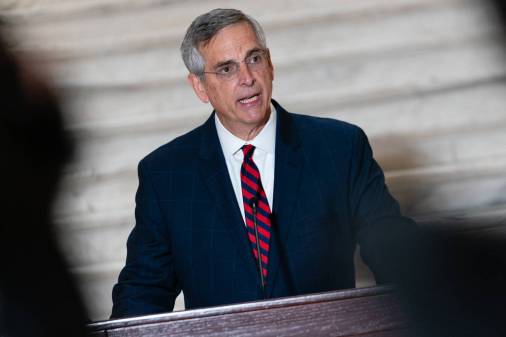
Adrian Fontes, Arizona’s secretary of state, on Wednesday announced his office updated its AI-powered chatbot ahead of the November midterm elections, adding “expanded knowledge,” more accurate responses and “an enhanced user experience.”
Unlike some government chatbots, BallotBot, as it’s called, does not allow users to ask questions or enter any text at all, but only to tap or click on pre-selected options. A press release explains that the tool is offered “to supplement, not replace, the assistance available from county election officials” and the secretary of state’s office. In the release, Fontes explains that the tool is offered so that voters can obtain information outside of normal business hours.
Users can ask about voter registration deadlines, vote-by-mail, ballot tracking and several other issues. If the user wants to ask about something else, tapping “Something else” provides a phone number and email address where a person might provide an answer. Artificial intelligence is not required for a tool that has such limited, prescribed options for input, and officials from the office did not respond to an email asking why the technology was used or which platform the chatbot employs.
The office’s remarks about the bot’s improved accuracy reflect the ongoing challenge state and local government agencies have faced in standing up AI-powered tools. Generative AI technologies are famously known for confabulating in their responses, and some officials have faced scrutiny for backing chatbots that have provided misleading information. Former New York Mayor Eric Adams was lambasted by the press for his backing of a generative-AI chatbot that gave wrong or misleading answers on numerous issues, issues critics claimed were potentially harmful. (The mayor’s response was to double down on the project, explaining at one briefing that “you can’t stay in a lab forever.”)
Chatbots, like the one promoted this week by Fontes’ office, are often offered for reasons of accessibility and convenience, but they have at times misfired on those fronts. A 2024 report published by the nonprofit advocacy group Center for Democracy and Technology found that many chatbots frequently provided inaccurate information when queried about rules for voting with disabilities. Researchers found that some factual errors could interfere with the ability of users to vote. They also worried that the dissemination of inconsistent or misleading information could erode the public’s confidence in elections.