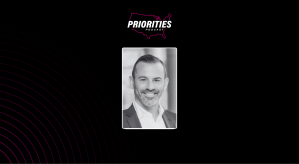
Oregon’s new privacy chief says it’s ‘Groundhog Day’ after time in Nevada

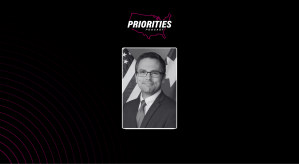
Michael Hanna-Butros Meyering, who was appointed last month as Oregon’s chief privacy and communications officer, said that after nearly a month on the job, he’s already seeing familiar technology challenges — a “Groundhog Day” repeat of his time in Nevada.
Hanna-Butros Meyering joined Oregon’s state government in July after serving as Nevada’s communications and policy lead for three years. He takes over the privacy responsibilities from Nik Blosser, who was selected last August to serve as Oregon’s first dual chief privacy officer and artificial intelligence strategist, but is now serving as the state’s first dedicated chief AI officer.
Though Hanna-Butros Meyering is working closely with Blosser at the intersections of AI, data governance and technology, he said separating the roles will allow him to be more oriented towards the “technical layer of privacy,” which he described as tackling how privacy is impacted when technology interacts with constituent data. Comparing the problems both Nevada and Oregon have faced in these areas, Hanna-Butros Meyering said he’s already found a number of similarities.
“The problems that we were trying to navigate through in Nevada … my funny joke is I feel like I’m living in déjà vu. … I was like, Oh man, it’s like Groundhog Day all over again, because we’re dealing with the same type of problems here that Nevada was dealing with, and there’s problems that like they’ve already solved here in Oregon that Nevada was dealing with,” he said.
One challenge is a fragmented understanding of which problems exist across agencies. Though many agencies have similar problems that they’d like Enterprise Information Services, the state’s tech office, to help with, he said some agencies don’t realize that many AI questions are actually privacy questions.
To find solutions and identify the common ground among agencies and their challenges, he said he views his position as a “glorified arranger of people,” which means convening experts and leaders to align privacy expectations across executive branch agencies with consistent policies and language.
Hanna-Butros Meyering anticipated establishing a more formal privacy program in partnership with the state’s legislature. Unlike other states, Hanna-Butros Meyering said Oregon’s privacy program is informal and heavily governance‑focused, rather than a fully codified, statutory program. As Oregon is “loosely federated,” a big part of his role will be observing how the program works.
“What I’m trying to kind of sit back and like really observe is understanding where guidance is given and where in the statutory authority is maybe a gap. I’m also really trying to understand how each agency is approaching privacy,” he said. “If I had like a diagram to show, there’s like two circles, and then there’s the middle of which I’ll label privacy, where one circle is AI — that’s a really high focal point for a lot of entities. And then [the other is] data, and the two work hand in hand, right? You can’t have AI governance without good data governance, right? And then in the middle is how the technology layer comes over and encompasses privacy in a sense. So I’m kind of wedged in the middle of this.”
Two other key tenets of privacy Hanna-Butros Meyering noted are risk and trust. He views both as tightly linked, because how governments earn trust is not just through transparency, but by doing the hard, unseen work of preparing for when things go wrong. He pointed to the ransomware attack that Nevada suffered in August 2025, which disrupted services for weeks. The disruption was partially owed to Nevada’s Governor’s Technology Office needing to isolate affected systems to contain the intrusion, including the state’s Department of Motor Vehicles, which had to cancel licensing and renewal appointments.
“We were trying to like be proactive, we were trying to make sure to minimize the damage. … I know it’s an inconvenience, but we still need to think of the greater good. Can you imagine if all the information you had went to some foreign or negative entity? You’re gonna feel that negative impact,” he said. “We had to really safeguard that information, and by all means, even though it will cause a lot of inconveniences, it might cause a lot of like ruffling. But at the end of the day, DMV services were restored. … But at the end of the day, 28 days later, all services were rendered, we came out stronger, and that’s where it really hit me. The responsibility isn’t just transparency; it’s being proactive, really understanding what risk comes with holding that data.”
The experience, along with his move to Oregon, underscored the value of states learning from one another. Facing many of the same technology and data challenges, Hanna-Butros Meyering said he plans to draw on the lessons and knowledge of his peers.
“I think the best part about now working from one state, the of Nevada, to now the state of Oregon, it really is eye opening and humbling to under to really understand that you’re not on an island in your state,” he said. “I’m like, oh man, these conferences like [the National Association of State Chief Information Officers] where these other state CIOs are talking, they’re all talking about the same problems, and at some point, one might have already solved it, and really learning and leaning into those lessons learned is really how this community of public servants, especially in technology, really come together and figure out what those problems are and solving it together.”