Limiting construction noise, detecting potholes priorities for rising NYC transit tech startups
It’s that time of year again, when New York City transit agencies once again turn to startups and emerging technologies to tackle some of the metropolis’ biggest transportation challenges, like potholes, aging subway trains and construction noise, through the eighth annual competition led by the Transit Tech Lab, a business accelerator for startup and growth-stage transportation technology companies.
A common theme across this year’s cohort is using artificial intelligence, cameras and motion sensors to address infrastructure monitoring, bridge safety, construction management and operational resilience, areas that transit leaders say are increasingly critical as aging infrastructure and climate threats strain systems across the region. Eighteen companies focused on data modernization and improving infrastructure.
“This NYC DOT is going to be aggressively delivering on our Vision Zero goals, with ambitious, bold projects to make our streets safer. Doubling down on this work will require looking at every opportunity to become a more efficient and organized agency,” Mike Flynn, commissioner of New York City’s Transportation Department, said in a press release in January, when the competition began.
Cyvl, a Boston-based startup, will mount cameras and sensors on vehicles driving throughout the metro area, like street sweepers or garbage trucks, to automatically detect potholes and other pavement problems, in an effort to replace manual inspections with searchable map of infrastructure conditions. The city’s Department of Transportation, which has repaired more than 80,000 potholes this year so far, aims to address 311 road complaints within two days.
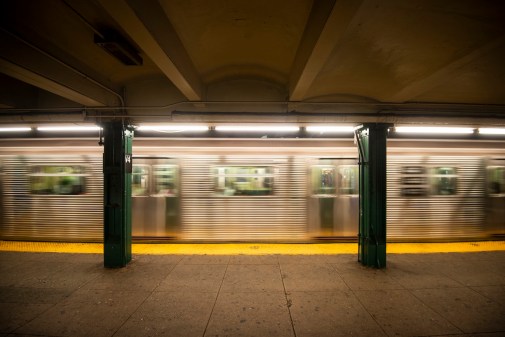
To tackle some of the city’s transportation problems below ground, Ontra Mobility, a transit planning platform based in New York City, will use AI to analyze subway ridership and operations data to predict travel demand, recommend service design changes and keep trains running on time — an issue that plagues the region.
A 2025 report by the state comptroller’s office found that roughly 82%, or 486,614 of New York City’s 2.7 million trains, ran on time. Nearly half of the year’s train delays were caused by infrastructure and equipment problems, according to the report. The startup Delphisonic, based in Wayne, New Jersey, will work with the Port Authority of New York and New Jersey to install onboard AI-powered vibration and temperature sensors on railcars, to detect mechanical issues and help prevent in-service failures.
“It’s important to understand where and how subway service is being disrupted and delayed,” State Comptroller Thomas DiNapoli said in a statement about the report. “Targeting problem areas like signals and issues with subway cars that add to delays can improve straphangers experience and boost ridership.”
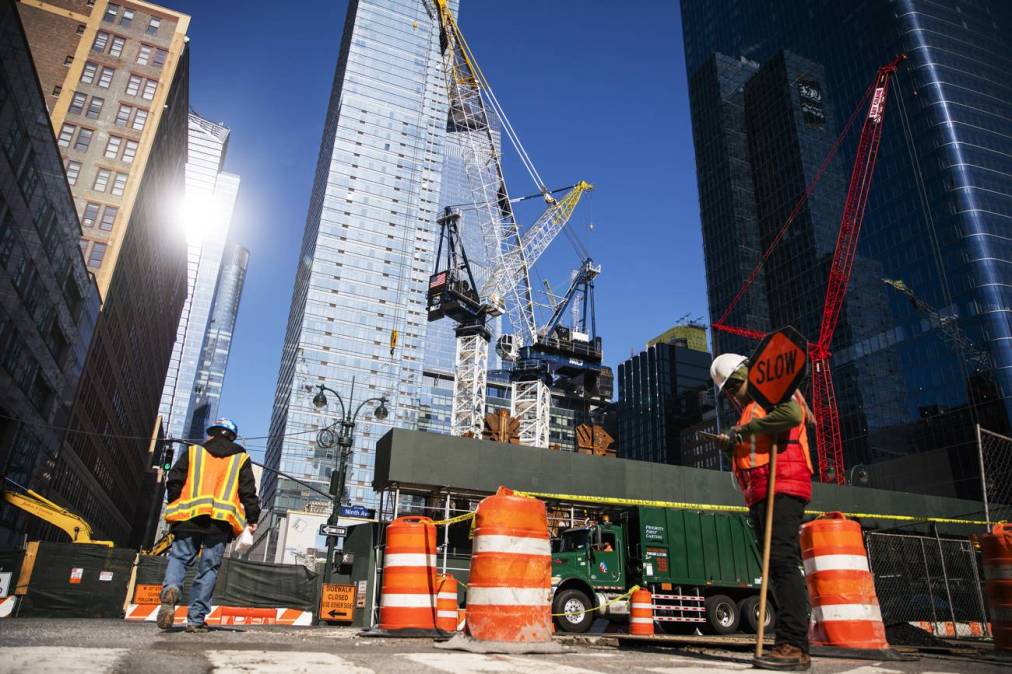
But all this maintenance work can often lead to noise complaints. Last year, DiNapoli launched the NYC311 Monitoring Tool, an interactive dashboard that lets residents view service requests in their neighborhood to help identify where more resources may be needed. Due to the high volume of noise complaints, the city now requires continuous 24/7 noise monitoring at new construction sites near residential areas that operate after hours. In the city, maintenance noise is restricted to weekdays, from 7 a.m. to 6 p.m.
Viatec, a startup out of Piedmont, California, will work with the Metropolitan Transit Authority and the New York City Transit Authority to outfit work trucks with modular battery systems to eliminate engine idling at job sites to help reduce cutting emissions construction noise.
“New Yorkers are increasingly contacting 311 to report lack of heat and hot water, excessive street noise and illegally parked cars,” DiNapoli said in a statement about the rise in noise complaints to city’s 311 system. “Being able to see where complaints are heaviest by type and location should make it easier for advocates, agency officials and policymakers to identify neighborhoods that need help or where resources should be focused.”
Since its launch in 2018, the Transit Tech Lab has reviewed more than 1,000 applications and tested more than 80 technologies that led to 16 commercial procurements.
The Transit Tech Lab’s initiative, backed by the Metropolitan Transportation Authority and the Partnership Fund for New York City, pairs public agencies with private-sector technology firms for short-term proof-of-concept deployments aimed at modernizing transit operations. Past participants have introduced tools that improved bus route planning, reduced fuel use and made transit systems more accessible to riders with disabilities.