Maryland’s ‘Single View’ platform is informing smarter broadband investments
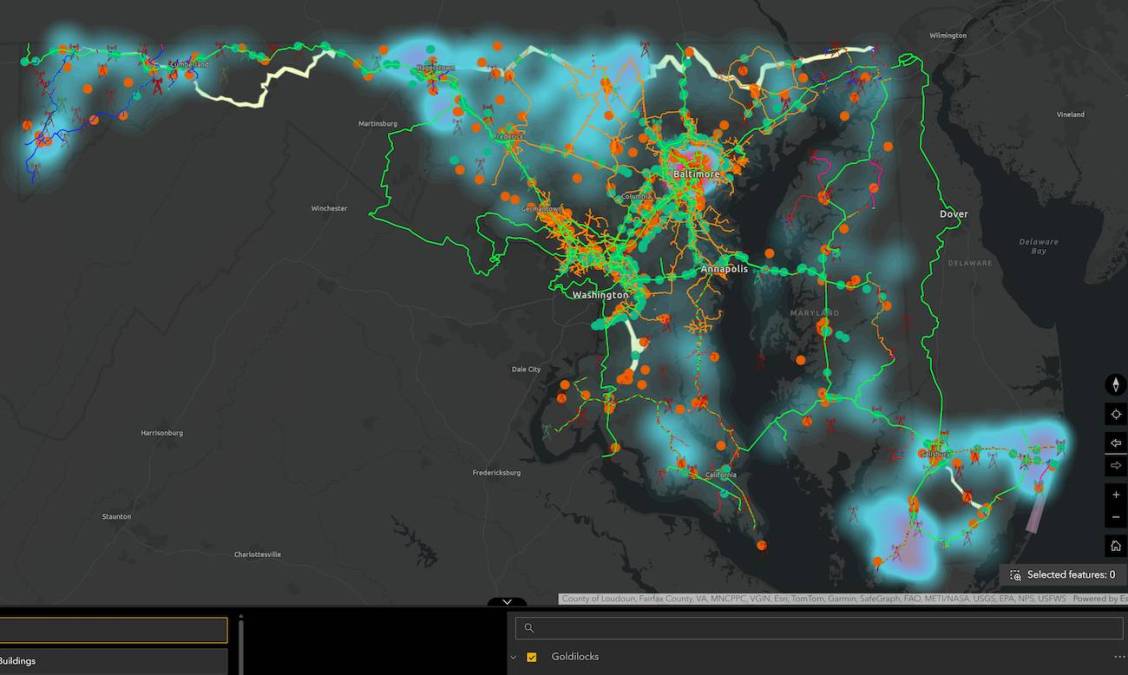
As questions swirl about what states will be able to do with nondeployment funds left over from the Broadband Equity, Access, and Deployment program, Maryland stands ready to make smarter broadband investments thanks to its “Single View” platform, mapping software that helps officials spot internet coverage gaps.
Single View was created for use by Maryland’s Digital Infrastructure Group, or DIG, a cohort of representatives from 11 agencies, charged by a January 2025 executive order with planning and implementing the state’s broadband infrastructure. It maps state-owned fiber, towers, buildings and real estate, allowing the group see who is being served with internet in each building. It also shows which sites are connected to networkMaryland, the state-owned fiber backbone, operated by the technology department, that supports the state’s intranet and that can lease capacity to private internet service providers.
Eric Bathras, Maryland’s chief technology officer of infrastructure and leader of DIG, said the platform has been running since November. Since then, the agencies, which include the state Department of Transportation and Department of Housing and Community Development, have added their internet infrastructure data.
Single View lets agencies enter and combine information, such as lease expiration dates, property managers and emergency management communication platforms, in one location, which Bathras said allows agencies to consolidate their data in a way that wasn’t previously possible.
He said the goal of Single View is to help the state shift away “one agency, one mission,” in which each agency has one task or role in the process of broadband expansion. Instead, the consolidated tool enables the “Goldilocks approach,” a “just right” strategy Bathras explained as expanding broadband infrastructure in a way that serves multiple needs simultaneously, maximizing the value of each investment by ensuring it benefits multiple sectors.
To satisfy this approach, he said, the investment in broadband expansion must benefit four key pillars: transportation (many state roadways in the state house fiber); state-owned “vertical assets,” like wireless towers; community anchor institutions such as libraries and municipal buildings; and “community needs,” like homes and businesses. The platform includes a filter that highlights locations that fit each need.
Bathras said documenting assets, including fiber, tower and building information, is imperative for speeding up internet-service delivery, and can sometimes cut down time to get new offices or personnel online from months to just days or weeks, when moving agencies or adding services.
The tool also allows the state to manage its towers, and maximize revenue received from them. Bathras said the state has a program that allows it to share access to its towers with private internet service providers. There are a total of 41 shared agreements, which Bathras said generate about $2 million in revenue annually.
But, the state could be making more if it’s “proactive,” he said.
“Rather than being reactive and waiting for the private market to come to us, we can go to them and say, Hey, we want to focus on this, here’s these 50 towers that are the appropriate loaded capacity, meaning we can get them on very quickly with very little work. Do you have interest to get on there?” Bathras said. “And the faster we can get to that, the faster we can generate revenue off of the RSA and and be able to bring revenue into the state.”
The data also allows the state to identify where secondary fiber routes and middle‑mile builds might be necessary, such as those that that add resiliency, increase fiber bandwidth or support additional builds in rural areas.
And because the data in Single View has already been vetted by agencies for quality and consistency, Bathras said, he’s aiming to incorporate artificial intelligence into the tool to automatically generate project lists that are ranked by priority.
He said AI will be able to ingest the data from Single View and generate project lists that each hit a “Goldilocks” pillar, and include information such as the estimated costs of each project and the projected cost recovery if it’s a shared resource, like a tower or fiber network that can be leased.
Bathras is also thinking about how the platform’s data will enable the state to find places where more bandwidth is needed as more people use AI and more infrastructure — like data centers — are being built to meet demand for the tech.
“What we’re looking at here, especially in these needed areas, we want to make sure all the different parts of the communities of Maryland have access to that AI infrastructure. So, allowing AI, let’s call it preparation for AI,” he said. “It’s not just a land preparation, it’s not just a power preparation. It’s also making sure there’s ample infrastructure, fiber infrastructure, that’s out there in preparation the public sector, the private sector side — they’ll have their connections into these AI data centers and will be in a position to utilize AI tools or make available to the citizens some of these tools through the state’s public infrastructure.”
This combined data and the platform’s eventual AI capabilities also stand to provide the state with the needed evidence to pursue any new federal grants. Specifically, it allows them to map how projects meet Bathras’ “Goldilocks approach” and predict their return on investment. Bathras hoped that as the National Telecommunications and Information Administration continues to consider how to let states spend their nondeployment BEAD funds, the leftover funding states were awarded for things like digital skills training — that the federal agency will look at the work that Maryland’s doing.
“For the NTIA, and in terms of what to do with those funds, you look at projects and initiatives like this, right — like this is how the federal government can be in a position to say, Wow, okay, for every dollar we invest, we know it’s taking care of this, this broad range of public need without question, right? It’s going to serve the public and the private sector,” he continued. “The NTIA is in a position to kind of broaden out the requirements of BEAD. Whereas BEAD is very much last mile, I would really like to see middle mile also be expressed in any revisions to the [program] requirements.”