Digital accessibility working group encourages states to ‘keep it simple’ on policy

With less than three months before a federal deadline requiring states and large localities to adopt accessibility standards across their websites and other digital properties, the National Association of State Chief Information Officers on Tuesday published a report containing advice informed by a year of study by one of its working groups.
The report encourages states to “secure leadership buy-in,” craft simple policies, inculcate a sense of “shared responsibility” across their agencies, include digital accessibility early in governance, planning, procurement and training, and to stay flexible as organizations and federal directives inevitably change.
The advice arrives ahead of an April 24 deadline set by the Department of Justice that many states are expected to at least partially miss, despite months of technology and accessibility bureaus scrambling to reformat PDFs, revise poorly conceived color schemes and revisit their policies for acquiring new technologies. State technology leaders are well aware of the deadline, according to NASCIO’s most recent survey of its membership, in which accessibility climbed to the sixth most important priority, behind perennial concerns like cybersecurity, modernization and digital services. (AI this year topped NASCIO’s list for the first time.)
In addition to its checklist of pointers, NASCIO’s 20-page accessibility report passes along success stories from leading states and warns of common pitfalls, such as technology vendors that might not accurately disclose how their products do or don’t conform to accessibility standards. Reports derived from “voluntary product accessibility templates,” or VPATs, can provide government officials an idea of where products succeed or fail along various dimensions, but there is apparently an art to interpreting such reports — NASCIO’s publication warns that agencies “should be wary of vague and/or AI-generated responses.”
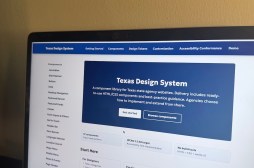
Marie Cohan, Texas’ statewide digital accessibility coordinator, said in an interview that unlike cybersecurity standards, for instance, accessibility standards don’t follow a standardized and objective scoring scale. Vendors can self-report their “conformance levels,” such as “supported” or “not supported” or “partially supported,” to various accessibility features, like a product’s inclusion of alternative text for images, and provide comments with additional information, but mapping that information onto governments’ needs is not always so simple.
“It’s difficult to grade something like that, so when it comes to vendor documentation, we’re really relying on vendors,” said Cohan, who co-chaired NASCIO’s accessibility group. “They have the burden of accessibility in their products, government has the burden of compliance.”
Cohan said matters are further complicated by the fuzziness of disabilities themselves: Some people have more than one, and each disability lies on a continuum. Government, meanwhile, must ensure its services are available to everyone.
NASCIO’s report highlights several red flags agencies can detect when reviewing vendors’ assessments of their products, including any report that shows a product as fully supporting the accessibility standard, but does not include any qualifying comments. The working group suggested such a report “could indicate the VPAT was created by a sales team.” Cohan said vendors can build credibility with governments by being forthright about their products’ performance: “If they just fill in that report with general product knowledge or their best guess or whatever, it’s very hard for government to have faith in that product’s accessibility.”
For governments that miss the April deadline, and for smaller governments, which have until April 2027 to meet a second deadline, accessibility may only grow as a priority. According to a Centers for Disease Control and Prevention health survey called the Behavioral Risk Factor Surveillance System, 29% of Americans have at least one disability, including 14% who have a cognitive disability.
Historical data from the Social Security Administration reveals social and health landscapes that have transformed in recent decades. Disabilities caused by heart disease and stroke were once the most common category, now dethroned by back pain, mental illnesses and developmental disabilities. Diagnoses of attention deficit hyperactivity disorder, in particular, have become startlingly common.
Cohan said recent events in her home state, including the winter storms and last summer’s deadly floods, illuminate why accessibility work is essential: “People who have disabilities are typically the last to find out or they’re stranded or trapped or they don’t have power and they need a machine that needs power to operate to help them live or to administer medication or to communicate with the outside world.” Accessible government services and effective communications, she said, help keep people safe.
But beyond DOJ mandates and ethical obligations, there may even be a financial motive for governments to serve their disabled populations, which typically face relatively high unemployment rates. “A lot of what I’m seeing is people with disabilities start their own business,” Cohan said, pointing out that businesses must, of course, pay sales tax and possibly franchise or unemployment taxes, all revenue for the state. Making forms accessible, for permits, applications and taxes, could therefore be indirectly profitable.
Cohan also pointed out that, eventually, everyone who lives long enough will accumulate disabilities — to hearing, sight and mobility — and that some of technology’s most convenient features, like the smartphone’s pinch-zoom feature or voice commands, started with disabled users in mind.
“This is why it matters, to think of all the population and not just the majority of the population,” she said. “When you design for people with accessibility, when you design with that in mind, you’re actually helping the rest of the population.”