Inside Tennessee’s deployment of ChatGPT Enterprise
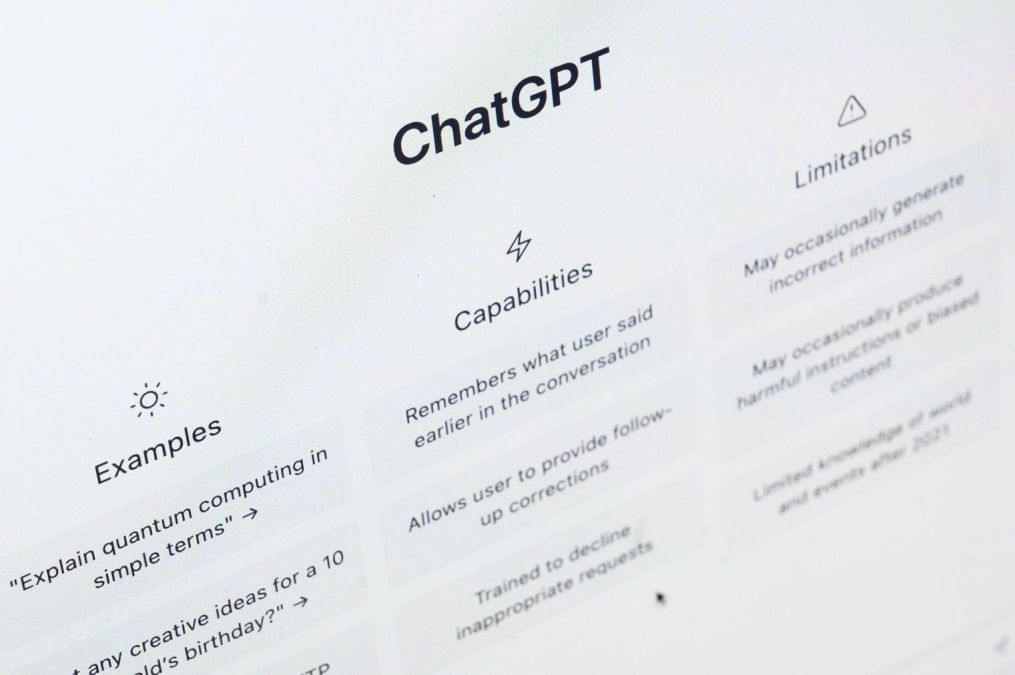
Under a new chief information officer, Tennessee has moved beyond experimenting with ChatGPT Enterprise and is now deploying the technology into day-to-day operations — 1,000 state government employees are licensed to use the generative AI tool from OpenAI, with another 2,000 licenses ready to be deployed.
State Chief Information Officer Kristin Darby officially took over from Stephanie Dedmon, the state’s CIO since 2018, last July. But Darby started in the role almost exactly a year ago, last March, and worked alongside Dedmon for a transitional period of a few months. Over the course of this past year, the Volunteer State’s new top tech official said her office, the states’ Strategic Technology Solutions, has made “tremendous progress” in carving out an AI governance framework, which she said is the foundation to expanding the state’s use of technology.
And now, many staff are reporting that ChatGPT is helping them to save nearly a week’s worth of work each month.
Starting with governance, not tech
Darby said the state’s AI push is part of a broader strategy to reposition STS as a “strategic partner” to agencies, while also improving services for residents. This effort, she said, includes a formal AI strategy, a workforce initiative called Focus Forward aimed at upskilling both IT staff and the broader state workforce, and a cultural push to emphasize performance and value.
“It always starts with governance, not technology, and so I think that’s important for any type of technology, but for especially for an area of emerging use,” she said. “And the question across Tennessee that we’re really trying to instill in all of our employees is not, Can we use AI? We have progressed far past that. The questions we’re educating everyone in the workforce to ask is, Should we use AI for this purpose? And I think that goes for any technology, right? Is technology really appropriate to be applied to the opportunity or the problem you’re trying to solve? And under what controls should I use it?”
Key voices in building out the state’s AI governance framework, Darby said, have come from state’s Artificial Intelligence Advisory Council, which Gov. Bill Lee established in 2024. Darby now co-chairs the council, along with Jim Bryson, commissioner of the state Department of Finance and Administration. The council also includes state lawmakers, the state’s attorney general and business and university leaders.
With initial guardrails and intentions set, the state kicked off a 60-day phased pilot of ChatGPT Enterprise in spring 2025, purchasing 1,000 ChatGPT licenses and rolling them out to a small group of employees who were provided with usage guidelines, trainings and educational materials from OpenAI. The employees were provided with learning sessions focused on practical use cases and all aspects of the experience were monitored via feedback surveys. The pilot concluded with an evaluation to determine how best to adopt the tech at scale, and to gauge employee satisfaction and value.
Darby said the state encouraged employees to first use ChatGPT for everyday, personal-life tasks as an on‑ramp to work use, and noted that the training sessions start with simple, non-work scenarios: “We’ll have people use ChatGPT to figure out what they’re going to cook for dinner. Pull a recipe, right? … Some of our training classes are first, how do you understand in your real life how this can be an efficiency accelerator? Maybe it’s planning out the driving schedule for your family or, you know, fun things to do with your dog over the weekend — great hikes, right? How can I get there, I’ve got four hours, what’s the best thing? … Through the education around simple things that maybe don’t apply to your job, we find afterwards, they start thinking about like, Oh, maybe I could use it for this, right? You start connecting the dots, and then they get more interested in going through the other education.”
‘We don’t want to use AI just to use AI’
Based on employee feedback, the state’s enterprise-wide roll-out started shortly after the conclusion of the pilot last summer. Priority access was given to those with roles in shared services or communications — human resources, operations, executive support, research or IT — that would see immediate benefit from ChatGPT’s ability to assist with drafting, summarizing and performing analyses on “non-sensitive content.”
Employees across a wide range of roles are using ChatGPT, with Darby saying adoption has been strongest among IT professionals, policy and administrative staff, legal and compliance teams, data analysts and customer service personnel. Technical teams use it for coding and automation, while legal, policy and administrative staff rely on it for drafting, summarizing, research and documentation. Voice features are also widely used for transcription and case notes, the state said. Officials also monitor employees usage of their ChatGPT license, and if they notice and employee really isn’t using it, they will proactively reallocate licenses to another state employee that wants to try it.
Alongside the AI council, the state has an AI steering committee, which converts use cases uncovered during pilot projects into formal policies. It also ensures all uses of AI come with “measurable outcomes,” like usage analytics, task-based time savings estimates and workflow improvements, such as faster document drafting, reduced administrative burden and increased automation of repetitive tasks.
During the recent pilot, participating employees reported saving an average of roughly 2.5 hours per week. But active users are now estimated to be saving between 1.5 and 2.5 hours per day, or 30 to 50 hours saved per month, the equivalent of nearly one full workweek saved every month.
But officials in Pennsylvania said they’re also evaluating AI’s value based on how it improves services for residents. Darby said the state is taking a “consumer-centric” approach, aiming to make interactions with government feel more seamless and responsive — similar to those offered by large companies — even though the state’s services are delivered by many separate agencies.
“We don’t want to use AI just to use AI,” Darby said. “There’s lots of push and pressure out there, and every product is becoming AI enabled. We’re wanting to make sure not only that clear purpose is brought in, but that we have clear, defined outcomes as to why we would use it, and we have mechanisms for measuring it: so, time saved, cost avoidance, maybe it’s fraud detection that’s been in the news a lot, service delivery, speed, customer satisfaction.
“All of those mechanisms get built in before we say go, and that way, as these projects start to scale, we’ll start to have discrete data to be able to show value and understand, Do we stop? Do we continue? And so that’s part of our methodology, but also that we need to not be afraid to experiment, but we need to have clear guardrails so we know when to stop if value isn’t being derived, and then we pivot.”
March 4, 2026: This story was updated to reflect that the state has 1,000 ChatGPT licenses, plus another 2,000 on the way — not a total of more than 5,000, as originally reported.