San Jose, California, reports success with AI-powered streets pilot projects
Officials in San Jose, California, this week released results from the second phase of a AI-powered object detection pilot, which uses computer vision to identify street hazards like potholes, illegal dumping and debris. According to the city, the artificial intelligence system flagged nearly 70% of issues before they were reported by residents, helping road crews respond more proactively.
“It does transfer the responsibility of reporting from the residents to the city itself. Because we have city vehicles that drive almost every street, we shouldn’t be so reliant on the community to make these reports,” Stephen Caines, the city’s chief innovation officer, said in an interview. “Once we fully integrate this into the system, I think it would be great to see over time if we actually see a reduction in manual 311 reports.”
The system also detected 50% more street hazards, other than potholes, than residents reported, such as garbage piles, vegetation and mattresses.
“It really enables us to identify issues before they become worse,” Caines explained.
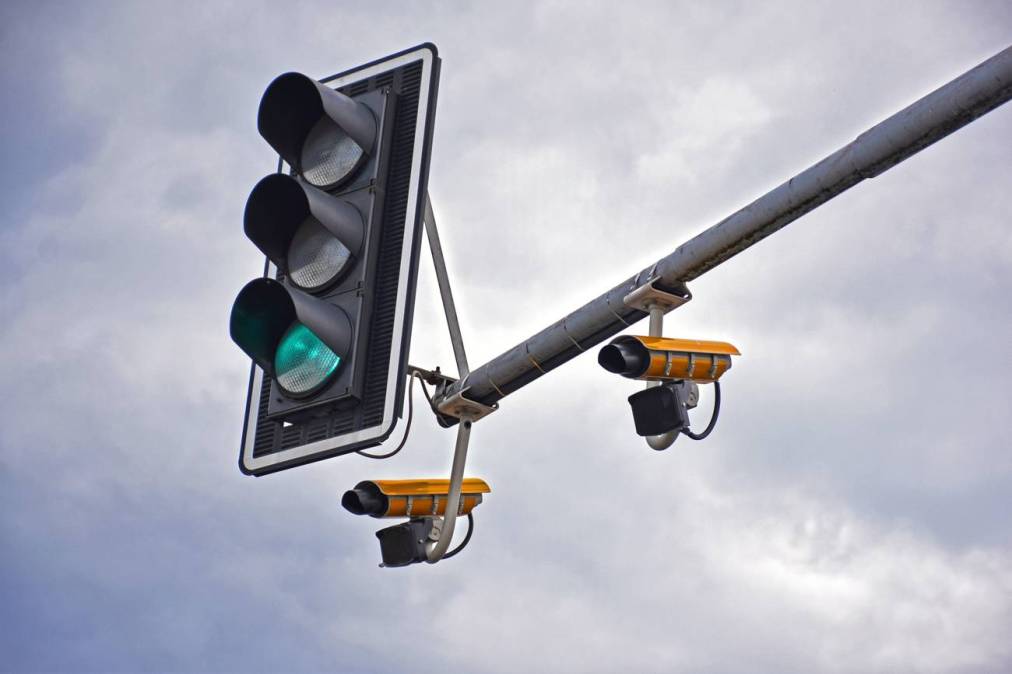
The results come alongside another major AI milestone for San Jose: a citywide rollout of AI-powered transit signal prioritization that has increased bus speeds by 20%, by analyzing real-time traffic conditions to give buses more green lights.
“If you want to know how well a city’s government is working, look at the basics — how buses run, how parks are taken care of, how fast potholes are filled,” said San Jose Mayor Matt Mahan said in a press release.
The city tested the technology first in 2023, on two routes, where it helped cut red-light wait times by 50% and helped buses stay on schedule. Caines said those benchmarks paved the way for deployment across all bus routes.
“Being able to advance transportation gains is something that touches almost every San Jose resident,” Caines said.
Since 2018, first responder vehicles in San Jose, like fire trucks, ambulances and police cars, have used a similar prioritization system, called emergency vehicle preemption, which creates a string of green lights so they can reach their destination faster. The system uses GPS and cellular networks to track vehicles and anticipate their arrival at intersections, then sends a request to the traffic signal controller to switch the light to green.
Caines said that the city also hopes to see the traffic-signal prioritization pilot adopted by school buses across the county, to help make their routes more efficient, but that making that happen is beyond the city’s purview.
Caines also noted that the street hazard detection pilot, which is supported by a grant from the Toyota Mobility Foundation, the company’s nonprofit arm focused on transportation technology, and the traffic signal pilot, made possible through a partnership with the traffic technology software provider LYT and the Valley Transportation Authority, is a lesson in how local governments can fund city-improvement projects, even with limited budgets.
“What makes this story unique is that we did this by combining five different grants, and 90% of the funding came from the state or federal government,” Caines said. “These were affordable investments that were modular, scalable and able to be rapidly deployed.”
The projects also reflect San Jose’s broader strategy to use AI to improve city services and government operations, including its AI training program for city staff and streamlined housing permitting with automation, which both launched last year.