Resource-sharing agreement expands Maryland’s middle-mile network
Maryland Gov. Wes Moore and the state’s Board of Public Works on Wednesday announced a new resource-sharing agreement to expand the state’s middle-mile fiber network — an extension valued at $3.5 million, but that will only cost the state a fraction of that amount.
An agreement between the Maryland Department of Information Technology and the Maryland Broadband Cooperative follows an initial investment from the state of $250,000. The spending will grant the state access to about 26 miles of fiber optic cable along rural and underserved areas in Allegany and Garrett counties in the western part of the state, expanding the state’s middle-mile network with the addition 17 state-owned towers and 15 Maryland Department of Transportation intelligent transportation system devices. The expansion is expected to deliver services to 473 additional unserved or underserved homes and businesses, and 48 community anchor institutions.
“Since Day One, our administration has been committed to expanding access to high-speed internet to all Marylanders, because connectivity is not a luxury—it is a necessity,” Moore said in a news release. “This new agreement is a direct investment in the future of Western Maryland, ensuring our families, students, and businesses in Allegany and Garrett counties have the robust, high-speed internet access they need to thrive.”
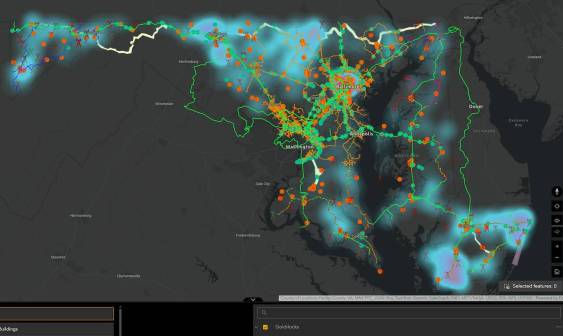
The expansion follows work from DoIT’s Digital Infrastructure Group, led by Eric Bathras, Maryland’s chief technology officer of infrastructure, to better plan through the establishment of its “Single View” platform, mapping software that helps officials spot internet coverage gaps. The tool has helped the state identify opportunities for new resource sharing agreements that allow private companies and the state to share fiber optic infrastructure, like towers, rights of way, rooftops or bridges, in exchange for monetary compensation or in-kind exchange.
Such agreements can save time and taxpayer dollars by reducing the need to build new fiber optic infrastructure. According to Maryland officials, the state technology department’s Statewide Resource Sharing Agreement program saves the state approximately $50 million annually.
“Marylanders must be able to get online to access the State’s digital services,” Maryland Chief Information Officer Katie Savage said in the release. “Through this creative resource-sharing agreement, we are showing how the State can reduce investment costs for internet service providers while saving taxpayer dollars. With a little planning and partnership, we can reduce costs, eliminate inefficiencies, and bridge the digital divide across our state.”