New York attorney general creates unit to oversee AI safety and enforcement
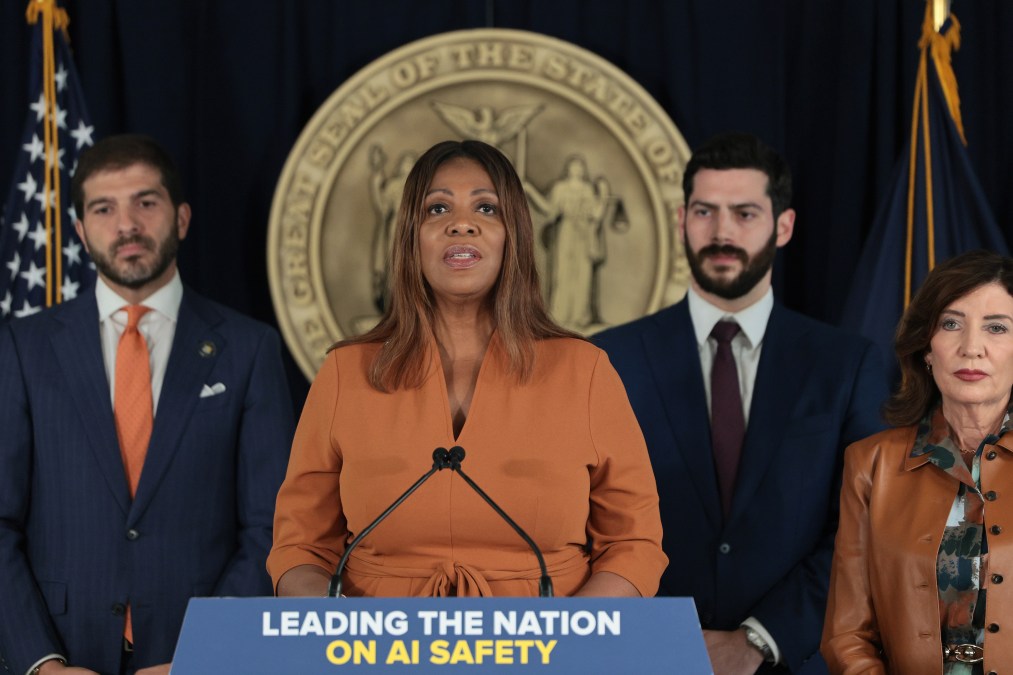
New York Attorney General Letitia James is creating a dedicated unit to oversee artificial intelligence safety and enforce state laws regulating the technology, adding another layer of oversight as the state works to curb AI-related risks.
The AI Safety, Standards, Enforcement and Transparency Unit (ASSET), announced Tuesday, will operate within the New York Attorney General’s Office and focus on consumer privacy, cybersecurity, digital scams and online safety.
The unit will lead enforcement of New York’s Responsible AI Safety Education Act, known as the RAISE Act, which takes effect Jan. 1. The law requires developers of certain advanced AI models to publicly disclose their safety practices and promptly report serious safety and security concerns.
The office will also develop new policy proposals and provide technical expertise to support investigations across the attorney general’s office. Cristy Phillips, formerly special counsel for the office’s Economic Justice Division, will lead the new unit.
“Promising new technologies like artificial intelligence should never come at the expense of New Yorkers’ safety and privacy,” James said in the announcement. “Our ASSET Unit will lead the way in ensuring AI and other emerging technology are developed safely and for the benefit of all New Yorkers.”
The unit will also help enforce several existing and forthcoming state laws addressing AI-related harms. Those include legislation requiring chatbots to make reasonable efforts to identify and respond to suicidal ideation, restrictions on potentially harmful chatbot features for children, and laws prohibiting the distribution of harmful intimate images, including those generated or altered using AI.
New York’s move comes as states are increasingly establishing policies and leadership structures to manage AI adoption and address potential risks.
A November report from the National Association of Chief Information Officers found that at least 46 states have identified someone responsible for directing AI initiatives. However, many of those officials lack the staffing, funding and authority needed to oversee the technology across the government.
While most states have developed AI policies or guidance, the report also found that 56% of respondents lacked dedicated AI budgets and 75% identified insufficient staffing as a major challenge.
In September, California Gov. Gavin Newsom ordered state officials to accelerate the rollout of a new system for independently auditing the safety of AI models, while exploring additional requirements for companies developing the most advanced AI systems.
New York’s approach adds a different dimension to that oversight by giving the attorney general’s office a dedicated team focused on enforcing laws and investigating potential misconduct by technology companies.
The effort also comes amid broader disagreements over how much authority states should have to regulate AI. James previously joined a bipartisan coalition opposing federal legislation that would have restricted states’ ability to establish their own AI safeguards.
President Donald Trump’s 2025 executive order banning states from enforcing their laws regulating artificial intelligence sparked widespread backlash from lawmakers and advocacy groups claiming it is a threat to state rights and a handout to Big Tech.
In June, a coalition of state lawmakers warned against a federal proposal to preempt state laws regulating artificial intelligence, submitting a letter to Congress urging the nation’s lawmakers to oppose the Great American AI Act. The legislation would authorize $100 million per fiscal year for a Center for AI Standards and Innovation and calls for oversight in government AI adoption.
The proposal is currently a discussion draft intended to gather feedback from experts, industry stakeholders, and the public before being formally introduced and split into individual committee-led bills.