New law adds satellite emergency alerts into federal warning system, but researchers question its impact
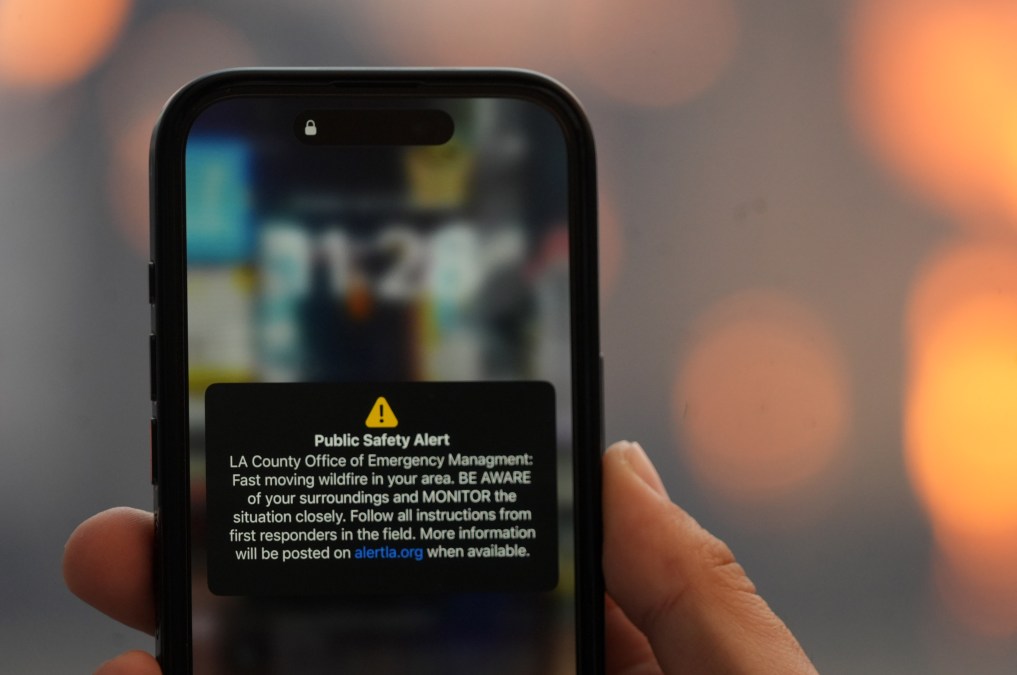
The Mystic Alerts Act became law late last month, creating a federal framework for wireless providers to deliver emergency alerts through satellite networks.
The technology could give emergency managers another way to reach people during disasters when cellular infrastructure is damaged or unavailable; but emergency communications experts say the law’s effectiveness will depend on how carriers implement it — and whether officials can address the procedural, staffing and coordination problems that keep warnings from reaching people in the first place.
The legislation, signed into law by President Donald Trump on Oct. 22, directs the Federal Communications Commission, the Department of Homeland Security and the Federal Emergency Management Agency to establish requirements for mobile service providers to transmit wireless emergency alerts (WEA) through satellite connections.
However, the law does not require every wireless provider to offer satellite-delivered alerts. Instead, providers participating in the existing WEA system must indicate whether they intend to support the capability, while those that opt out must notify customers. The FCC’s rulemaking and carriers’ implementation decisions will determine which customers can receive the alerts and under what technical conditions.
The legislation is named after Camp Mystic, the all-girls Texas summer camp where flooding during the July 2025 Hill Country disaster killed campers and counselors. The tragedy renewed scrutiny of emergency communications in rural areas, where cellular coverage can be limited and infrastructure may be vulnerable during disasters.
But whether satellite delivery would have meaningfully changed the outcome at Camp Mystic is a more complicated question.
Art Botterell, a warning systems consultant working on emergency alerts, said he expects the law’s impact to be limited.
“Honestly, I think the benefit is going to be really marginal,” Botterell said in an interview.
Botterell described satellite connectivity as another transmission method for the existing WEA system, rather than a solution to the broader challenges of getting useful warnings to people in danger. He acknowledged that satellite links could provide redundancy when terrestrial networks fail, but he questioned how reliably the technology will work in real-world conditions, including indoors, underground or during heavy rain and cloud cover — which can disrupt satellite transmissions.
“It’s unproven and I think the advantage is marginal,” he said. “I would never argue against doing it, but I don’t think we want to confuse that with an actual solution to an actual problem.”
To that end, the ITS Codification Act, aimed at improving emergency communications and helping first responders locate people trapped in disaster zones, advanced out of a U.S. Senate committee last month. The legislation, sponsored by Sens. Marsha Blackburn, R-Tenn., and Tammy Duckworth, D-Ill., would formalize the role of the Institute for Telecommunications Sciences, a research engineering laboratory within the National Telecommunications and Information Administration, and direct it to support the development of emergency communication and tracking technologies that can locate people in places where radio signals are limited.
Botterell also questioned the timing of the carrier opt-in process in implementing the Mystic Alerts Act, noting that providers are being asked to decide whether to participate before the FCC creates the regulations governing the service.
“Normally, that sort of election only happens once we know what we’re talking about. In this case, the requirement for the FCC to make the necessary rules comes afterwards,” he said.
‘New technology doesn’t help…if it isn’t usable’
Elizabeth Reddy, an assistant professor at the Colorado School of Mines who studies the emergency alerting ecosystem, said satellite technology could add resilience warning systems, particularly when terrestrial communications infrastructure is damaged. But, she emphasized that the new capability will be useful only if it’s integrated into the systems and procedures emergency managers already use.
“New technology doesn’t help anybody if it isn’t usable,” Reddy said, pointing to platform integration as a key obstacle.
Emergency managers often work across multiple alerting tools and platforms that do not always communicate seamlessly. Reddy said local and regional officials can be left to figure out how those systems fit together, putting the burden on personnel who are already responsible for both preparedness and emergency response.
“The platform and integration issues are really where the rubber hits the road,” she said, adding that new technology may not deliver the benefits its developers intend.
Reddy said the value of satellite-based alerts will also depend on whether emergency managers have clear standards and procedures for using them. She said a more coordinated regulatory framework could help technology developers and emergency managers work together rather than leaving local agencies to navigate disconnected systems on their own.
“I think the idea of coherent and regulatory infrastructure that can apply broadly is really, really nice,” she said. “It’s important to create norms so that technologists and scientists, as well as emergency management practitioners, can be working together.”
The law sets deadlines for that work.
The FCC must publish a notice of proposed rulemaking within six months of enactment and issue a final rule within 18 months, in consultation with DHS and FEMA. The rule will account for satellite and mobile-device capabilities and seek to minimize impacts on other voice and data communications, including 911 calls. Its effective date will be at least three years after publication of the final rule, or later if federal agencies have not yet implemented the necessary alerting standards and procedures.
Providers will have 60 days after the rule takes effect to file their decision on whether to transmit alerts by satellite.
‘Human factors and the policy layer’
Botterell said he remains skeptical, not only whether a satellite alert can reach a mobile device, but if it will provide enough information so the recipient can take action. He said the gaps exposed by the Camp Mystic disaster were not necessarily emblematic of the technology used to distribute the warnings, but of the people tasked with issuing them.
“The bottlenecks weren’t at the technology layer, they were at the procedural layer, the human factors layer and the policy layer,” he explained. “None of those things can be solved by slapping a fresh coat of technology paint on it.”
He said the Kerr County sheriff’s office did not send WEAs during the disaster. If an alert is never issued, he argued, adding another way to transmit it cannot solve the problem.
After the floods, the Texas legislature passed several pieces of legislation aimed at strengthening protections for young campers, including Heaven’s 27 Camp Safety Act — in honor of the 27 victims at Camp Mystic — which restricts the state from licensing youth camps where cabins are located in floodplains, unless the floodplain is around a lake or another still body of water. State senators also passed SB 3, which tasks the state with determining which of the areas that flooded last July should be required to have outdoor warning sirens, and establish guidance on how to install, maintain and operate them.
Dispatch centers can also become overwhelmed during emergencies, forcing personnel to balance answering individual 911 calls with issuing public warnings. Developing effective alerts requires training and preparation, Botterell said, not just access to another communications channel.
A 2025 FEMA grant program provided $40 million to help states improve public alert and warning systems, but emergency management observers questioned whether that funding would be sufficient to support local governments and the range of systems needed to reach residents.
Emergency management officials have also highlighted the importance of using multiple communication channels rather than relying on a single alerting system. In Hawaii, emergency managers emphasized combining wireless alerts with sirens, television, social media and community outreach to account for differences in geography and access to technology.
Reddy similarly cautioned against treating satellite alert delivery as a substitute for broader preparedness efforts.
She said communities need to understand what warnings mean, how to respond and where to turn to for reliable information. That can be especially important in rural areas, where residents may have limited access to communications infrastructure and emergency officials may have fewer opportunities to engage with communities before a disaster strikes.
“Sometimes I worry that we focus on the alert and warning stuff because it’s solvable problems,” she said. But without education and inclusive preparedness, she added, “the rest of this is useless.”