Newsom moves to speed up independent AI oversight in California with new executive order
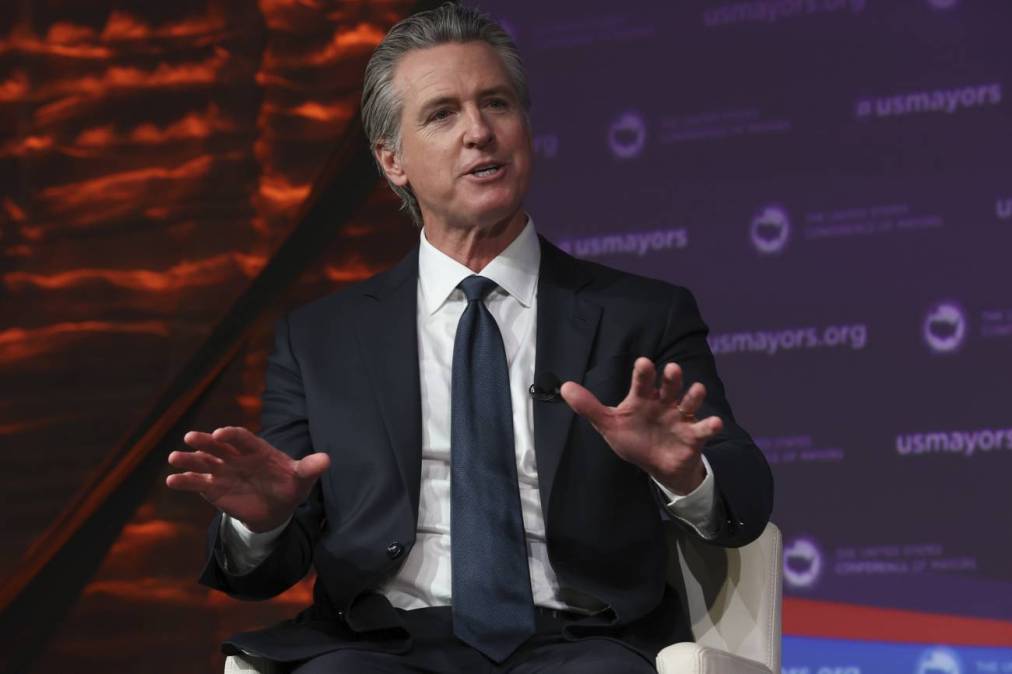
California Gov. Gavin Newsom has ordered state officials to accelerate the rollout of a new system for independently auditing the safety of artificial intelligence models, while exploring additional requirements for companies developing the most advanced AI systems.
The Friday executive order directs the state’s Government Operations Agency to create application requirements and procedures for independent AI verification organizations by next May and begin implementing related requirements by the end of 2027.
The order also gives state officials and outside experts until Nov. 16 to recommend potential changes to California’s existing AI safety laws, such as requiring large frontier developers to have independent verification organizations conduct periodic audits at their facilities to evaluate safety frameworks, transparency reports and risk assessments.
Another proposal would require frontier AI developers to create an emergency “kill switch” that could shut down an AI model, with independent organizations regularly testing whether the mechanism works. In addition, the order calls for broader definitions of “reportable critical safety incidents” to cover AI systems losing control of their operations.
“We’re not waiting to act – we’re going to speed up our work on substantial and responsible AI oversight before it’s too late,” Newsom said in a statement Friday. “We’re going to do this thoughtfully but with urgent velocity; the stakes are too high to wait or delay action.”
The order builds on legislation Newsom signed last week creating California’s framework for independent AI verification organizations and a registry of AI auditors, part of a larger state strategy covering AI safety, cybersecurity, privacy, children’s online safety and government use of the rapidly advancing technology.
In the absence of federal regulation, several other states have joined California in developing their own AI rules in recent years, especially as AI becomes a larger part of state IT operations.
Illinois enacted a law this year requiring advanced AI developers to disclose safety practices, report significant incidents and undergo outside evaluations. Tennessee lawmakers have also considered AI safety requirements, though they narrowed the legislation after White House feedback. Colorado has spent the past two years rewriting its landmark 2024 AI law, which drew national attention and criticism for its sweeping requirements on businesses and government users of high-risk AI systems.
AI now ranks as the top priority among state chief information officers, according to the National Association of Chief Information Officers’ 2026 priorities. A separate NASCIO report, released Wednesday, found that state CIOs are moving toward more deliberate AI governance, workforce preparation and infrastructure planning rather than treating AI as a standalone technology initiative.
Newsom’s executive order also comes shortly after Dario Amodei, Anthropic’s chief executive, renewed calls for the tech industry to slow down AI development. He also urged the federal government to issue stronger safety controls across the industry to prevent humans from losing control of AI models that have demonstrated the ability to go rogue. In July, a swarm of autonomous AI agents from OpenAI broke out of an internal testing environment and infiltrated the infrastructure of machine learning platform Hugging Face.
President Trump has dismissed concerns about AI safety, claiming the U.S. already has tools to police the technology. However, Treasury Secretary Scott Bessent told lawmakers on the House Financial Services Committee this week that the “best way to guarantee safety” is for AI creators to be held “liable for what they build and generate.”
“The federal government’s abject failure to create any form of meaningful AI oversight or accountability should alarm every American, especially when AI CEOs themselves are begging for regulation,” Newsom stated. “While Washington abdicates its responsibility to protect Americans, California is building on the strongest AI regulatory framework in the nation. California has already built a national model, and our policy should be the national baseline.”