Civil rights group ‘condemns’ NYC transit authority’s pursuit of AI video analytics systems
The New York privacy and civil rights group Surveillance Technology Oversight Project on Thursday condemned the New York City transportation authority for issuing a request for information on artificial intelligence video analytics tools, claiming the inquiry will lead to the expansion of surveillance technologies across the city.
The Metropolitan Transit Authority’s request for information, which was published Dec. 5, targets AI and computer vision tools that can perform video analyses, including detection of forbidden objects, like weapons or hazardous materials, recognition and monitoring of unattended items like luggage or packages, and anticipation, detection and analysis of unusual or unsafe behaviors, such as foot traffic surges or stampede risks.
Critical response to the RFI comes after MTA Chief Security Officer Michael Kemper told the MTA’s board last April that he was “exploring” the use of cameras to detect “problematic behavior on our subway platforms.”
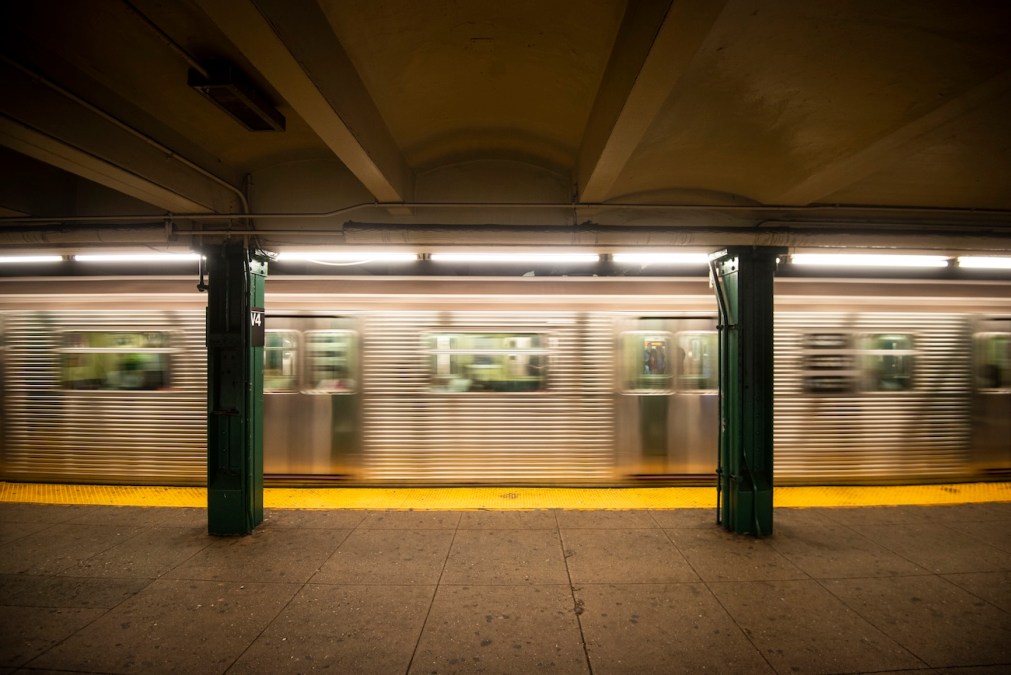
The RFI seeks information from “qualified vendors, technology providers, and system integrators for the development of Proof of Value for a scalable technology solution” that can perform real-time analysis of video feeds from the cameras installed on the MTA’s public transit vehicles, like subway cars and buses. The MTA said the information will help it assess the “feasibility, scalability and cost effectiveness” of the technologies, and it may be used to shape a procurement.
The MTA said an “unspecified number of tech providers and systems integrators” responded to the RFI by its Dec. 30 deadline.
STOP on Thursday cited past failures of the city to use AI video analytics to bolster public safety, and claimed that its more than 15,000 cameras deployed across 472 subway stations will be used to invasively surveil the public.
Former New York City Mayor Eric Adams last March announced the city’s police department would test AI-powered gun-detection scanners made by the company Evolv in the city’s subway system. In October, following the conclusion of the pilot program, the Legal Aid Society said the program was “objectively a failure,” citing its high false positive rate. The following month, the Federal Trade Commission said in a settlement in its case against Evolv that it had found the company “deceptively” advertised its weapons scanner to schools and other venues.
“The MTA has no right to treat New Yorkers like guinea pigs for their endless AI experiments,” Will Owens, STOP’s communications director, said in a news release. “Any AI software that claims to flag so-called unusual behavior is pure pseudoscience, disproportionately targeting [Black, indigenous and people of color] and disabled transit riders. New Yorkers should never have to worry they’ll be flagged by law enforcement simply for the way they talk or walk. We already saw the resounding failure of Eric Adams’ AI weapon detector rollout, so MTA should stop exploring more of these surveillance boondoggles. New Yorkers need safe, reliable transit, not magical thinking from Silicon Valley.”
In April, the organization condemned the MTA’s admission last year it had been testing behavioral surveillance AI to score how rationally riders were behaving. In 2023, the group discovered through a public records request that the MTA had contracted the AI firm Awaait to monitor subway fare evasion. The tech used the MTA’s sprawling network of cameras and Awaait’s AI software.
While the MTA claims the RFI is for “informational purposes only and does not constitute a solicitation or a commitment to issue formal implementation agreement,” STOP claims that the request will lead to an expansion of the city’s surveillance capabilities.
The RFI goes on to state that the transit authority is seeking “solutions that are not only technologically robust but also designed in collaboration with behavioral experts to ensure that the system reflects a nuanced, ethical, and human-centered approach to safety.”