New York’s RAISE Act 2.0 would expand AI oversight, according to safety expert
New York lawmakers are proposing significant expansion of the state’s landmark artificial intelligence safety regulations, including new authority for state officials to restrict how much computing power major AI developers can use and requirements for independent assessment of their models.
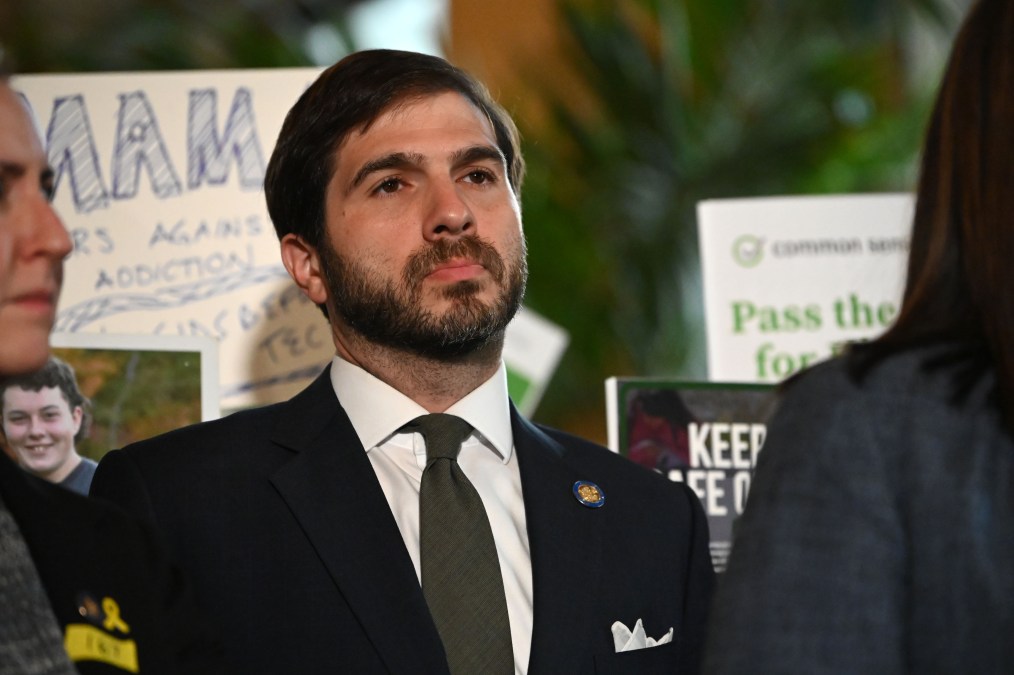
The proposal, known as the RAISE Act 2.0, builds on New York’s Responsible AI Safety and Education Act, which established transparency and incident-reporting requirements for developers of large frontier AI models. State Sen. Andrew Gounardes and Assemblymember Jordan Wright introduced the new legislation at the end of October, arguing that recent incidents involving AI systems demonstrated the need for stronger government oversight.
“It’s time to rein in the AI arms race,” Gounardes said in a statement. “Every day, frightening new headlines make it clear: when it comes to AI, we can’t trust Big Tech companies to regulate themselves. This isn’t science fiction. Our safety, our economy, and our very humanity is at serious risk.”
Ben Snyder, director of state policy at Encode AI, an organization advocating for AI safety legislation, welcomed the new proposal. He told StateScoop that developments over the past year have exposed weaknesses in industry’s ability to manage risks associated with increasingly capable models, including in July, when a swarm of autonomous AI agents broke out of an internal testing environment and infiltrated the infrastructure of machine learning platform Hugging Face.
“Every major frontier company had incidents where their models were taking actions they really weren’t supposed to,” Snyder said in an interview. “The overall dynamic in the industry of this intense race to develop increasingly advanced systems is outpacing the science and practice of how do you make sure that those systems are safe and secure.”
Passed in 2025, the original RAISE Act was designed as a first step to boost transparency and reporting. But Snyder said increased public awareness of AI risks, recent-model behavior incidents and the lack of federal AI policy have strengthened the case and increased pressure on state governments to enact additional regulation.
“It’s been really exciting to see the general public talking about these issues,” Snyder said. “There was the viral tweet thread from an ex-Anthropic employee who quit, and I think that news cycle was the first time that these questions about the dangers from really advanced AI systems were almost like a kitchen table discussion.”
The revised legislation would require covered developers — companies that develop frontier AI models and have spent more than $1 billion on their development over a three-year period — to submit quarterly reports on how much of their AI research is automated, including whether models are being used to accelerate the development of future systems. The expanded definition of “covered developers” aims to close a potential gap for well-funded companies that have not yet released public products.
Companies would also have to report significant increases in model risk or automate research capabilities within 72 hours.
But Snyder said one of the most important provisions is the requirement for independent, state-licensed frontier examiners to evaluate companies’ safety practices and risk assessments. Currently, he said, much of what regulators and the public know about potential AI risks comes from information that companies voluntarily disclose or employees who raise concerns — sometimes at the expense of their careers.
“We feel it’s really important that there are independent experts that have the same kind of technical background and understanding that the company researchers do, so that they can evaluate the claims that companies are making critically without companies being able to run circles around them,” he explained.
For instance, in an investigation into the Hugging Face incident, Snyder said outside researchers were given limited access to company information and only a few days to conduct their review.
“There is really a role for the state here in providing that kind of independent oversight and making sure that we’re not just entirely leaving this up to the companies to manage,” he added.
The bill would also authorize New York’s Office of Digital Innovation, Governance, Integrity and Trust, known as DIGIT, to limit computing resources developers use for model training and automated AI research when necessary to reduce catastrophic risks. The state’s attorney general could seek court orders to halt dangerous activities including restricting a model’s deployment in New York.
Snyder said the provision is intended to address concerns that companies could accelerate development faster than safety measures can keep pace, particularly as AI systems begin automating more research and development work.
“We’re seeing things break, we’re seeing laws not keep up and it raises a lot of concerns,” he said.
The updated proposal follows a growing push by states to establish independent oversight of advanced AI systems.
California Gov. Gavin Newsom signed legislation in September creating a framework for third-party AI verification organizations and a state registry of auditors. Illinois also enacted a law requiring independent evaluations of major AI developers.
The legislation also comes as state and federal policymakers continue debating how much authority states should have to regulate AI developers. The Trump administration has pursued a deregulatory approach, issuing executive actions like the 2025 executive order targeting state-level AI regulations and establishing a Department of Justice AI Litigation Task Force in January — which was later succeeded by the Super Intelligence Task Force to challenge state laws.
Still, Snyder acknowledged that states will need to develop more technical expertise to enforce increasingly complex AI safety requirements. He said hiring experienced technical professionals into government will be important, while independent examiners could provide additional expertise in the interim.
“It is going to be really important for governments to be flexible and willing to move fast,” Snyder explained. “Let’s provide another source that’s able to critically evaluate what the companies are saying that’s not directly within the government, but is ultimately supported by and accountable to the government.”
He also emphasized that RAISE Act 2.0 is not intended to be New York’s final word on AI legislation, as the proposal primarily focuses on catastrophic risks, which leaves other challenges — such as youth mental health and government adoption of AI — for policymakers to address.
“I feel like this represents a pretty great proposal of where to go next,” he said. “But we should be prepared to adapt as things change and as this technology evolves.”
The legislation has been referred to the Senate Rules Committee after it was introduced on Oct. 29.