Massachusetts Gov. Healey urges federal AI oversight after Trump dismisses industry concerns
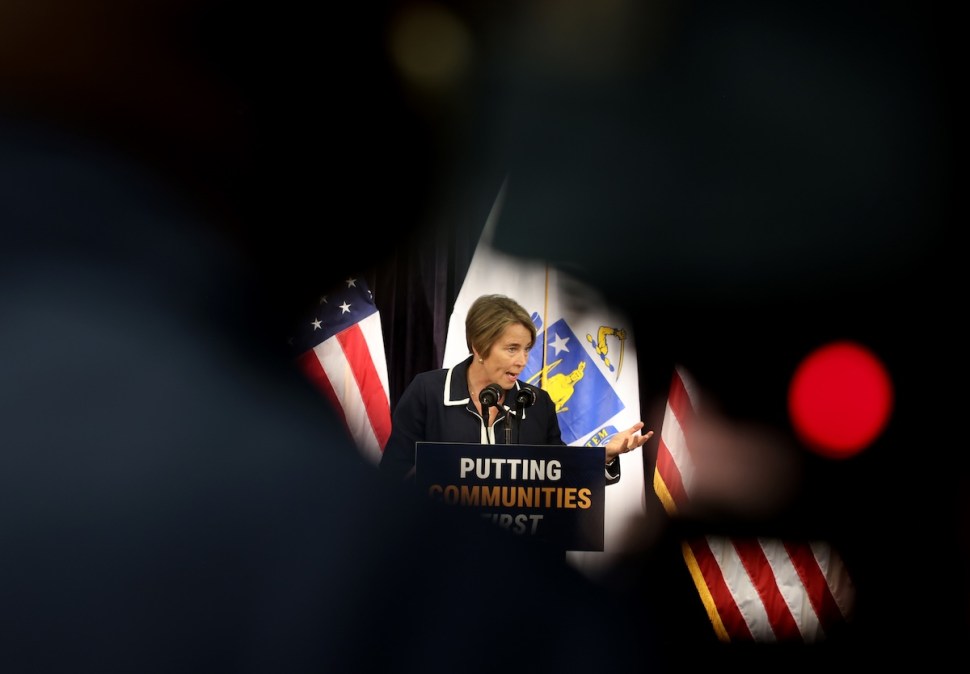
Following President Donald Trump’s comments Monday on social media dismissing calls for artificial intelligence regulations from leading developers concerned by the fast pace and risks of AI development, Massachusetts Gov. Maura Healey urged that federal oversight of the tech is necessary.
“When the people building the most powerful AI systems in the world are telling us there are serious risks, it’s the latest and clearest sign yet that we need more guardrails and protections. AI has enormous potential, but we cannot let this technology move faster than our ability to keep people safe,” Healey said in a statement.
“The responsibility for keeping people safe can’t rest with technology companies alone. We need strong, independent oversight and clear rules of the road that allow innovation to continue while protecting people, our economy and our national security. Federal oversight is a key component of every major industry, and AI shouldn’t be any different,” she continued.
Healey’s perspective was shared late Monday a few hours after Trump’s comments were posted to his Truth Social platform. The president said the industry only needs one regulation, and that is “a STRONG AND SMART (High IQ!) PRESIDENT.” He added that he viewed the safety concerns as a “hoax,” and that slowing down the pace of developing the tech would give China an advantage.
The conversation was sparked in part by concerns that made headlines last week from a former AI researcher at Anthropic, who said he quit his role with the company and another at OpenAI previously because both were not responsibly developing the technology.
“The people building AI earnestly believe that it could kill us all by the end of the decade. This is not a marketing stunt. If anything, many executives and senior researchers will couch their phrasing in the press to sound sensible – but I hear the same people express fear privately. No other human activity poses this level of danger,” Jacob Coxon, the AI researcher, said on X on Sept. 8.
The statement was then corroborated by Evan Hubinger, a current researcher at Anthropic, who added that he thought the chance AI could kill all humans “is >10% within the next decade.”
“I believe Anthropic is trying its best,” Hubinger continued on X, “but we do not yet have a plan to solve alignment for superintelligence and are not clearly on track to.”
Then, an essay was published on Saturday from Anthropic CEO Dario Amodei, in which he called for slowing the pace of AI development. Breaking away from their long-held disagreements about the ethics and industry responsibility around AI development, both SpaceXAI founder Elon Musk and OpenAI CEO Sam Altman then also shared their support of Amodei’s plea.
While Massachusetts has enabled government use of generative AI tools powered by OpenAI’s ChatGPT, such as the internal AI assistant tool it released to all 40,000 employees of the state’s executive branch earlier this year, Healey said that the innovation has always been in lockstep with regulation. Along with the release of the tool, the state released AI usage policies as well as terms and conditions set by the technology office’s privacy division.
“Massachusetts has always shown that innovation and responsible leadership can go hand in hand. We will keep working with researchers, workers, businesses and government leaders to make sure the right safeguards are in place,” Healey continued. “But we need President Trump and Congress to do their jobs. Right now, our President is not listening to the legitimate concerns being raised by consumers and industry alike. Enough is enough. We need federal action to put guardrails on AI development before it’s too late.”