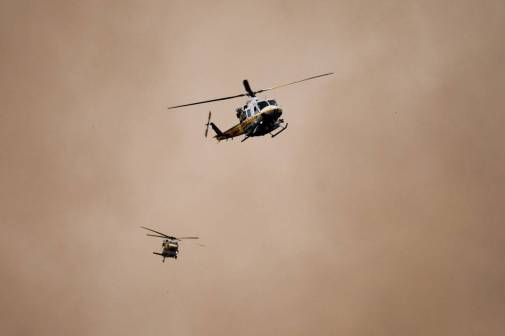
CAL FIRE creates new unit to test emerging wildfire technology
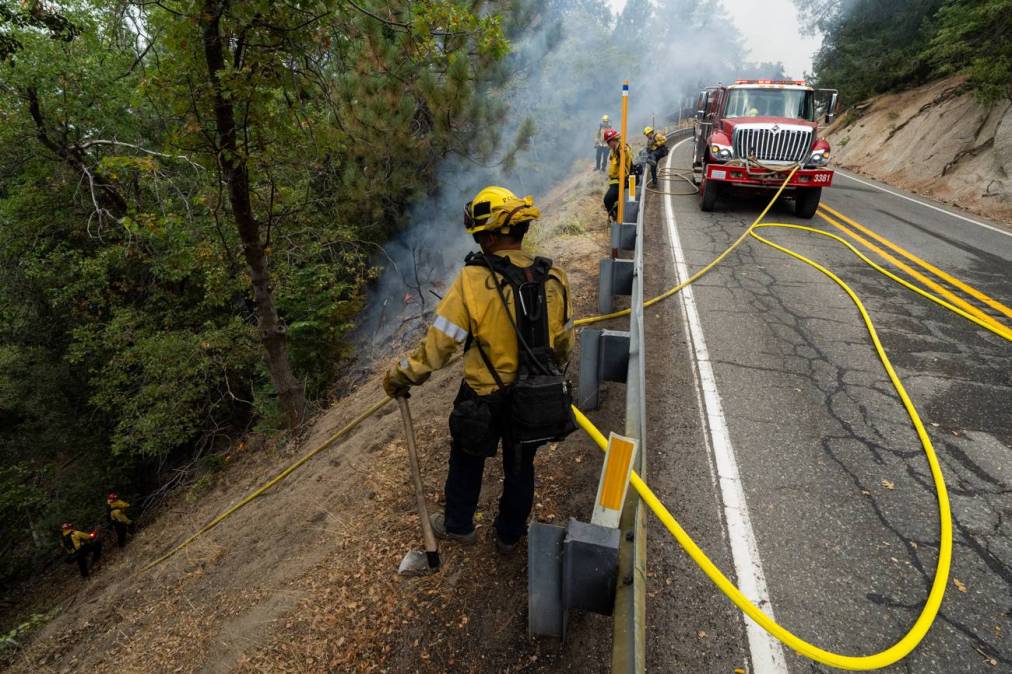
California is giving CAL FIRE, the state’s Department of Forestry and Fire Protection, a dedicated team to research and test emerging technologies that could change how it prepares for, responds to and recovers from wildfires.
Gov. Gavin Newsom signed legislation this week establishing the Fire Innovation Unit, or FIU, within CAL FIRE. Per the Tuesday announcement, the unit will serve as the department’s “innovation arm” for wildfire technology research, coordination, procurement and deployment.
“In partnership with the Legislature, we’ve made historic investments in prevention, resilience, technology, and the emergency responders on the front lines — building a stronger system designed for the climate reality we face,” Newsom said in a statement.
Chief Jack Worden, deputy chief of FIU, said the team will take a broad approach rather than concentrating on a single part of wildfire response. That could include technology for wildfire detection, prevention and mitigation, emergency operations, incident response, suppression, evacuation, and rescue, as well as post-fire recovery and ecosystem resilience.
The goal, Worden said, is to identify technology that fills gaps in CAL FIRE’s existing operations and improves fire and public safety, but the deputy chief acknowledges that not every new tool will join the fire agency’s vast arsenal.
“Not every technology we research or test will ultimately be deployed,” Worden wrote in an email to StateScoop, adding that the sandbox could include artificial intelligence or IT modernization tools. “Part of FIU’s role is to evaluate technologies in real-world conditions, determine whether they solve an identified need, and help move successful technologies toward adoption and deployment.”
CAL FIRE already uses technology ranging from AI-enabled cameras and drones to satellite imagery and predictive fire modeling to help protect over 31 million acres of privately owned wildlands and natural resources across the state. Its strategy of combining traditional firefighting resources with new data technologies includes a network of 1,260 AlertCalifornia mountaintop cameras, 915 of which are now AI-enabled to automatically detect smoke and alert dispatch centers before 911 calls are received. Joe Tyler, CAL Fire’s director, said another 200 cameras will be added this year.
The state agency is also expanding its use of drones for fire mapping, prescribed burns and tactical operations while incorporating lidar data to better assess vegetation and fuel conditions.
“Cal FIRE is leaning in and taking advantage of the power of technology that best supports our firefighting efforts,” Tyler told reporters at the California Department of Forestry and Fire Protection’s Aviation Management Unit at Sacramento McClellan Airport earlier this summer. “As the technology advances, it’s important that we continue to advance with that technology.”
Worden noted that any technology FIU researches must work with CAL FIRE’s existing systems and meet cybersecurity, privacy and state IT requirements, which is especially important as California works to connect information from increasingly diverse sources. The state developed the California Wildfire Commons to break down data silos and connect wildfire datasets, models and tools across 19 state agencies.
“Technologies that integrate with Department systems will still need to work through applicable California Department of Technology and security standards to ensure CAL FIRE’s systems, information, personnel, and operations remain protected,” Worden wrote. “The Governor’s SB 1079 signing message reinforces this approach by directing CAL FIRE to collaborate with the Department of Technology and Department of General Services as wildfire innovation procurement and contracting processes develop.”
FIU will be headquartered in Sacramento, California’s state capital, with staffing expected to include fire chiefs, research specialists, IT personnel, administrative staff and other subject matter experts. Worden said that combination is important because innovation within CAL FIRE has to connect technology with the actual needs of firefighters and the department’s other programs.
Although the program does not formally launch until January under the legislation, the unit is already doing some work.
“Our goal is to continue the innovation work already taking place while building the staffing, partnerships, testing capabilities, and processes necessary to establish a sustainable innovation program for CAL FIRE,” Worden explained.
The broader wildfire package Gov. Newsom signed this week codified faster environmental and permitting reviews for wildfire mitigation projects, including fuel reduction and forest restoration, with the administration saying changes can save a year or more of review time.
The legislation also expands the use of prescribed and cultural burning, creates a California Wildfire Preparedness Program to help counties coordinate mitigation and wildfire-risk modeling, and establishes low-interest loans for homeowners and businesses to pay for defensible space projects.
Other measures address the state’s wildfire risk from abandoned transmission lines, require water suppliers in high-risk fire areas to include wildfire preparedness in emergency plans and restrict drones from interfering with wildfire suppression and emergency response.
“These new laws carry that work forward by speeding up critical prevention projects, helping Californians protect their homes and communities, expanding proven prevention tools, and giving firefighters every possible advantage,” Newsom stated. “The goal has always been bigger than responding to the next fire; it’s about leaving California safer, stronger, and better prepared for the generations that follow.”