Advocacy groups call FCC’s E-Rate review an ‘attack’ on schools and libraries
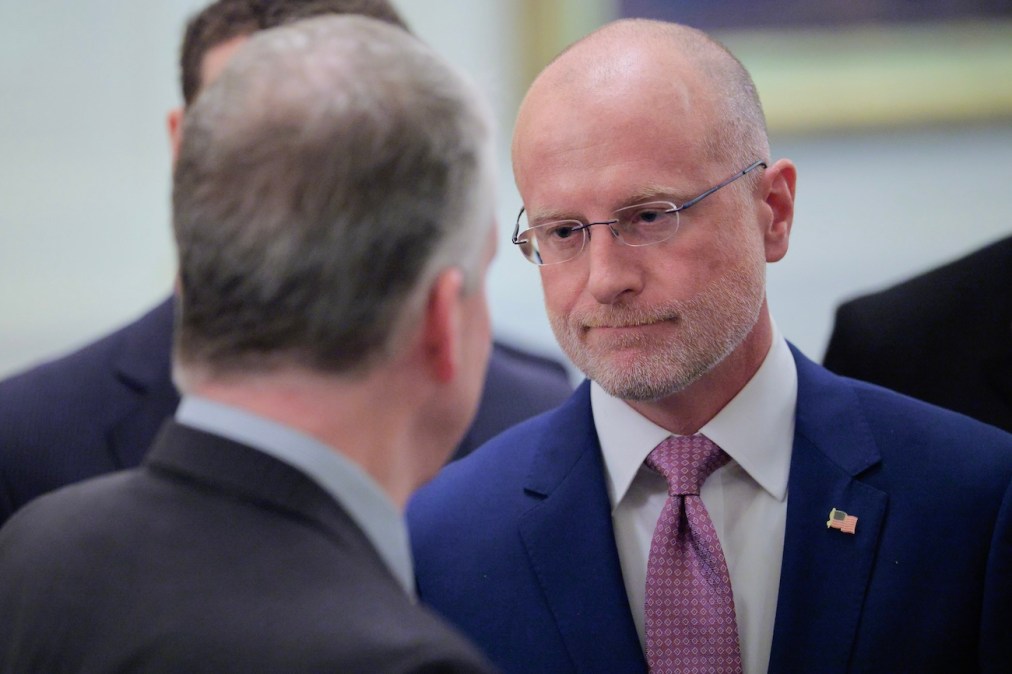
After the Federal Communication Commission voted 2-1 on Thursday to approve a broad review of the federal E-Rate program to determine if it should be limited or even terminated, advocacy groups are pushing back on the commission’s attitude towards the program, with some calling the moves an “attack.”
The FCC’s “top-to-bottom” evaluation of the E-Rate program, which was laid out in a June draft of the notice of proposed rulemaking and a further notice, seeks to “improve the E-Rate program and ensure E-Rate-funded networks and services are being used for educational purposes.” The program is the largest federal educational technology program and helps to provide affordable broadband and communication services to schools and libraries nationwide.
The notice seeks comment on measures the FCC can take to empower parents, guardians and teachers and better protect children when using E-Rate-funded networks and services, and seeks comment on actions the FCC can take to strengthen the program’s integrity, increase oversight and streamline its administration.
While the FCC did on Thursday approve a longer comment period than is typical for such a notice, the Schools, Health and Libraries Broadband Coalition, among other advocacy groups, claimed that the proposal opens the door for the FCC to consider if the E-Rate program should be outright terminated or possibly limited to only rural areas.
“Instead of asking whether E-Rate should be terminated, the FCC should be asking how to make it stronger,” Joey Wender, executive director of the SHLB Coalition, said in an emailed statement. “The Commission is treating the program’s success as a reason to walk away, when it is exactly the reason to stay the course. Today, the FCC took the damaging step towards either ending E-Rate or shrinking it to only rural areas, despite lacking the authority to do so and despite a clear congressional mandate to bring universal service to every community.”
Along with reviewing the program, the FCC is also seeking to better understand the “hours per day children of all ages now spend online,” a figure affected by computer use at schools and libraries. The inquiry seeks also to understand if laws, such as the the Children’s Internet Protection Act, go far enough to “sufficiently protect children from inappropriate and harmful content” when using school and library computers on E-Rate-funded networks and services.
“Concerns about children’s screen time deserve to be taken seriously, but they should not become a backdoor for dismantling one of the country’s most successful connectivity programs and adding unnecessary budgetary strain on schools and libraries across the nation,” Wender continued. “SHLB will not stand by while the FCC tries to end the E-Rate program. Today’s vote represents an attack on school and library funding that these institutions can’t afford to lose, particularly in the most disadvantaged rural and urban communities.”
Most actions the Trump administration’s FCC has taken during its evaluation of E-Rate over the past nearly one-and-a-half years have met opposition. These include the creation of a competitive bidding portal for schools and libraries participating in the E-Rate program. That initiative was rebuked by advocates who claimed its required use would burden the same groups it purportedly intended to benefit.
Last fall, the FCC rolled back rules passed under the Biden administration that allowed schools and libraries to receive discounts through the E-Rate program for school bus Wi-Fi and internet hotspot services. The Biden-era policies extended the availability of subsidized internet services following the push to remote schooling during the COVID-19 pandemic.
“E-Rate is about connectivity, and that connectivity underpins nearly every aspect of school district operations, from security systems and transportation to HVAC, student information systems and classroom learning,” Noelle Ellerson Ng, chief advocacy and governance officer at AASA, the School Superintendents Association, said in an emailed statement. “Without reliable, affordable broadband, students cannot fully participate, and schools cannot function effectively. There is no defense or explanation for pulling back a program that has, for 30 years, ensured equitable access for schools and libraries.”