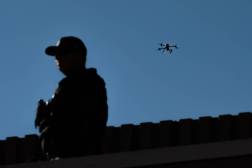
Police union urges Congress to give state and local law enforcement authority for counter-drone measures
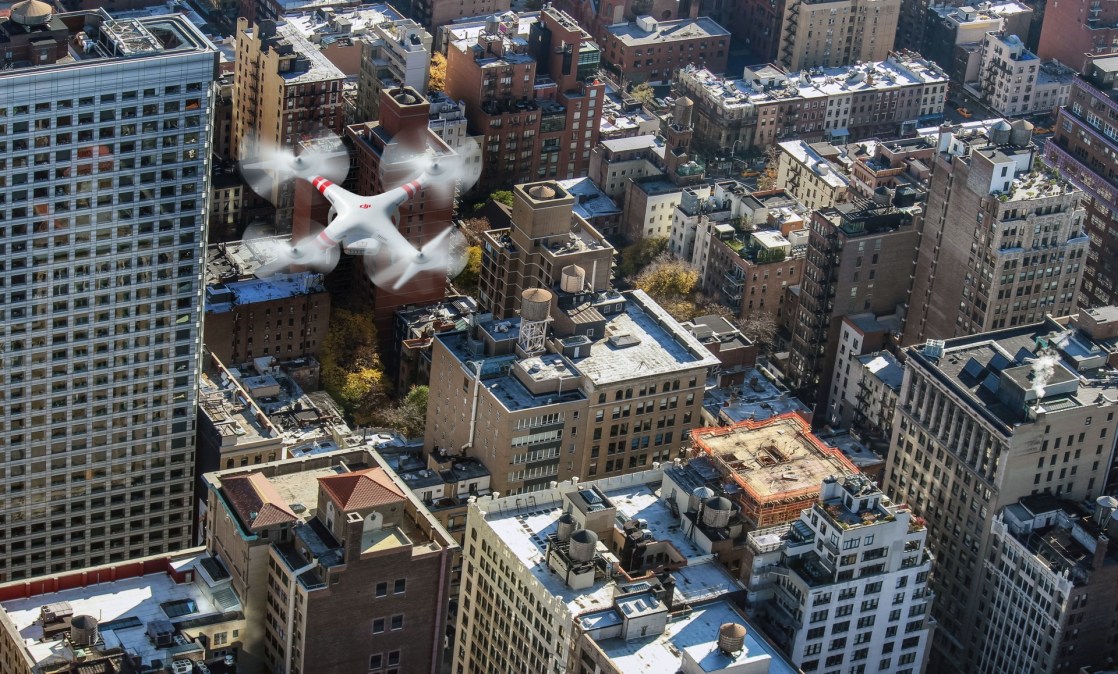
The National Fraternal Order of Police, one of the nation’s largest police unions, urged Congress on Wednesday to give state and local law enforcement more authority to stop criminal drone activity, warning that gaps in federal law are putting communities at risk. The organization said federal rules have not kept pace with how quickly drones are being deployed, leaving local agencies without the authority or tools they need to respond.
In a letter to congressional leaders, Patrick Yoes, the organization’s president, called on lawmakers to include “robust counter unmanned-aircraft systems” in the upcoming National Defense Authorization Act, which authorizes funding levels each year and provides authorities for the military and other critical defense priorities. (For fiscal year 2025, the NDAA supports $895.2 billion in funding for national defense, according to a report by the Senate Committee on Armed Forces.)
“State and local law enforcement require unequivocal legal authority to detect, track, identify, and intercept drones that endanger lives, infrastructure, public safety, and national security,” the letter reads, urging lawmakers to act before a major drone-related incident forces change after the fact. “It is past time to rectify this critical vulnerability.”
Counter-drone technology uses a combination of detection methods, like radar, radio frequency scanners and cameras, to detect, track, identify and neutralize unauthorized drones. The Department of Defense is also developing drone detection systems, kinetic weapons and other electronic countermeasures to combat unmanned aerial systems in a variety of scenarios.
Police departments across the country are seeing more drones used for illicit purposes — from smuggling drugs and contraband into prisons to interfering with firefighting aircraft and flying dangerously close to airports, power plants and other critical infrastructure.
Between 2015 and 2019, the Justice Department recorded 130 incidents of drones delivering or attempting to deliver contraband at federal prisons.
In response to the growing threat, the Oklahoma Department of Corrections launched a 45-day pilot to test whether drones, armed with artificial intelligence, can detect and decrease illicit activity through continuous aerial surveillance.
The Michigan state legislature introduced a bill that would create statewide drone registry and prohibit drones from being operated near sensitive facilities.
Under current law, only a limited number of federal agencies can legally detect, track or disable hostile drones, including DOD, Department of Homeland Security, Federal Aviation Administration and Department of Justice.
The police union said this “patchwork” system means that when a drone threatens a stadium, a prison yard or a disaster scene, local police often have their hands tied. The group is pressing Congress to change that by granting vetted, trained state and local agencies explicit permission to use approved counter-drone technologies.
“We must update counter-UAS provisions that would authorize specially trained State and local law enforcement personnel to execute operations at high-risk sites, including large-scale public gatherings, critical infrastructure, and correctional facilities,” the letter reads.
The letter also calls for nationwide training standards, stronger oversight and clear federal guidelines to prevent inconsistent enforcement. The union argued that these safeguards would protect civil liberties and give communities tools to address emerging drone threats. The group cited the 2026 World Cup and 2028 Olympics as high-profile gatherings that could use additional protection.
“This issue should not be a last-minute provision folded into the NDAA, but it is preferable to address this issue in this legislation now than risk further inaction,” the letter reads.