USDA agrees not to share Kansans’ SNAP data with foreign governments
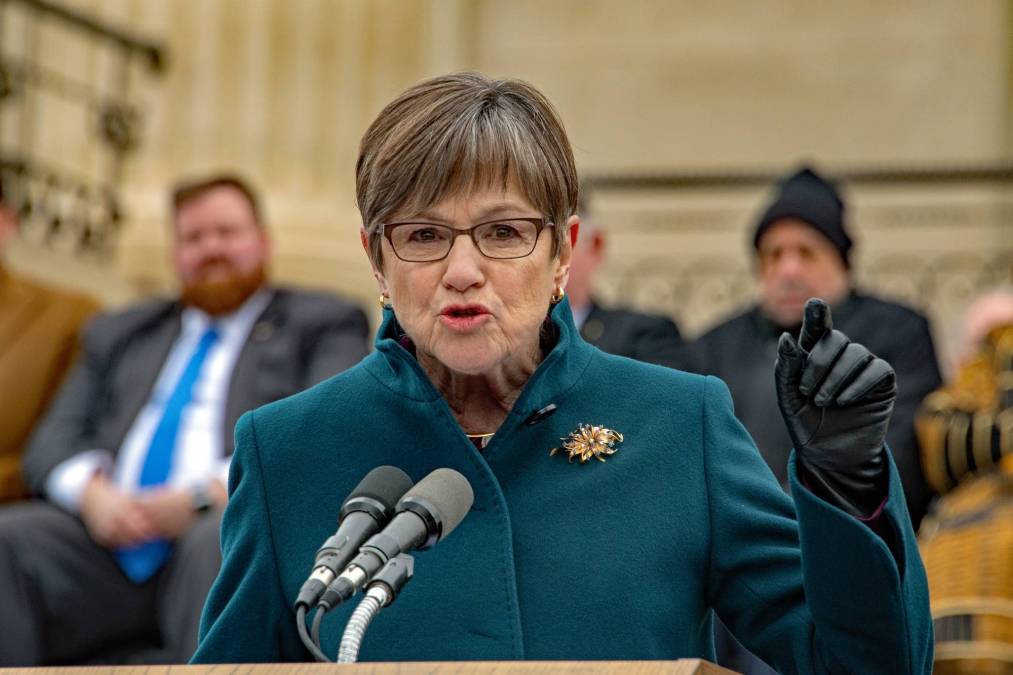
Kansas Gov. Laura Kelly on Friday announced that state officials have reached an agreement with the Department of Agriculture, resolving a months-long dispute over access to sensitive food-assistance data and preserving millions of dollars in federal funding for the state’s Supplemental Nutrition Assistance Program.
Kelly said the deal ensures Kansans’ personal information, including Social Security numbers, will not be shared with foreign governments and that the agreement complies with federal and state privacy laws. According to the announcement, the USDA has accepted Kansas’ data protection conditions.
In exchange, the state will share data, consistent with privacy requirements, and the USDA will rescind its $10.4 million disallowance letter, ensuring the state will not lose federal administrative funding for SNAP.
“In reaching this agreement, we have successfully preserved Kansans’ privacy against the threat posed by the USDA’s initial request that amounted to federal overreach and violation of data protection laws,” Kelly said in a press release.
The conflict began last year when the USDA requested five years of data on Kansans who’d applied for or received SNAP benefits, including Social Security numbers, dates of birth and other personally identifiable information. The request was prompted by President Donald Trump’s March 20 executive order called “Stopping Waste, Fraud, and Abuse by Eliminating Information Silos.”
According to the Center for Budget and Priorities, 187,000 people, or roughly 6% of Kansas’ population, received SNAP benefits in 2024.
State officials raised immediately raised concerns about provisions that could have allowed that data to be shared beyond federal agencies, including with foreign entities.
Laura Howard, secretary of the Kansas Department for Children and Families, declined to provide the information under those terms, arguing the request conflicted with confidentiality protections in the federal Food and Nutrition Act and the Kansas Cybersecurity Act. Howard also claimed the amount of time the USDA had allotted the state agency to compile the data was unreasonable.
“Producing the amount of data being requested will require significant time, manpower, and expense. Requiring the production to occur no later than July 30, 2025, presents an unreasonable burden that simply cannot be met,” Howard wrote in a letter to the federal agency dated July 31.
After USDA rejected Kansas’ corrective action proposal in September, the children and families agency filed an appeal, temporarily blocking the federal government from withholding $10.4 million in SNAP funding and ensuring that benefit services would continued uninterrupted. The state maintained it could not legally release the data without stronger safeguards.
“USDA seeks to change federal legislation with the following argument: Ignore what we said. Trust us,” Marc Alternbernt, general counsel for Kansas DCF, wrote in a January letter to the USDA. “When this Board considers that the confidential information of thousands of Kansans and tens of millions of dollars are at stake, Trust us simply will not suffice.”
The episode underscores broader tensions between federal oversight efforts and state-level data privacy mandates, particularly as agencies rely more heavily on large-scale data collection to monitor public benefit programs.
In an October report, NPR found that at least 27 states had shared SNAP recipient data with the USDA. According to the Economic Research Service, the federal benefits program served roughly 41.7 million participants per month in 2024, two-thirds of whom are children, adults over age 60 or people with disabilities.