ACLU calls for policy review after Maryland police used faulty facial recognition scan to wrongfully imprison Oklahoma woman for six months
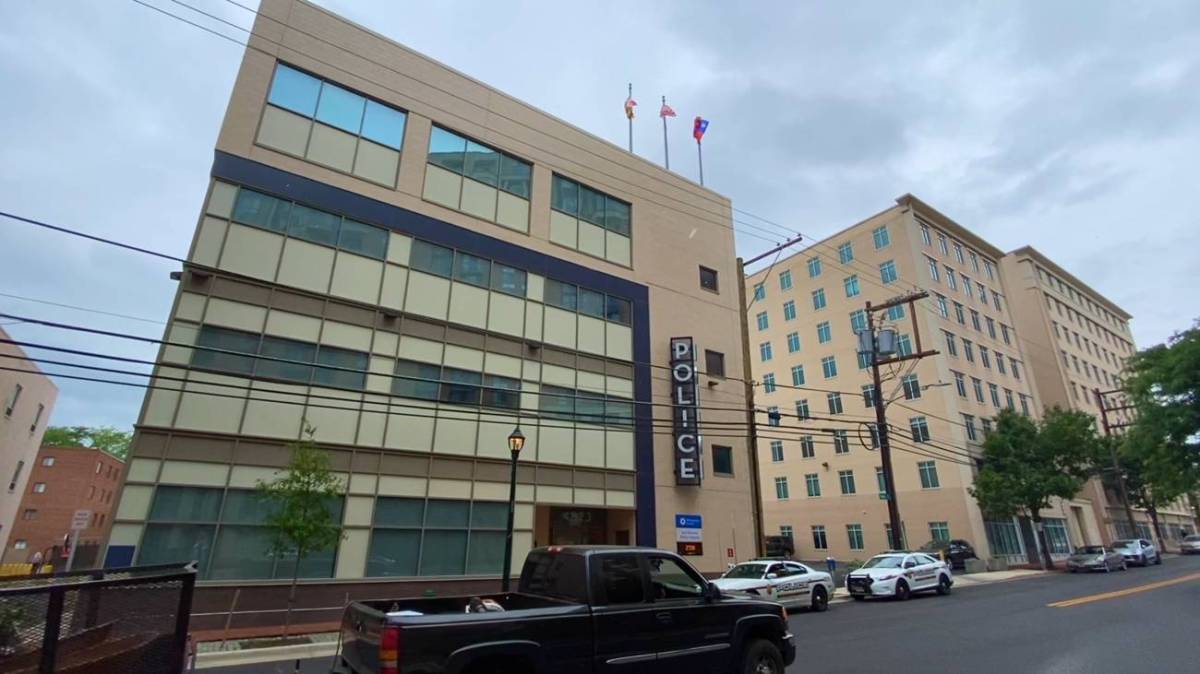
The American Civil Liberties Union and ACLU of Maryland on Tuesday sent letters to three law enforcement agencies in Maryland calling for them to publicly apologize to Kimberlee Williams, a white Oklahoma woman who claims she was wrongfully arrested in 2021 after Maryland police relied on an unverified facial recognition scan conducted by an unknown third party to identify her as a criminal suspect.
The letters, which are individually addressed to Montgomery County Police Department, the Anne Arundel County Police Department and the Prince George’s County Police Department, claim that Maryland police investigators relied on an incorrect result from facial recognition system to get a warrant for Williams’ arrest. The letters allege that investigators concealed their reliance on the technology from the court when applying for arrest warrants, and that as a result, Williams spent six months in jail for a crime she did not commit, in a state she had never visited. The letters argue that police must stop treating facial recognition as reliable evidence, and adopt stricter safeguards to prevent similar wrongful arrests.
According to the ACLU, Williams was arrested while accompanying one of her daughters, a DoorDash driver, as she made a delivery to a military base in Lawton, Oklahoma, on June 23, 2021. When military police conducted a standard ID check at a base checkpoint, they discovered Williams had an outstanding arrest warrant in Maryland. The military police detained her and then called the local police, who arrested her. Williams said she spent 23 days in an Oklahoma jail before an officer from Maryland arrived to transport her to a jail in Montgomery County, Maryland.
The letters state that when she arrived in to the jail in Montgomery County, Williams was imprisoned for more than three months. Law enforcement accused Williams of being a match to an unknown individual suspected of fraud who had entered several bank branches in Maryland, impersonated account holders and fraudulently withdrew thousands of dollars from their accounts.
According to the ACLU, it was not the police that used the facial recognition technology. When the bank began investigating these incidents, a bank investigator sent an image of the unknown suspect to a national network of police and private investigators, called Crimedex, a website where investigators share information about white collar crimes. One of the website’s users reportedly ran the bank’s image through a facial recognition system and returned Williams’ name and photo as a purported match. The bank investigator sent a memo to a Montgomery County detective stating that “facial recognition software” had flagged Williams as the suspect.
The ACLU alleged that Montgomery County police obtained a warrant for Williams’ arrest without an independent investigation to corroborate the match from the internet. And when applying for the arrest warrant, the ACLU claimed, the detective assigned to the case did not disclose that the identification was made by facial recognition technology or that the scan had been run by an unknown website user. He claimed that the identification had been confirmed by visually comparing a photo of the suspect with an old photo of Williams.
In its letters, the ACLU claimed that had Montgomery County police accurately represented the facts to the magistrate judge, or conducted an adequate investigation, Williams would not have been subject to wrongful arrest, prosecution and prolonged detention. Though Montgomery County prosecutors dropped their charges against Williams in October of 2021, she still faced pending charges against her in two other Maryland counties where other bank branches had been defrauded. Those charges were based on the same misidentification by facial recognition.
After the dismissal, Williams was transferred from Montgomery County’s jail to a jail in Prince George’s County, where she spent another two months fighting charges there and in Anne Arundel County, according to the ACLU Those cases were finally dismissed in December of 2021, after Williams had spent a total of six months incarcerated.
The ACLU claims Williams is the 14th person publicly known to have been wrongfully arrested by police in the U.S. because of reliance on erroneous facial recognition results. Robert Williams, a Black man from Michigan, was wrongfully arrested in 2020, in front of his daughter and wife, and charged with a felony after being incorrectly identified by a facial recognition system.
The letters note that facial recognition systems exhibit higher rates of false matches when used on people of color, women, the elderly and young people. According to testing by the National Institute of Standards and Technology, images of Asian or Black people are 100 times more likely to produce false matches. As a woman, Williams also faced an increased risk of being incorrectly matched, the ACLU noted.
“I lost six months of my life when Maryland police wrongfully imprisoned me halfway across the country from my children, my home, and my job, all because they relied on an incorrect result from faulty technology,” Williams said in a news release. “I had never even been to Maryland before I was flown there in handcuffs, for a crime I had nothing to do with. My family and I can’t get that time back, but I hope my experience will be a warning to police in Maryland and across the country that this technology can ruin lives. No family deserves to go through that.”
Along with the public apology to Williams, the ACLU asked the agencies to investigate its faulty procedures. The group is also asking for policy reforms, such as banning arrests based solely on facial recognition results, even if they are followed by an officer’s visual match, and to prohibit reliance on facial recognition searches performed by outside parties.
Lauren Yu, a legal fellow with the ACLU, said that due to the known faults with facial recognition technology, law enforcement agencies should be required to provide stronger, independent evidence of suspect identification before bringing charges.
“No one should spend six months in jail because an algorithm got it wrong,” Yu said in a news release. “We now know of 14 people across the country who have been wrongfully arrested because of police reliance on dangerous face recognition technology, with no telling how many more have faced the same injustice. These Maryland police departments owe it to Ms. Williams to make amends and to take serious steps to make sure this doesn’t happen to anyone else. And police across the country are on notice: face recognition technology is hurting people, and these abuses must end.”