New Mexico is using satellites and AI to help rural water systems find hidden leaks
The New Mexico Environment Department last month launched a statewide effort to help small communities track down millions of gallons of lost drinking water, by using satellites and artificial intelligence to find leaks in pipes buried deep underground.
The initiative, called LeakTracer, is available to smaller rural water systems across New Mexico, where aging drinking water pipes and limited resources have made it difficult to detect and repair hidden breaks in water lines before treated water seeps into the soil.
The program uses satellites from a California company called Asterra, whose technology was originally developed to locate underground water on Mars. It’s part of a broader push under Gov. Michelle Lujan Grisham’s 50-Year Water Action Plan, which aims to conserve water and bolster long-term water security in the face of drought and climate impacts.
“That’s the most expensive water there is, that’s water going into our desert,” Meta Hirschl, the environment department’s chief data and technology steward, said in an interview.
The New Mexico Groundwater Alliance published a report last month showing that the state’s water supplies are projected to shrink 30% by 2050. The group called it a “looming groundwater crisis.” Groundwater supplies roughly 80% of the state’s drinking water.
Hirschl said that water loss due to water infrastructure leaks is a real problem across the state, with some utilities reporting losses of up to 70% each year. She added that traditional methods to find leaks, such as manual inspections, are often slow, labor-intensive and can miss underground problems entirely.
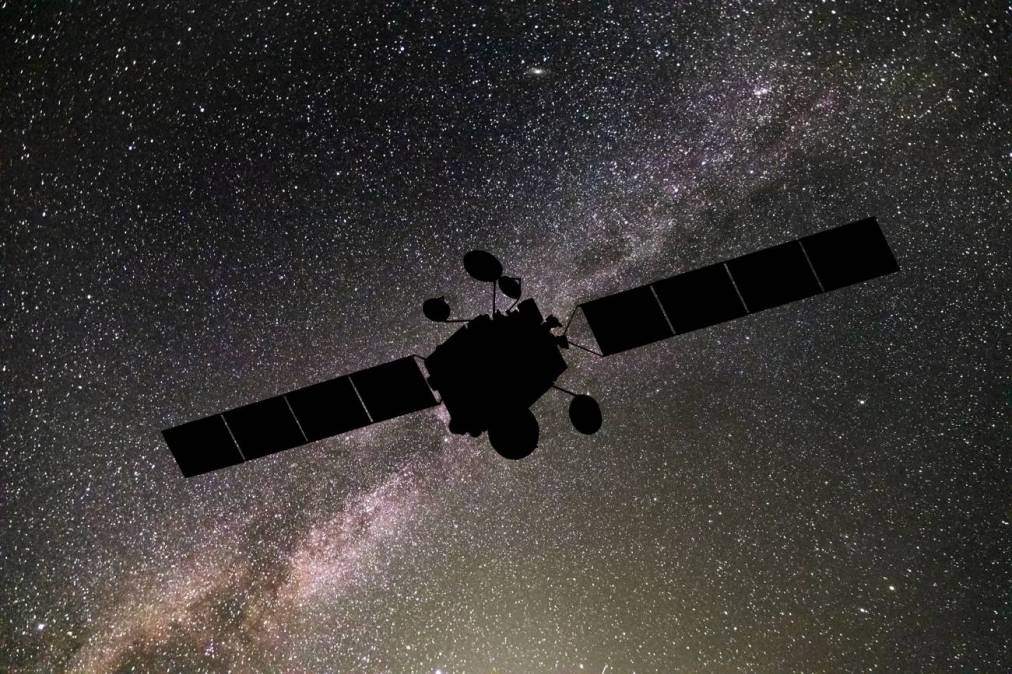
Instead of sending crews out blind, Hirschl said, the LeakTracer program uses data from satellites equipped with L-band synthetic aperture radar, or SAR, which uses a moving antenna to create highly detailed images of the ground, even through clouds, smoke or darkness.
Paired with machine learning, the data helps operators identify anomalies in soil moisture that could signal water escaping underground. Once satellites flag a potential issue, deeming it a “point of interest,” the state sends ground crews to verify and locate the leaks so utility companies can make repairs.
“Asterra has this engineering firm that has these super sensitive hydro-acoustic microphones that can hear like miles down,” Hirschl explained. “And then they walk along where they know those points of interest are along a pipeline, and they can actually hear the leak. You can hear the water moving like rushing out of a leak. They can often estimate the gallons per minute that’s being lost.”
LeakTracer began as a pilot project in five communities last year, identifying more than 78 verified leaks, which Hirschl estimated could help save the state 345,000 gallons of water per day.
Encouraged by those results, New Mexico is now offering the program statewide, to rural water systems serving fewer than 20,000 people that are in good standing with the state’s Rural Infrastructure Loan Program. While the cost of detecting leaks is fully covered by the program, utilities are responsible for fixing leaks once they’re identified.
Hirschl acknowledged that even though the LeakTracer program will help rural communities conserve water, it’s only a temporary solution to the larger issue of replacing New Mexico’s aging water infrastructure completely.
“If it’s a weak system, you really want to replace the whole thing,” she said, “but replacing all the infrastructure in New Mexico, or any place, is a heavy lift.”