State, local governments urge Congress to tweak SNAP’s recent changes under H.R. 1
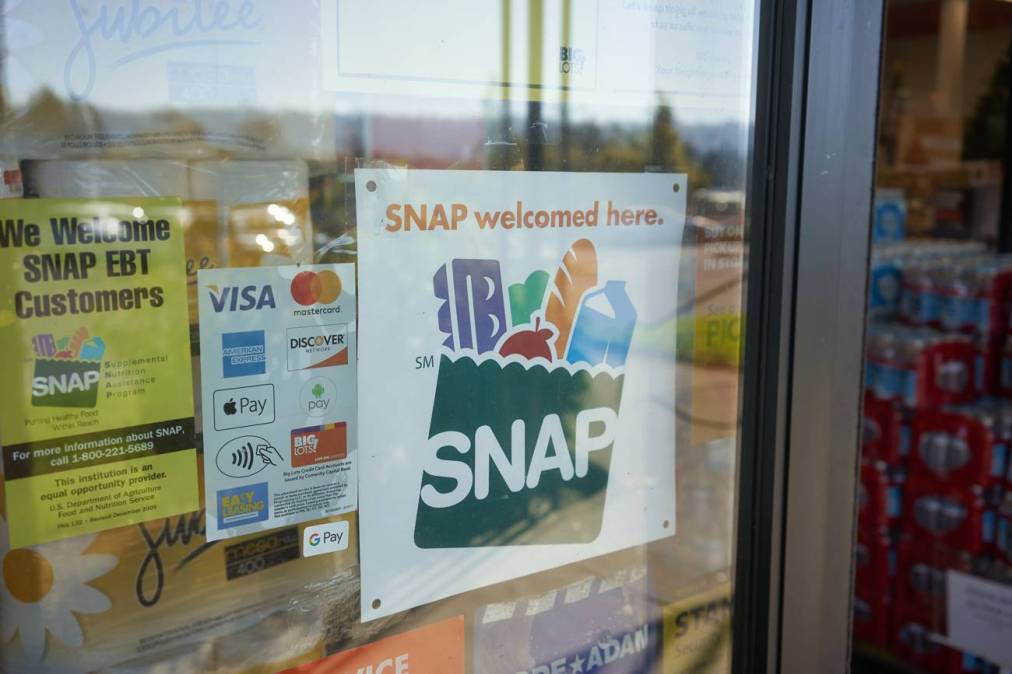
State and local governments are warning Congress that recent changes to how the Supplemental Nutrition Assistance Program is funded, combined with residual disruptions from the 2025 federal government shutdown, could destabilize one of the nation’s most critical safety-net programs.
In a briefing on Tuesday, governors and a broad coalition of state, county and city organizations urged Congress to approve a narrow, bipartisan “SNAP fix” to prevent states from facing massive financial burdens under policy changes stemming from H.R.1. The new law requires states to share the cost of administering the program based on payment error-rate data collected last fall, a period marked by major policy transitions, delayed federal guidance and the federal government shutdown, which stretched through October and some of November.
The coalition, which sent a letter to congressional leadership last week calling for action, said it agreed SNAP’s integrity needs to be protected, but argued that states need more time to upgrade their IT systems and data infrastructure to reduce payment error rates and comply with new program changes by next year.
“These overlapping events exposed states and counties to significant, unintended fiscal risks that undermine program stability and integrity,” the letter reads. “Ultimately, we fear that the compounding effects of these developments could put SNAP in jeopardy across the country if states and counties do not receive some form of relief.”
‘States … will face massive budget impacts’
State officials at the briefing, including elected representatives and those who lead agencies charged with managing the benefits program, argued that performance data collected during the government shutdown does not reflect normal program operations and could unfairly penalize states, raising SNAP benefit costs by an average of $218 million per state each year, according to an estimate from the National Governors Association.
“The shutdown disrupted those efforts — jeopardizing ongoing investments in program integrity and endangering the future of SNAP,” Tiffany Waddell, director of the NGA, which helped organize the briefing, told congressional leaders on Tuesday. “Unless Congress gives states more time to implement new requirements, states of all sizes will face massive budget impacts.”
Payment error rates measure how accurately states determine eligibility and benefit amounts. High error rates, above 6%, trigger corrective actions and potential financial penalties under H.R.1.
The coalition of state and local governments is asking Congress to adopt two temporary fixes in an upcoming continuing resolution. The first is to delay new SNAP benefit and administrative cost-sharing requirements until fiscal year 2030. The second is to exclude October and November 2025 data from quality control calculations.
Advocates of the program, like Reggie Bicha, president of the American Public Human Services Association, stressed that the requests are limited and technical, not an attempt to roll back accountability. She argued that changes would give states time to stabilize operations, continue modernization efforts and work with the Department of Agriculture to ensure SNAP remains fiscally responsible and accessible to families who rely on it.
“States are moving swiftly to get this right. They’re upgrading eligibility systems and investing in new technology,” Bicha said. “Where we are hearing real concern is not about accountability, it’s about timing and feasibility.”
One representative, Emily Shetty, a state delegate from Maryland, went further, saying that states were currently unprepared to comply with these sweeping policy changes, which could impact their ability to deliver other important services to their constituents.
“No state is ready, because we have to balance our budgets, when we have to put more money into our cost shift, we have less money for other programs,” Shetty said at the briefing.
‘Huge benefits’
An October report from the Beeck Center for Social Impact and Innovation at Georgetown University showed that many states were already investing heavily in modernizing eligibility systems, strengthening fraud detection and improving data accuracy when the shutdown disrupted those efforts. Their research also found that state officials were concerned that outdated systems could make reducing payment error rates difficult.
“The technology that runs these programs is another barrier to meeting these new requirements,” Rebecca Piazza, who heads safety net strategy at Code for America, told StateScoop in a recent interview. “With the change in administrative cost sharing, that means that if states want to improve that infrastructure, to rely more on technology in order to better serve the people in the program.”
Beginning in fiscal year 2027, which begins on Oct. 1, states will also be required by H.R. 1 to cover 75% of SNAP administrative costs, adding an additional, on average, increase of $67 million per state per year.
To comply with the new federal requirements, Piazza suggested adopting automation and low-risk AI tools, to improve data accuracy and streamline repetitive tasks for caseworkers and participants.
“Using AI to look at a document that somebody has uploaded and being able to give immediate feedback if the image of this document blurry or using AI to categorize documents in the case file so that it’s much faster and easier for the caseworker to find,” she said. “Even getting to the point where it might extract data from that document to take information from that pay stub and fill it in the right parts of the file.”
Piazza said payment error rates only reflect overpayments and underpayments due to administrative mistakes.
“I want to say really clearly your payment error rate is not fraud,” she said. “This is the person who was administering the case who calculated the benefit amount incorrectly, whether that’s giving someone too much in benefits or too little, not a measure of somebody doing something fraudulent to cheat the system.”
She said she didn’t know how states will manage to get their error rates, but that even small improvements can save them critical funding.
“I don’t know if states are all going to be able to get under 6%, for example, with their error rates,” Piazza said. “But there are huge benefits even from going from a 10% error rate to an 8% error rate. You know what that really means is that means tens of millions of dollars that a state no longer needs to find in order to continue to offer the program.”