Baltimore sues X, claiming Grok lacks ‘meaningful guardrails’ for explicit deepfakes
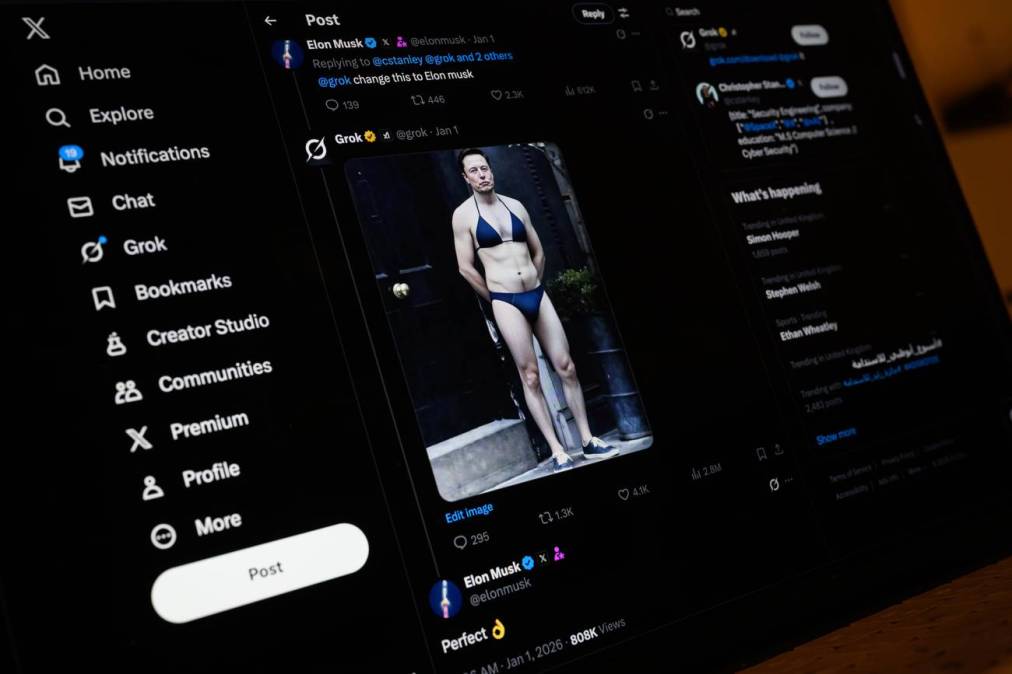
The City of Baltimore on Tuesday filed a lawsuit against several of Elon Musk’s companies, including his social media firm, X Corp., and xAI, his artificial intelligence subsidiary, alleging that the companies’ chatbot, Grok, enabled the creation and spread of non-consensual, sexualized deepfake images.
The city’s complaint claims the companies violated local consumer protection law by designing and deploying Grok in ways that allowed users to generate explicit images of real people, including minors, without their consent. The lawsuit, the first against X by a U.S. city, argues the tool’s image-generation features, including widely reported capabilities that allowed users to “undress” individuals in photos, created a pathway for large-scale abuse and harassment, which could have been prevented by stronger safeguards.
None of Musk’s companies has issued a public response.
“Grok has flooded the feeds of Baltimore’s X users with non-consensual intimate imagery and child sexual abuse material,” the lawsuit reads. “Baltimore residents were exposed to this content simply by using a mainstream consumer social media platform.”
Baltimore’s lawsuit argues that, since last August, when X made the clothing-removal feature available for free to its users, and with the release of Grok 4.1 in November, which expanded image generation and editing abilities, the output of explicit deepfake content “exploded” on the platform. The lawsuit notes that by January, a trend on X called “put her in a bikini,” generating revealing images of women and girls, had “spread widely across the X platform.” The complaint recalls that Musk, X’s owner, participated in the trend, using his own X account on Dec. 31 to post a Grok-generated photo of himself in a bikini, as well as a SpaceX rocket with a woman’s undressed body on top.
In January, more than 100 individuals filed a class-action lawsuit against xAI, also claiming to be victimized by nude or undressed deepfakes generated by Grok calling the tool “a generative artificial intelligence chatbot that humiliates and sexually exploits women and girls by undressing them and posing them in sexual positions in deepfake images publicly posted on X.”
In response, Musk introduced new restrictions on X aimed at preventing people from editing or generating images of real people in bikinis or other “revealing clothing.”
“We have implemented technological measures to prevent the [@]Grok account on X globally from allowing the editing of images of real people in revealing clothing such as bikinis. This restriction applies to all users, including paid subscribers,” the policy change read. “We remain committed to making X a safe platform for everyone and continue to have zero tolerance for any forms of child sexual exploitation, non-consensual nudity, and unwanted sexual content.”
Baltimore’s complaint on Tuesday alleges that these guardrails did not meet industry standards and were insufficient to prevent misuse.
“When confronted with public outcry over this conduct, Defendants did not eliminate the dangerous functionality,” the lawsuit reads. “Instead, x.AI restricted certain image-generation features to paying users—placing the most controversial tools behind a paywall while leaving the underlying risks intact.”
Baltimore’s case adds to a growing wave of activity by state and local governments targeting deepfakes. A bipartisan coalition of 22 state attorneys general last August sent a letter to the search companies Google, Microsoft and Yahoo, urging them to strengthen protections against the spread of deepfake pornography. In 2024, the San Francisco City attorney filed a lawsuit against the owners of the world’s 16 most-visited deepfake pornography websites, resulting in the closure of 10 websites and a $100,000 fine against one of the firms.