Civil rights groups back federal suit against NYPD’s ‘Suspect DNA Index’
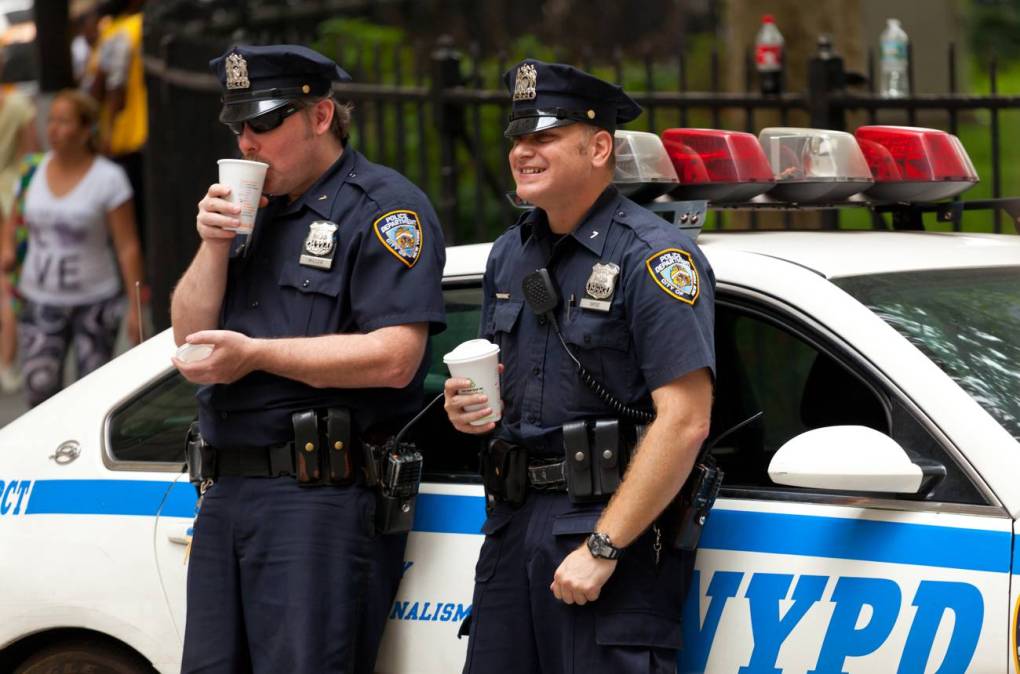
Three civil rights groups on Thursday filed a joint amicus brief in the Legal Aid Society’s federal class action suit against New York City and several top officials across the New York City Police Department and the city’s chief medical examiner, claiming that the DNA database the city’s agencies have built using surreptitiously collected discard items is unlawful.
The brief, which was filed jointly by the American Civil Liberties Union, the New York Civil Liberties Union and the libertarian think tank Cato Institute, supports the Legal Aid Society’s challenge to the “Suspect DNA Index,” a database run by the city’s Office of the Chief Medical Examiner that feeds on DNA collected by the NYPD.
The Legal Aid Society’s suit, which has been ongoing since 2022, alleges that the NYPD has gathered the DNA of more than 54,000 unknowing New Yorkers over the last decade, often from discarded items — used cups, tissues or cigarette butts — used during interrogations or investigations. The data has been indexed it in a database used to compare evidence taken from other investigations.
The database includes those who haven’t been charged with, much less convicted of, a crime. The class action suit was originally filed on the behalf of the nearly 32,000 individuals who had DNA taken without their knowledge, including plaintiff Shakira Leslie. Leslie was arrested in New York City in 2019 following a traffic stop in which a gun was found in the vehicle and all inside were arrested.
According to the suit, NYPD officers deprived Leslie of food and water for several hours at the precinct. When she was offered water in a disposable cup, officers allegedly told her that “it would be some time before she had another opportunity to drink.” After drinking from the cup, the NYPD pulled her DNA from that cup, developed a profile from it and stored it in the database, the suit claims.
The Legal Aid Society’s case argues that the “rogue” DNA database violates state law, which mandates that the New York’s State DNA Identification Index be the state’s only such index. The law also sets limits on whose DNA can be collected, when and for what purpose. It also sets retention and deletion requirements. And because the NYPD’s index was not created via legislation or other outside authorization, the case argues, there’s insufficient accountability for potential abuses.
The suit argues that the Suspect Index violates the Fourth Amendment, which protects against unreasonable searches and seizures without a warrant. Because DNA is a highly sensitive and private information, individual privacy regarding personal details like ancestry, family relationships and propensities for serious medical conditions, and much more, are also put at risk.
When combined with other data, DNA can also expose potentially damaging information, such as previously unknown family histories of adoptions, misattributed paternity, early mortality or substance abuse disorders.
“The government cannot treat our DNA like it treats our garbage, and seize, search, and store it without a warrant,” Vera Eidelman, a senior staff attorney at the ACLU’s Speech, Privacy, and Technology Project, said in a news release. “Usually we rely on hypotheticals to highlight the dystopian possibilities of this kind of privacy invasion, but no hypothetical could be more troubling than New York City’s actual practice: amassing thousands of people’s DNA without their knowledge, their consent, or any court-ordered or legislative guardrails. If the Second Circuit does not intervene, all I can say is: New Yorkers, hold on to your trash.”