New Wyoming helibase brings wildfire aviation, IT modernization under one roof
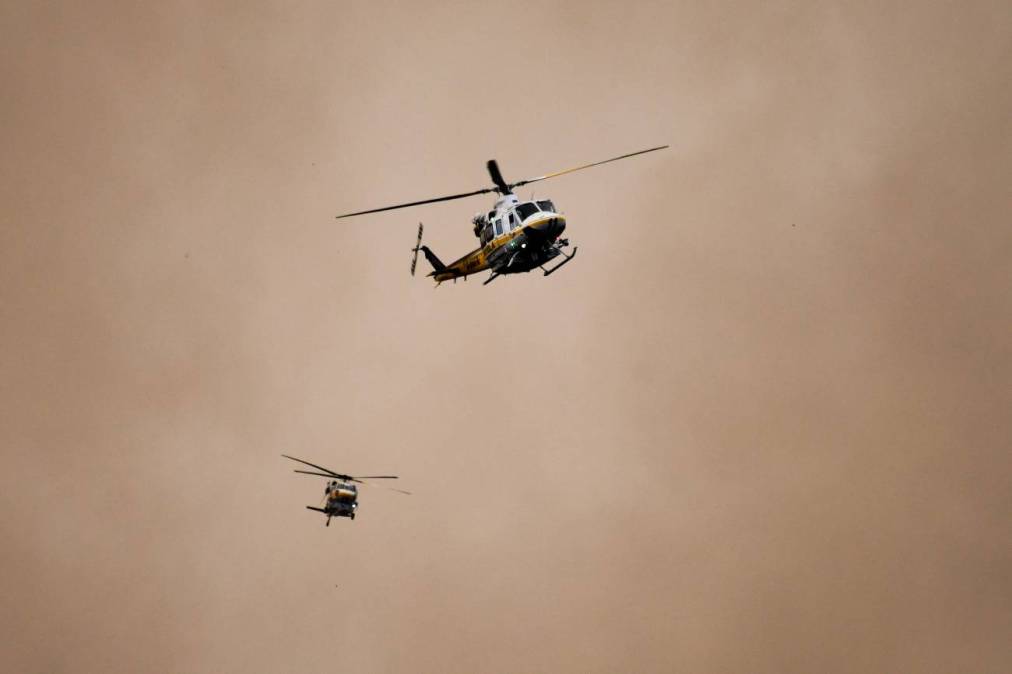
Wyoming has opened a $7.5 million helibase at Casper-Natrona County International Airport this week, designed to speed up wildfire response while giving state firefighters better access to technology and communication infrastructure.
The new facility, announced Monday, brings together state forestry staff, wildland firefighters and federal partners at a centralized aviation hub.
Chris Fallbeck, assistant fire management officer for aviation with the Wyoming State Forestry Division, said the facility replaces an older helibase located on a remote state-owned property near Lander in central Wyoming, where limited connectivity made it difficult for firefighters to access information and state networks.
“There was no landline, no hardline internet,” Fallbeck told StateScoop. “So to gather intelligence, daily briefing materials, weather, current and ongoing predictive fire behavior — all of that was accessed through either a Verizon jetpack or just recently, in the last two years, Starlink.”
The new helibase is connected to the state network, allowing crews to access the same systems used by other state agencies and share files more easily — part of Wyoming’s broader effort to expand its interagency aviation capabilities.
Fallbeck said the state’s helitack program, which coordinates helicopter operations for wildfires, has grown significantly since it launched in 2004.
“So with the new facility, we’re on the state network just like I am in my office here in Cheyenne,” Fallbeck explained. “Same as all of our legislators and other state agencies, so it’ll finally be at a level that’s on par with everybody else.”
Fallbeck said the new facility also improves the safety infrastructure available to aviation crews.
Unlike the previous location, where it was about six miles away from the nearest fire department, the airport provides continuous access to specialized aircraft and firefighting vehicles.The state currently plans to operate two helicopters and four single-engine air tankers from the facility under its current contracts.
“We will have access at 24/7 for the airport fire rescue and their ARF vehicles, who are specifically trained to handle things like aircraft and fuselages on fire with Jet A fuel, as opposed to a fire department that has to be well versed in wildland structure, medical car crashes,” Fallbeck said. “What these folks do at the airport is to make sure that they can respond really quickly.”
The launch also builds off a new reorganization plan from the U.S. Forest Service, under the Department of Agriculture, announced in March.
The changes include moving headquarters to Salt Lake City, transitioning to a state-based leadership model, building a network of Operations Service Centers across the country and unifying the agency’s research program. According to the USDA, these centers will provide shared administrative and technical support to state forestry offices nationwide, “allowing field leadership to focus more directly on actions that improve the health, productivity, and resilience of our nation’s forests.”
Although Wyoming’s new helibase will not be fully operational until the state’s next fire season in June, Fallbeck said one helicopter launched from the facility for a wildfire response last week, but had to be stowed before Monday’s ribbon-cutting ceremony.
“Probably no more than 20 minutes after we had it all in there, the helicopter got a call to go to a fire outside of Tensley, Wyoming, so we had to pack it back up, shove it out of the hangar and have those guys go respond to a fire,” Fallbeck explained. “But it sure wasn’t planned, and I have no intention of being operational this year.”