Advocacy groups oppose FCC’s proposed changes to Lifeline broadband program
A group of 11 broadband advocacy groups on Wednesday voiced concern with reforms the Federal Communications Commission’s has proposed to its Lifeline subsidy program. The groups claim the changes, which include stricter eligibility requirements, would harm those the program is intended to benefit.
Lifeline provides low-income residents broadband or phone service for $9.25 per month, or $34.25 for those on tribal lands. To qualify, an individual’s income must be at or below 135% of federal poverty guidelines, or they must participate in other need-based assistance programs like SNAP or Medicaid.
Lifeline is the last remaining federal broadband subsidy program available to low-income people after the FCC’s Affordable Connectivity Program expired at last May, when it did not receive renewed congressional funding.
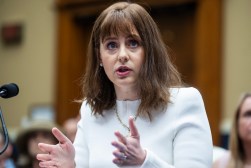
“It is what it sounds like, a Lifeline — meant to support our most vulnerable neighbors. And yet, the Commission is on a path to make it harder for people who rely on this program to access it,” Angela Siefer, executive director of the National Digital Inclusion Alliance, one of the groups opposing the reforms, said in a statement. “NDIA continues to call on Congress to pass legislation to establish a true and sufficient national broadband affordability benefit. But until then, we ask the FCC to live up to its mandate — ensuring affordable, quality telecommunications services are available to all consumers.”
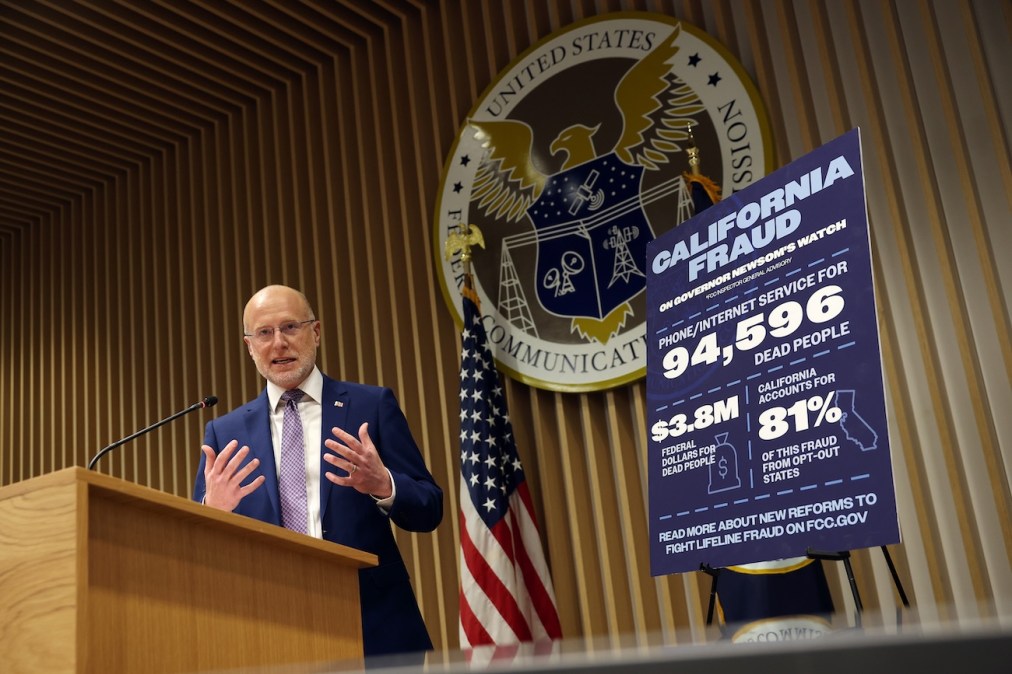
The FCC’s proposed changes, which the agency announced Wednesday though a notice of proposed rulemaking, come after the agency’s enforcement bureau shared on Tuesday that it had opened an investigation into Lifeline providers for possible violations of program rules in California, and also in Oregon and Texas, two so-called “opt-out states” that manage their own eligibility systems, rather than using one supplied by the FCC.
In January, FCC Chair Brendan Carr said the agency’s office of inspector general claimed it found evidence that nearly 117,000 deceased people across the three states were still receiving Lifeline program benefits, totaling $5 million over a nearly five-year period.
Opt-out states are those that manage their own eligibility verification processes and subscriber databases for the Lifeline program instead of using the FCC’s national verifier tool. California was also an opt-out state until its status was revoked in November after the FCC accused the state of “unlawfully abusing” the program. Gov. Gavin Newsom had signed a law in October that prohibited the California Public Utilities Commission, which administers the program, from disclosing information provided by Lifeline program applicants or subscribers to the federal government without a subpoena or warrant. It also removed a requirement that applicants submit full or partial Social Security numbers.
The FCC said in its notice it’s seeking comment on a number of program reforms that are designed to ensure Lifeline is “efficient, transparent, and accountable, while continuing to support Americans who rely on it.”
The agency said the proposed reforms were driven by “rampant abuse of the program and its verification processes,” and they include codifying the Lifeline program support as a “federal public benefit.” This change would make the program available only to U.S. citizens and those with appropriate qualified status under the Personal Responsibility and Work Opportunity Reconciliation Act of 1996. That proposal signals alignment with the Trump administration’s offensive on immigration, despite Carr’s claims that the changes are motivated by the finding that dead individuals are receiving benefits.
The 1996 law altered eligibility for welfare programs, including stiff work requirements and restricted access to federal, state and local public benefits for noncitizens, including legal immigrants.
Another proposed program change, the FCC said, would ensure “that Lifeline support is used to benefit only legal, living, and eligible Americans” through the addition of “enhanced requirements.”
Other changes include: improving program integrity and efficiency, including reforms to the requirements placed on states that opt out from using the national verifier tool; promoting “more principled service provider conduct” to ensure that internet service providers that participate in the program comply with all rules; and streamlining the program’s rules to minimize stakeholder confusion.
The 11 organizations — which include the American Civil Liberties Union, the Benton Institute for Broadband and Society, the National Digital Inclusion Alliance and Common Sense Media — joined to raise concerns that these proposals may unnecessarily make it more difficult to qualify, easier to lose service and reduce the number of affordable provider or plan options.
“At a time when many families are increasingly strained to afford basic necessities, the changes proposed … would further restrict access to a benefit that is both chronically underutilized and inadequate relative to current connectivity costs,” Brenna Leasor, a tech policy adviser at Common Sense Media, said in the groups’ announcement. “With only one in five eligible households enrolled, this important program is already not reaching all of the families it is designed to serve. And yet the proposed changes, if they are incorporated, will cause children in low-income households to face additional barriers to educational resources, will make parents and caregivers increasingly unable to communicate with their kids’ schools, and cause families to have less access to emergency services. These proposed changes risk leaving millions of kids even further behind in today’s economy.”