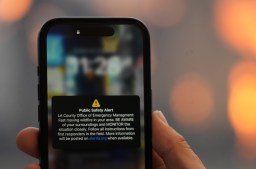
ALTADENA, CALIFORNIA – JANUARY 08: Dylan Stewart of Riverside, Calif. holds a phone with a Los Angeles County Emergency management public safety alert message during the Eaton Fireon January 8, 2025 in the Altadena section of Pasadena, California. (Photo by Kirby Lee/Getty Images)
The law could help people receive emergency alerts when cell networks fail, but experts say better technology alone won’t fix gaps in how warnings are sent.
Changes to location eligibility, brought on by newly available data, arrive as the federal government's keystone broadband program moves into its final phases.
NTIA Administrator Arielle Roth testifies during the House Energy and Commerce Subcommittee on Communications and Technology hearing titled “Oversight of the National Telecommunications and Information Administration,” in Rayburn building on June 30, 2026. (Tom Williams / CQ-Roll Call, Inc via Getty Images)
Christopher Mitchell, of the Institute for Local Self-Reliance, explains why New Mexico's replacement to the FCC's Affordable Connectivty Program is laudable, but not a long-term solution.
President Donald Trump speaks to the media as he departs the White House on July 15, 2025 in Washington, D.C. Trump is traveling to Pittsburgh, Pennsylvania, to speak at an artificial intelligence and energy summit. (Anna Moneymaker / Getty Images)
The Federal Communications Commission proposed new rules designed to enhance the accuracy of location information provided during 911 calls made from mobile phones.
The FCC unveiled the details of a new, three-year program designed to provide schools and libraries with technology to defend their networks and data stores.
FCC Chair Jessica Rosenworcel testifies during a House Energy and Commerce Committee Subcommittee hearing on March 31, 2022 in Washington, D.C. (Kevin Dietsch / Getty Images)
The Federal Communications Commission voted along party lines to expand the list of services available under its E-Rate subsidy program for schools and libraries.