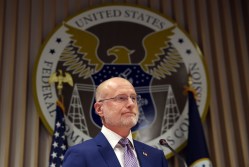
Congressional Democrats send letter urging FCC’s Carr to drop E-Rate elimination proposal

Congressional Democrats sent a letter to the FCC Thursday urging the agency to withdraw its proposal to limit or eliminate the E-Rate program.
The letter, addressed to Federal Communications Commission Chairman Brendan Carr and signed by 46 Senate Democrats and 65 House Democrats, argues that the nearly 30-year-old federal program supports essential broadband infrastructure by helping schools and libraries afford broadband connectivity. They said any changes to the program’s reach or purpose would increase connectivity costs for schools and libraries, deepen educational inequities and undermine U.S. competitiveness in technology. A recent study found that cutting the program would cost the U.S. economy over $4 billion annually.
It comes after the FCC issued a notice of proposed rulemaking in June seeking comment on whether it should retain, narrow or eliminate the program. Senate Minority Leader Chuck Schumer, D-N.Y.; Sen. Ed Markey, D-Mass.; and Reps. Doris Matsui, D-Calif.; Robert Menendez, D-N.J.; and Grace Meng, D-N.Y., led the signing of the letter.
The deadline for comments on the rulemaking closed Tuesday, and reply comments are due Nov. 12.
Markey was the author of the original E-Rate program, which was created in 1996 under the Telecommunications Act of 1996. He and other signatories argue that any changes would undermine the program’s original intent and have ripple effects across the country.
“Schools and libraries help develop the next generation of engineers, scientists, and cybersecurity professionals, including in communities that have historically lacked access to those opportunities. Cutting E-Rate would narrow that talent pipeline,” the letter said. “Maintaining connectivity in every school and library is therefore an investment in America’s technological leadership, economic competitiveness, and national security.”
Though the FCC’s notice also sought comment on potential changes to online safety requirements, screen time, parental control options and program oversight, advocacy groups have largely criticized the agency as using the probe to assess an outright cancellation of the program.
The letter argues that though concerns about students’ screen time are founded, they should be addressed through targeted policies rather than cuts to connectivity funding. The authors also said that because the program funds broadband connectivity — not devices or online content — subsidy recipients must already follow federal internet-safety requirements.
“The Commission should not use child safety as a pretext to dismantle the secure, managed broadband infrastructure that schools and libraries need to educate students and help them navigate the digital world safely,” it said.
Advocacy groups also spoke out this week, sharing the public comments they submitted to the agency regarding the program’s future. The American Library Association pointed to the economic impact of a potential program cut, saying in a Tuesday news release that roughly 75% of public libraries rely on E-Rate for internet access and broadband-enabled services.
ALA warned that losing the program’s $2.6 billion in annual support could force schools and libraries to reduce connectivity or cut other services and resources.
The Consortium for School Networking similarly argued that as technology becomes more integrated into teaching and school operations, schools continue to need reliable, secure broadband.
In its comments filed with the FCC, CoSN said that while the program has helped expand internet access at schools and libraries, ongoing connectivity costs and equipment maintenance show the program’s work is not complete. The organization also called for making cybersecurity products and services permanently eligible for E-Rate funding.
“E-Rate has been successful because it has provided schools with the reliable connectivity they need to serve students and educators,” Keith Krueger, CEO of CoSN, said in a news release. “That success is not a reason to pull back. As technology becomes more deeply integrated into teaching, learning, and school operations, schools need networks that are not only fast and reliable, but secure and resilient. The FCC should build on what works by preserving E-Rate and modernizing it to meet the needs of today’s schools.”