Alabama secretary of state says he found 25 noncitizen voters
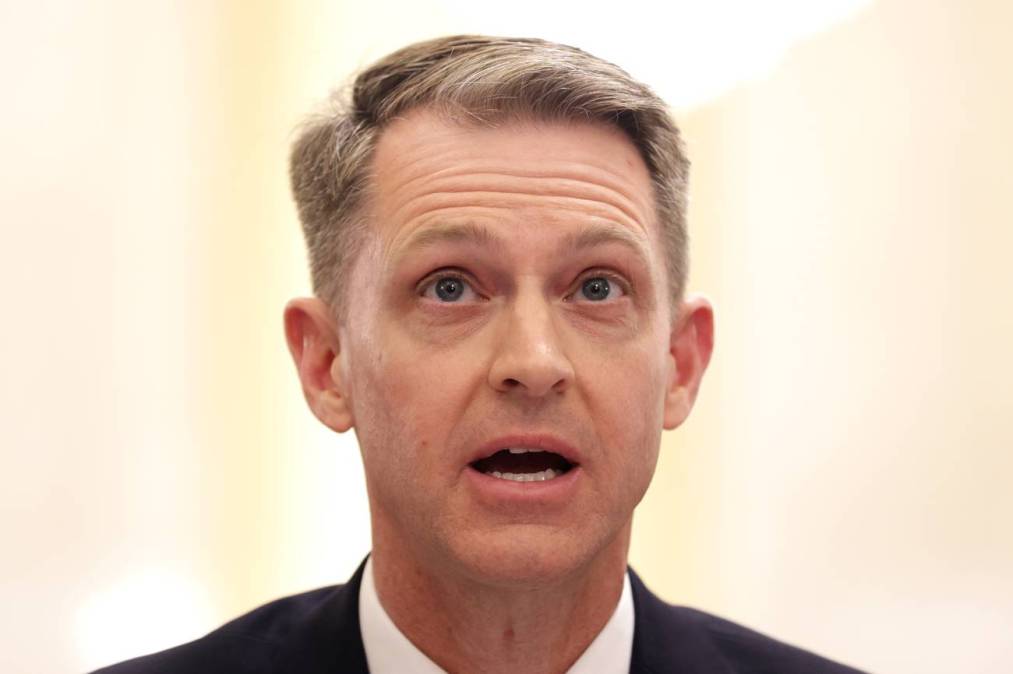
Alabama Secretary of State Wes Allen last week announced that his office has identified 186 noncitizens who are registered to vote in his state, along with 25 who’ve illegally voted in Alabama elections.
While 25 voters does not constitute even a rounding error in a state with 3.7 million registered voters, the claim, if true, would represent a huge leap in known cases of noncitizen voting. According to a database maintained by the Heritage Foundation, a conservative Washington think tank, there have been only 24 verified cases of noncitizen voting in the United States between 1982 and the present day.
According to a press release from Allen’s office, the identified noncitizen voters and noncitizen registrants were flagged through use of the Department of Homeland Security’s Systematic Alien Verification for Entitlements system, a tool originally designed to check immigration statuses and verify benefits eligibility that has been repurposed for rooting out cases of noncitizen voting.
But critics of the SAVE system, including some secretaries of state, have pointed out that it is untested, has never been examined by third-party auditors and is being used for a purpose it was not designed for. Last month, a dozen secretaries of state, mostly from states run by Democrats, filed a lengthy protestation against the system and the federal government’s pursuit of state voter rolls to fuel it. Their objections were against not only the system’s questionable reliability in identifying noncitizen voters, but that a recent proposal would allow the system to integrate the sensitive personal information of legal citizens, too.
“They’re proposing that for a 10-year period, at least, they will be able to scoop up personal and sensitive data on perhaps as many as 200 million people for uses they won’t describe, shared with agencies they won’t name,” Minnesota Secretary of State Steve Simon told this publication last month.
It is not possible to verify the legitimacy of Allen’s findings, because he has not disclosed any additional information about the supposed noncitizen voters or noncitizen registrations, aside from a chart that shows how many of each come, purportedly, from each county. Allen’s office did not respond to emails and phone calls requesting additional information about exactly what information the SAVE system provides or how much faith officials have in its accuracy.
The state also did not disclose to what time frame the data pertains. David Becker, the executive director and founder of The Center for Election Innovation & Research, a nonprofit that seeks to build trust in elections, said it’s difficult to make judgments about the announcement that came out of Allen’s office without some insight into its methodology. He pointed out in an email that in other states making similar claims, such as Texas, error rates have proven “very high — a minimum of 33% and perhaps much higher than 50%.”
NPR reported last month that citizens who’ve been erroneously flagged by the system as noncitizens lost their voting rights. Texas Secretary of State Jane Nelson claimed last October that the SAVE system had spotted 2,724 “potential” noncitizens who’d registered to vote. In more than a dozen cases, NPR found, driver’s license applicants had been registered to vote through some administrative error. Others flagged had been citizens for many years or already held U.S. passports.
Becker warned that such errors could continue in additional states if the SAVE system’s accuracy isn’t properly vetted: “These individuals were victims of the state’s error, and it could be that Alabama has a similar situation.”